


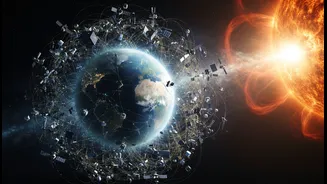


The Sun’s Fiery Temper
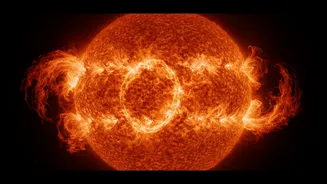
The sun isn't always the calm, steady presence it appears to be. It has a dynamic, 11-year cycle of activity, marked by the appearance and disappearance of sunspots. These spots are regions of intense magnetic activity that can erupt, releasing enormous
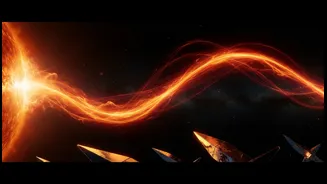
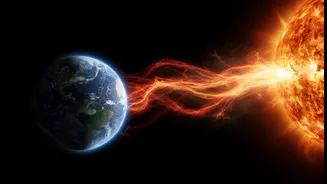
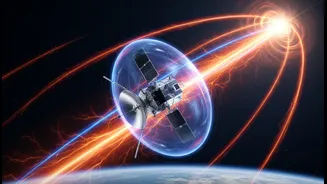
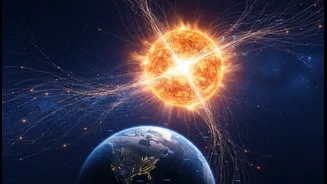
bursts of energy known as solar flares. Sometimes, these flares are accompanied by Coronal Mass Ejections (CMEs), which are gigantic bubbles of plasma and magnetic fields hurled into space. While Earth's magnetic field protects us from most of this solar onslaught, a powerful, Earth-directed CME can interact with our atmosphere and trigger a geomagnetic storm, which is where the trouble begins for our technology.
Our Fragile Digital World
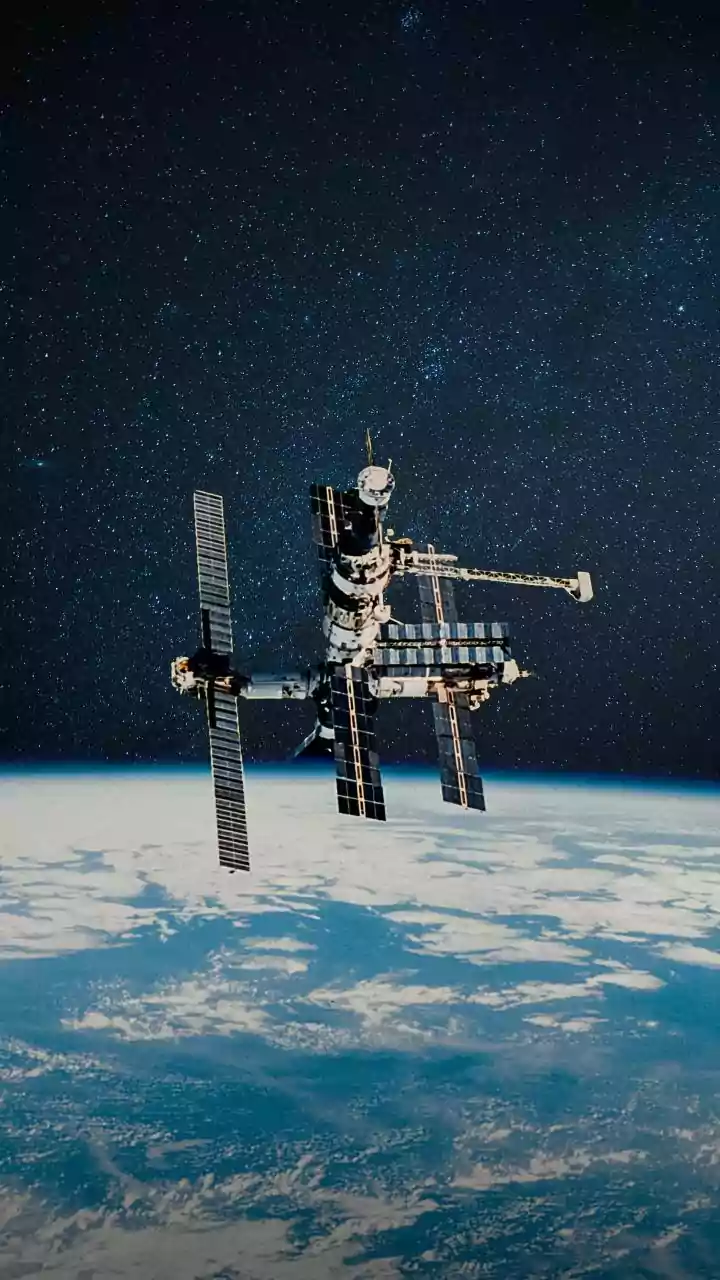
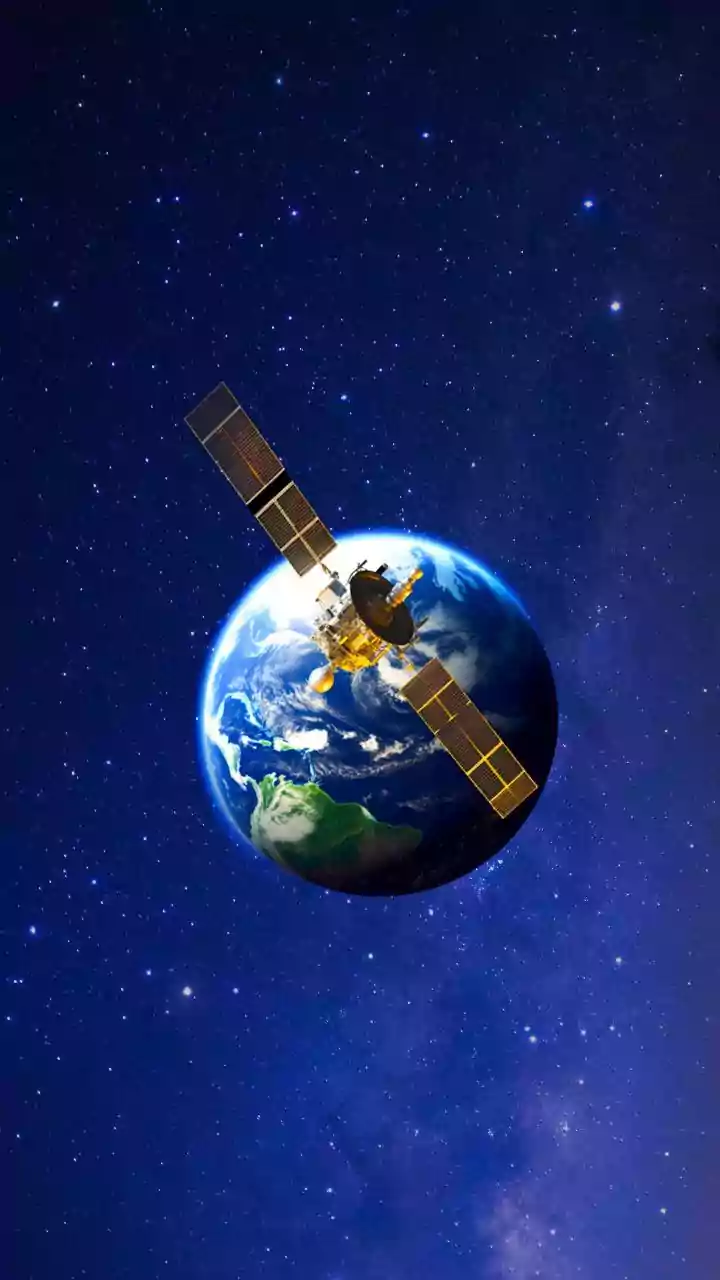
In today's hyper-connected India, the consequences of a severe solar storm are significant. These events can disrupt the very technologies we rely on daily. High-frequency radio communications and GPS signals, crucial for aviation and shipping, can be degraded or blacked out. Farmers who rely on GPS for precision agriculture could find their equipment knocked offline. The most serious risk is to our power grids. Geomagnetic storms can induce powerful electrical currents in long transmission lines, potentially overloading transformers and causing widespread, long-lasting blackouts. Satellites, operating beyond the full protection of our atmosphere, are also highly vulnerable to damage from solar radiation, affecting everything from weather forecasting to television broadcasts.
A Glimpse into the Future
The good news is that we are getting much better at predicting these solar outbursts. For decades, forecasting space weather was a challenge, often providing only minutes of warning. Now, thanks to a combination of new observational techniques and powerful artificial intelligence, the forecast window is expanding. Scientists have developed new methods to predict the strength of a future solar cycle years in advance by identifying a specific 'switch-off' point in the sun's activity. More immediately, new AI models, like the 'Surya' model developed by NASA and IBM, are being trained on massive datasets of solar observations to improve the accuracy of flare predictions. These tools can now forecast the likelihood of a major flare with greater precision, giving us more time to prepare.
India’s Eye on the Sun
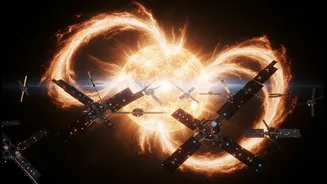
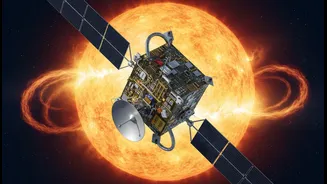
India is playing a crucial role in this global effort with its Aditya-L1 mission. Launched by ISRO, this state-of-the-art observatory is positioned 1.5 million kilometers from Earth at a special vantage point called Lagrange Point 1 (L1). From here, it has an uninterrupted view of the sun, monitoring its activity 24/7. Aditya-L1 is designed to study the sun's corona, the origin of CMEs, and the dynamics of space weather. Recent observations from the mission are already providing new insights into the sun's behaviour, such as why its outer atmosphere is mysteriously hotter than its surface. By providing a continuous stream of data, Aditya-L1 is a vital part of the early warning system that helps protect our technological infrastructure on Earth.
From Warning to Action
Improved forecasting is transforming how we handle space weather. Instead of a few minutes, new missions planned for the coming years aim to provide hours of advance warning for the most severe storms. This extra time is critical. It allows power grid operators to take protective measures, satellite operators to put their spacecraft into a safe mode, and airlines to reroute flights to avoid communication blackouts and radiation exposure. It turns a potential crisis into a manageable event. While we can't stop the sun from producing flares, understanding and predicting them gives us the power to mitigate their impact, ensuring our digital society remains resilient in the face of cosmic weather.