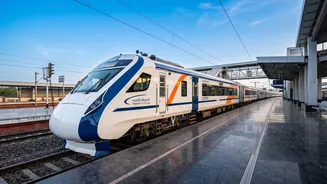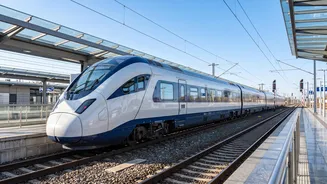








Pune's reputation as a bustling IT, automotive, and educational hub has long been hampered by congested overnight travel routes. Now, a significant upgrade is on the horizon: the introduction of Vande Bharat sleeper trains promises a new era of connectivity.
New Connections on the Horizon
Recent announcements and reports from Indian Railways point towards enhanced connectivity for Pune. One of the most anticipated new routes is the Bengaluru-Mumbai Vande Bharat sleeper service, which will include a crucial stop in Pune. This directly links Pune with India's tech capital, Bengaluru, a journey that currently takes a lengthy 18 to 20 hours by conventional trains. Another significant route under consideration is a Vande Bharat service connecting Pune with Secunderabad (Hyderabad). This would link two major IT and industrial powerhouses, streamlining travel for countless professionals and students who frequently move between these cities. While a Pune-Nagpur sleeper has also been planned, the immediate focus appears to be on the southern corridors.
What Makes the Vande Bharat Sleeper Different?
The Vande Bharat sleeper is not just another train; it's a complete overhaul of the overnight travel experience, designed to rival premium services like the Rajdhani Express. Unlike traditional locomotive-hauled trains, these are self-propelled trainsets, allowing for faster acceleration and deceleration, which helps cut down on overall journey time. The interiors are a significant upgrade, featuring ergonomically designed berths with better cushioning, modern bio-vacuum toilets with touch-free fittings, and fully sealed gangways to create a quieter, dust-free environment. Each 16-coach rake is fully air-conditioned and designed to accommodate 823 passengers across AC First, Second, and Third-tier classes. Safety is also a key enhancement, with the indigenous 'Kavach' anti-collision system integrated into the design.
A Leap in Speed and Efficiency
The primary advantage of the Vande Bharat sleeper is the significant reduction in travel time. For the Pune-Bengaluru leg of the new Mumbai-Bengaluru service, the journey is expected to take around 13 hours, a dramatic drop from the current 18-20 hours. This time-saving of nearly five hours could be a game-changer for business travellers and families alike. Similarly, the proposed Pune-Secunderabad service is projected to save passengers two to three hours compared to the existing Shatabdi Express, which takes around eight and a half hours. While the train's top speed is 160 km/h, the real efficiency comes from its ability to maintain a higher average speed due to quicker turnarounds and superior acceleration.
The Impact on Pune and Its People
For Pune's residents, these new routes represent more than just a faster way to travel. They signify a crucial infrastructure boost that strengthens the city's economic and social ties with other key metropolitan areas. The improved connectivity with Bengaluru is particularly vital for the thriving IT and startup ecosystems in both cities, facilitating easier collaboration and talent mobility. A faster, more comfortable link to Hyderabad will similarly benefit businesses and educational institutions. By providing a premium, time-efficient alternative to buses and existing trains, the Vande Bharat sleeper service is poised to become the preferred mode of overnight travel for a new generation of passengers. While an official notification with the final timetable and fares is still awaited, the launch of the Bengaluru-Mumbai service is anticipated as early as November 1, 2026.