






The Low-Cost Airline Baggage Game
Low-cost carriers have mastered the art of the ancillary fee. The ticket price is low, but the charges for everything else—seat selection, priority boarding, and especially baggage—can add up quickly. Most budget airlines now operate on a two-bag system.
You get a small 'personal item' for free, which must fit under the seat in front of you. The larger cabin bag for the overhead bin, once standard, now almost always costs extra. Checking a bag is even more expensive. These fees are significantly higher at the airport gate, creating a costly trap for unprepared travellers. This is where your packing strategy becomes a critical money-saving tool.
What Are Compression Cubes?
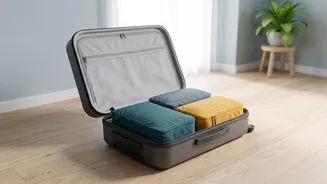
At first glance, a compression cube looks like a standard packing cube—a zippered fabric pouch for organising clothes. The key difference is a second, outer zipper. After you pack the cube and close the main zip, you then close the compression zipper that runs around its perimeter. This clever mechanism squeezes the cube, forcing out excess air from your clothing and dramatically reducing its volume. It turns bulky piles of clothes into dense, manageable blocks that are easier to fit into your luggage.
From Bulky Baggage to Compact Carry-On
The primary function of compression cubes is to save space, not to help you pack more. By reducing the volume of soft, puffy items, they allow you to fit what you need into a smaller bag. Think of bulky items like fleece jackets, sweaters, and scarves. A compression cube can flatten these significantly, making it possible to pack for a week-long trip in a bag that meets the restrictive 'personal item' or paid 'cabin bag' size limits of airlines. This allows you to avoid checking a bag altogether, saving you from the highest tier of baggage fees. By strategically compressing your bulkiest clothing, you can often downgrade from a large checked suitcase to a single carry-on.
The Critical Rule: Volume vs. Weight
Here is the most important thing to remember: compression cubes reduce volume, not weight. A compressed jumper weighs exactly the same as an uncompressed one. This is a crucial distinction because many international airlines, especially in Asia and Europe, have strict weight limits for carry-on luggage—often as low as 7-10 kg. While the cubes help you win the battle of space, you can easily lose the battle at the check-in scale. The cubes themselves add a small amount of weight, and their efficiency can tempt you to overpack. The solution is to be a mindful packer. Weigh your bag at home before you leave. If you're over the limit, the fix isn't more compression; it's packing fewer items or wearing your heaviest layers on the plane.
How to Use Compression Cubes Effectively
To get the most out of your cubes, pack them strategically. Rolling your clothes before placing them in the cube is generally the best method for minimising wrinkles and maximising space. Don't overfill the cube; leave a little room so the compression zipper can do its job without straining. Use different-sized cubes for different items—larger ones for jumpers and trousers, smaller ones for underwear and t-shirts. This not only optimises space but also keeps you organised, turning your suitcase into a neat set of drawers you can easily access without creating a mess. You can even dedicate one cube for dirty laundry as your trip progresses.