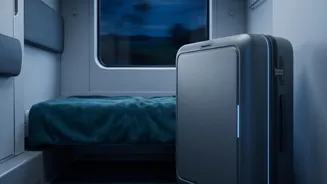







Activate Your Smart Luggage Features
Before you even leave for the station, take a moment to set up the 'smart' features of your luggage. Modern smart bags often come with GPS or Bluetooth tracking capabilities. Install the corresponding app on your phone and ensure the luggage is paired
and visible. Many travellers use trackers like Apple AirTags or Samsung SmartTags, which leverage a crowd-sourced network of nearby phones to pinpoint your bag's location. While these trackers may not provide a live feed from inside a metal train car, they are invaluable if your bag gets misplaced at a station. Some higher-end smart luggage also includes proximity alerts that can notify your phone if the bag moves too far away from you, acting as an early warning system against a grab-and-run theft.
Use a Physical Lock and Cable
A zipper lock is good, but it won’t stop a thief from walking away with your entire suitcase. For overnight trains, a secondary physical lock is non-negotiable. The most effective method is using a flexible bicycle-style cable lock. Loop it through your luggage handle and then secure it to a fixed part of the train compartment, like the metal luggage rack or the frame under the lower berth. This simple step acts as a powerful visual deterrent. Most opportunistic thieves are looking for a quick and easy target; a bag that is physically tethered to the train is too much hassle and attracts unwanted attention.
Create a High-Value 'Go Bag'
Never leave your most critical items in a larger suitcase, even a locked one. Your most valuable and sensitive gear—laptop, tablet, phone, passport, wallet, and medications—should be kept in a smaller daypack or personal bag. This 'go bag' should stay with you at all times. When you're sleeping, you can use it as a pillow or place it in your bunk with you, tucked away by your feet or under your head. This ensures that even if your main luggage is tampered with, your absolute essentials are physically on your person and secure.
Don't Forget Digital Security
Protecting your physical gear is only half the battle. Your devices themselves contain a wealth of personal information. Before your trip, ensure every device is protected with a strong password, PIN, or biometric lock. Public Wi-Fi on trains can be notoriously insecure, so avoid accessing sensitive accounts like banking unless you are using a reputable VPN service. It's also wise to enable 'find my device' features and remote wipe capabilities on your gadgets. This allows you to locate a lost device or erase its data remotely if it's stolen, protecting your digital life even if the hardware is gone.
Be Discreet and Strategically Position Your Luggage
Thieves often target travellers who openly display expensive equipment. Avoid flashing your high-end laptop or camera around the carriage. When you settle into your compartment, think strategically about placement. If there's an overhead rack, try to place your bag as high up or as far in as possible to make it difficult for someone to grab quickly. If you're in a seat, keeping bags within your line of sight is ideal. Packing valuable electronics deeper inside your main bag, rather than in easily accessible outer pockets, adds another layer of simple but effective security.
Secure Your Compartment Door
If you are in a private or semi-private sleeper compartment, the door is your first line of defence. Always use all available locks, which often include a standard lock and a secondary chain or deadbolt. Train staff are usually the only ones with a master key. Locking the door makes it significantly harder for anyone to enter quietly while you are asleep. For older trains that may lack robust locks, some seasoned travellers even loop a luggage strap tightly through the interior handle to provide an extra barrier.