





A New Era for Martian Exploration
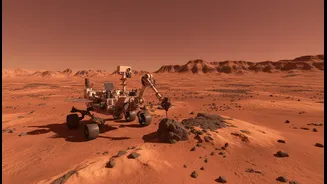
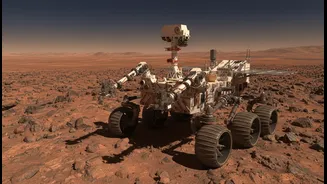
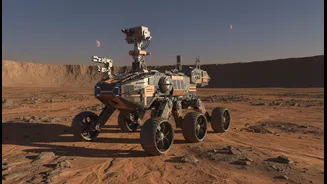
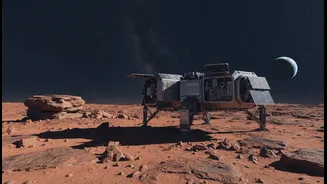
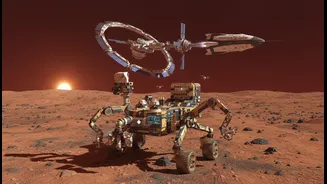
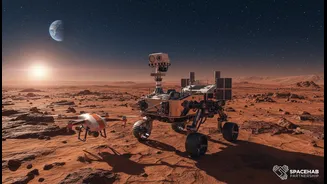
NASA's latest announcement isn't just another space mission; it's a strategic pivot. The agency has awarded contracts to seven companies under its Science Transport and Robotic Innovation for Deployment and Exploration (STRIDE) initiative. The goal is to spur
the development of next-generation robotic systems for the Red Planet. This move signals a fundamental shift away from NASA designing and building everything in-house. Instead, like its successful commercial crew and cargo programs for Earth orbit, the agency is now looking to buy services from private industry for missions to other worlds. This public-private partnership model aims to lower costs, accelerate the pace of exploration, and build a sustainable industrial base for deep space missions. It's less about building a single rover and more about creating a whole new market for Martian logistics.
Meet the New Martian Movers
The seven companies selected represent a cross-section of the modern space industry. They include established players with long NASA track records like Honeybee Robotics and AeroVironment, alongside ambitious newer firms such as Astrobotic, Intuitive Machines, and Venturi Astrolab. The list is rounded out by Ground Control Robotics and MEI Technologies. The diversity is intentional. NASA is casting a wide net to capture a range of ideas, from advanced rovers capable of tackling tougher terrain to entirely new concepts for surface mobility. These contracts are not for building flight-ready hardware just yet; they are for conceptual designs and studies to see what is possible. The total initial value is approximately $17 million, a relatively small sum in space terms, but its importance lies in the strategic access it provides.
First Check: Understand the Contract
Before interpreting this as a gold rush, it's crucial to understand what these contracts are. The STRIDE awards are for design studies and early-stage development, not multi-billion dollar production runs. Think of it as NASA paying companies to do their homework. The agency wants to see what innovative concepts industry can create to meet its future needs, which include supporting scientific instruments and potentially, one day, human astronauts. For the companies involved, this is a foot in the door. A small contract today can position them for much larger opportunities as NASA's Mars exploration architecture solidifies. For observers and potential investors, this means the payoff is long-term and fraught with risk; many of these initial concepts may never leave the drawing board.
Second Check: The 'Picks and Shovels' Strategy
The phrase "acting on the update" often implies investment. A smart way to approach the burgeoning space economy is by focusing on the 'picks and shovels' plays. In the gold rush, the most consistent profits were made not by prospectors, but by those selling tools to all the miners. In space, this means looking at the enabling technologies. Several of the STRIDE awardees, like Honeybee Robotics, specialize in critical subsystems—the drills, arms, and instruments that are essential for any mission, regardless of which prime contractor wins the main vehicle contract. These component and subsystem suppliers can have diverse customers across multiple missions and even multiple celestial bodies, from the Moon to Mars, providing a more resilient business model than betting on a single, high-stakes mission.
Third Check: Dual-Use Technology
A final point of analysis is to consider the terrestrial applications of the technology being developed. While a robot designed for Mars is highly specialized, the underlying innovations in autonomy, robotics, power systems, and rugged hardware often have dual-use potential on Earth. For example, autonomous navigation systems developed for the Red Planet could be adapted for use in mining, agriculture, or logistics in environments that are dangerous or inaccessible to humans. A company with a clear strategy to commercialize its space tech in terrestrial markets has a much stronger business case. It provides an alternative revenue stream and de-risks the long and uncertain timelines of deep space exploration. The most successful ventures will be those that can solve problems for customers both on and off our world.