



Valley of Flowers, Uttarakhand: A Monsoon Jewel
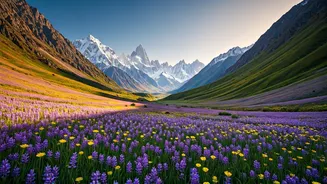
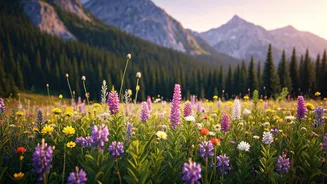
Nestled high in the West Himalayas, the Valley of Flowers National Park is a UNESCO World Heritage Site that comes alive during the monsoon. After being covered in snow for most of the year, the valley floor erupts with over 300 species of alpine flowers.
The peak window to witness this explosion of colour—including poppies, primulas, and anemones—is breathtakingly short. For the most vibrant and diverse display, plan your trek between mid-July and mid-August. This is when the valley is at its most lush, though be prepared for rain and potentially slippery trails. The park generally opens around June 1st and closes by the end of October, but the true spectacle is concentrated in those few monsoon weeks. A trip here often includes a visit to the high-altitude glacial lake of Hemkund Sahib, which offers its own unique alpine flora.
Kaas Plateau, Maharashtra: The Post-Monsoon Carpet
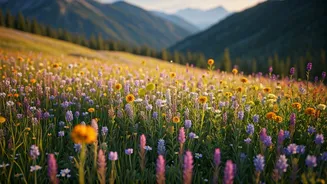
Also known as Maharashtra's Valley of Flowers, the Kaas Plateau is another UNESCO World Natural Heritage Site famous for its unique ecosystem. Unlike its Himalayan counterpart, the magic here happens after the heaviest rains subside. The best time to visit is from late August to early October, with September often being the peak month for blooms. During this period, the lateritic soil of the plateau supports over 850 species of flowering plants, creating vast carpets of pink, yellow, and blue. You can find tiny carnivorous plants like Drosera indica alongside vibrant Smithia flowers. Due to its fragile environment, visitor numbers are often restricted, so booking your entry pass online in advance is essential. To avoid crowds and see the flowers at their freshest, aim for a weekday visit.
Yumthang Valley, Sikkim: Rhododendrons in Spring
Often called the 'Sikkim Valley of Flowers', Yumthang offers a different floral calendar. This high-altitude valley is famous for the Shingba Rhododendron Sanctuary, which hosts over 24 species of the state flower. The prime time to visit is during spring, from late February to mid-June, when the rhododendrons are in full, glorious bloom. The valley, which remains closed due to snow from December to March, transforms into a riot of colour against a backdrop of snow-capped Himalayan peaks. Beyond the rhododendrons, the valley floor is also carpeted with primulas, poppies, and irises. To visit Yumthang, travellers need to obtain permits, which are usually arranged by tour operators in Gangtok. The journey itself, through the scenic town of Lachung, is part of the spectacular experience.
Munnar, Kerala: The Once-in-12-Years Neelakurinji
For a truly rare and epic floral event, nothing beats the blooming of the Neelakurinji flower in Kerala's Western Ghats. 'Neelakurinji' translates to 'blue flower', and when it blooms, it blankets the hillsides of Munnar in a surreal sea of purplish-blue. This mass flowering happens only once every 12 years. The last major bloom occurred in 2018, making the next one highly anticipated in 2030. The blooming season typically runs from August to October. Planning for this is a long-term game, but witnessing an entire mountain range change colour is an unforgettable, once-in-a-lifetime experience. Key viewing spots like the Kurinjimala Sanctuary and Eravikulam National Park become major draws, so advance planning for travel and accommodation is crucial.
Dzukou Valley, Nagaland-Manipur Border: The Summer Trek
The Dzukou Valley, located on the border of Nagaland and Manipur, offers a pristine and less-crowded trekking experience. Its rolling green hills are famous for their seasonal flowers, most notably the endemic Dzukou Lily. The best time to see the valley in full bloom is during the monsoon months of late June to September. During this period, the landscape is incredibly lush and dotted with a variety of wildflowers, creating a paradise for trekkers and photographers. While the monsoon brings the flowers to life, it also means potentially slippery and challenging trails. For those who prefer clearer skies, the post-monsoon season from October to November offers pleasant weather, though with fewer flowers. The valley is a testament to the raw, untouched beauty of India's northeast.