

Finding the Gaseous Veil
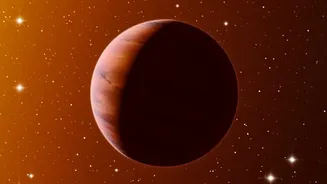
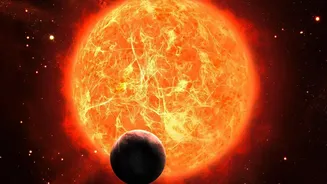
First, how do scientists even find an atmosphere light-years away? The most common technique is called transit spectroscopy. When an exoplanet passes in front of its host star from our perspective, a tiny fraction of the starlight filters through the planet's
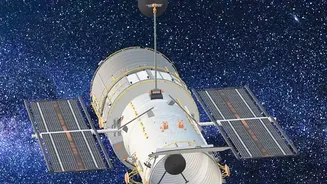
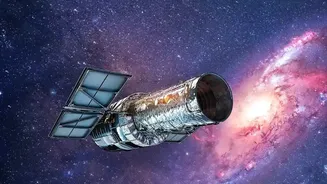
atmosphere, if it has one. Telescopes like the James Webb Space Telescope (JWST) are sensitive enough to capture this filtered starlight and analyze it. By comparing the light from the star before, during, and after the planet's transit, scientists can isolate the chemical fingerprint left by the atmosphere. The presence of this fingerprint is the first confirmation that the planet is shrouded in more than just empty space.
Decoding the Chemical Barcode
Once an atmosphere is confirmed, the real detective work begins. The light spectrum gathered by the telescope acts like a chemical barcode. Different molecules in the atmosphere absorb light at very specific wavelengths, creating unique dark bands in the spectrum. By reading these bands, astronomers can identify the atoms and molecules present. The first things they look for are familiar ingredients like water vapor, carbon dioxide, and methane. Finding these doesn't confirm life, but it tells scientists what kind of planetary environment they are dealing with. The JWST, for example, has already provided a full menu of atoms and molecules in some exoplanet skies, revealing signs of active chemistry.
Hunting for Signs of Life
This is where the search gets really exciting. Scientists are looking for 'biosignatures'—substances or patterns that suggest the presence of life. A key biosignature is the simultaneous presence of gases that shouldn't coexist, like oxygen and methane. Oxygen is highly reactive and would normally be destroyed quickly, while methane is also unstable. Finding both together in large quantities suggests that some active biological process is constantly replenishing them, creating a state of 'chemical disequilibrium'. Earth's atmosphere is in a massive state of disequilibrium precisely because of life. However, scientists must be cautious, as non-biological processes can sometimes mimic these signs, creating false positives. For instance, the breakdown of water by intense starlight could also produce an oxygen-rich atmosphere without any life at all.
Considering the Bigger Picture
An atmosphere is just one piece of the habitability puzzle. For a planet to truly be considered a potential haven for life, many other factors must be considered. Scientists need to determine the planet's temperature and pressure to know if liquid water could exist on its surface—a key requirement for life as we know it. The planet's distance from its star, known as the 'habitable zone', is crucial for maintaining a temperature suitable for liquid water. Furthermore, a planet's size, composition, and the presence of a protective magnetic field all play a role. A planet in the perfect location could have its atmosphere stripped away by intense radiation from its star if it lacks a magnetic shield. All these contextual clues are needed to interpret whether the atmospheric signs are truly pointing towards a living world.