







The Hyper-Palatable Trap
The term “hyper-palatable” sounds complex, but the concept is simple. It refers to foods engineered with specific combinations of fat, sugar, sodium, and carbohydrates to be intensely rewarding to our brains. Food scientists have identified precise formulas—like
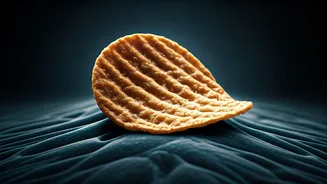
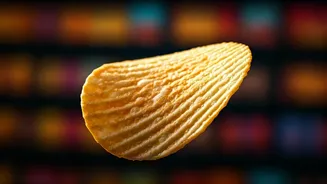
combining fat and sodium (think chips), or fat and sugar (think cookies and ice cream)—that are rarely found in nature. These combinations create a sensory experience that is so enjoyable it can encourage overeating. This is why you might find it easy to stop at one apple but nearly impossible to stop at one 'low-fat' biscuit; the biscuit is designed to make you crave the next one.
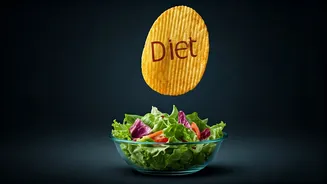
Your Brain on 'Diet' Snacks
When you consume these foods, they activate the reward centres in your brain, triggering a release of dopamine, the 'feel-good' neurotransmitter. This creates a powerful cycle: you eat the food, your brain feels a burst of pleasure, and it quickly learns to crave that food again to get another reward. This process can be so powerful that it overrides your body's natural satiety signals—the internal cues that tell you you're full. Studies have shown that even when people are on a diet, the inclusion of hyper-palatable foods leads to eating more calories overall. It’s not a failure of discipline, but a biological response to an artificial stimulus.
The Illusion of the 'Health Halo'
Packaged foods labelled as “low-fat,” “sugar-free,” or “baked, not fried” often carry a 'health halo'. This marketing makes us perceive them as healthier choices, giving us subconscious permission to eat larger quantities. However, a 2019 study found that nearly half of foods marketed with low-nutrient claims (like low-fat or low-calorie) still qualified as hyper-palatable. To compensate for lower fat or sugar, manufacturers often increase other ingredients like sodium or use engineered carbohydrates and artificial sweeteners that still trigger our brain's reward system, without providing the nutrients that lead to genuine fullness.
Designed to Disappear
Another trick up the food industry's sleeve is something called “vanishing caloric density.” This refers to foods that dissolve quickly in your mouth, like baked crisps, puffed snacks, or airy crackers. Because they melt away so fast, they don’t require much chewing. This tricks your brain into thinking you've consumed fewer calories than you actually have. Your body’s satiety mechanism partly relies on the physical act of chewing and the time food spends in your mouth. When a food 'vanishes', the brain doesn't get a strong signal to stop eating, making it easy to finish an entire bag without feeling satisfied.
Moving Beyond Portion Control
Understanding the science of hyper-palatable foods reveals that strict portion control of these items is an uphill battle. It puts the focus on quantity, when the real issue is the quality and engineered nature of the food itself. Instead of trying to wrestle with willpower against products designed to defeat it, a more effective strategy is to shift focus. Prioritizing whole, minimally processed foods—like fruits, vegetables, lean proteins, and whole grains—helps re-engage your body's natural appetite regulation system. These foods contain fibre, protein, and water, which promote fullness in a way that processed snacks are designed to avoid.