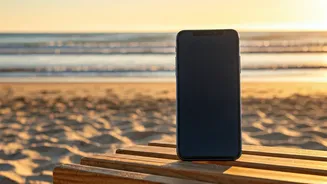









The Invisible Thief of Joy
We plan our holidays for months, fantasizing about escape. Yet when we arrive, we bring the biggest source of our daily anxiety with us: the internet. It’s not just the urgent work email that pulls you out of the moment. It’s the constant, low-grade hum
of notifications, the mindless scroll through other people's lives while you’re supposed to be living your own, and the pressure to document your fun instead of simply having it. Wi-Fi has become an invisible thief, stealing the very thing a vacation is meant to provide: a break. Every time you glance at your phone to check the weather and end up on social media, a little piece of your precious time off is lost. Every dinner where a phone sits on the table, ready to buzz, is a dinner where you’re not fully present with your companions. We've tricked ourselves into believing that being connected is a passive state, when in reality, it demands a significant portion of our attention—the most valuable currency we have on holiday.
Reclaiming Your Brain’s Bandwidth
The argument for a low-Wi-Fi vacation isn’t just romantic, it’s neurological. Our brains are not designed for the constant task-switching that smartphones demand. This digital bombardment leads to what scientists call “attentional fatigue.” You feel scattered, tired, and less able to form rich, detailed memories. When you disconnect, you give your brain a chance to do what it does best: observe, process, and wonder.
This is when the magic happens. Without a GPS guiding your every turn, you might discover a hidden alleyway. Without a screen to fill a quiet moment, you might strike up a conversation with a local. Your mind, free from the endless feed, starts to notice the details: the texture of a cobblestone street, the complex flavors in a local dish, the way the light changes at sunset. This is attentional restoration in action. You’re not just seeing a place; you’re experiencing it with all your senses, creating memories that are deeper and more lasting than any photo you could post online.
How to Engineer a Low-Fi Escape
Going fully off-grid can feel daunting, but aiming for “less Wi-Fi” is an achievable goal. The key is preparation. Before you leave, download everything you might need: maps for offline use (Google Maps has this feature), music playlists, podcasts, movies for the flight, and digital guidebooks. Inform your colleagues and family of your communication plan. Set up a clear out-of-office reply stating you will have limited access to email and provide an emergency-only contact number (perhaps for a trusted colleague or family member).
Once you’re there, set digital boundaries. Designate a short window—maybe 15 minutes after breakfast—to check for truly urgent messages, and then put the phone away for the rest of the day. Better yet, leave it in the hotel safe. If you’re traveling with family, make a pact to keep phones out of sight during meals and activities. The initial withdrawal is real, but it’s quickly replaced by a profound sense of freedom.
What to Do With All That Freedom
The fear of being bored is what drives many of us back to our screens. So, replace the digital habit with an analog one. Bring a physical book—the kind you can get wet at the pool without consequence. Pack a journal and a pen to document your thoughts the old-fashioned way. Buy a deck of cards. The goal isn't to be bored, but to rediscover the joy of undistracted activity.
Ask for directions instead of mapping them. Get a recommendation for the best local coffee shop from the person at your hotel desk, not from an algorithm. Sit on a park bench and just watch the world go by without feeling the need to capture it. The greatest luxury a vacation can offer is the chance to be fully where you are. When you eliminate the portal to everywhere else, you finally give yourself permission to arrive.