


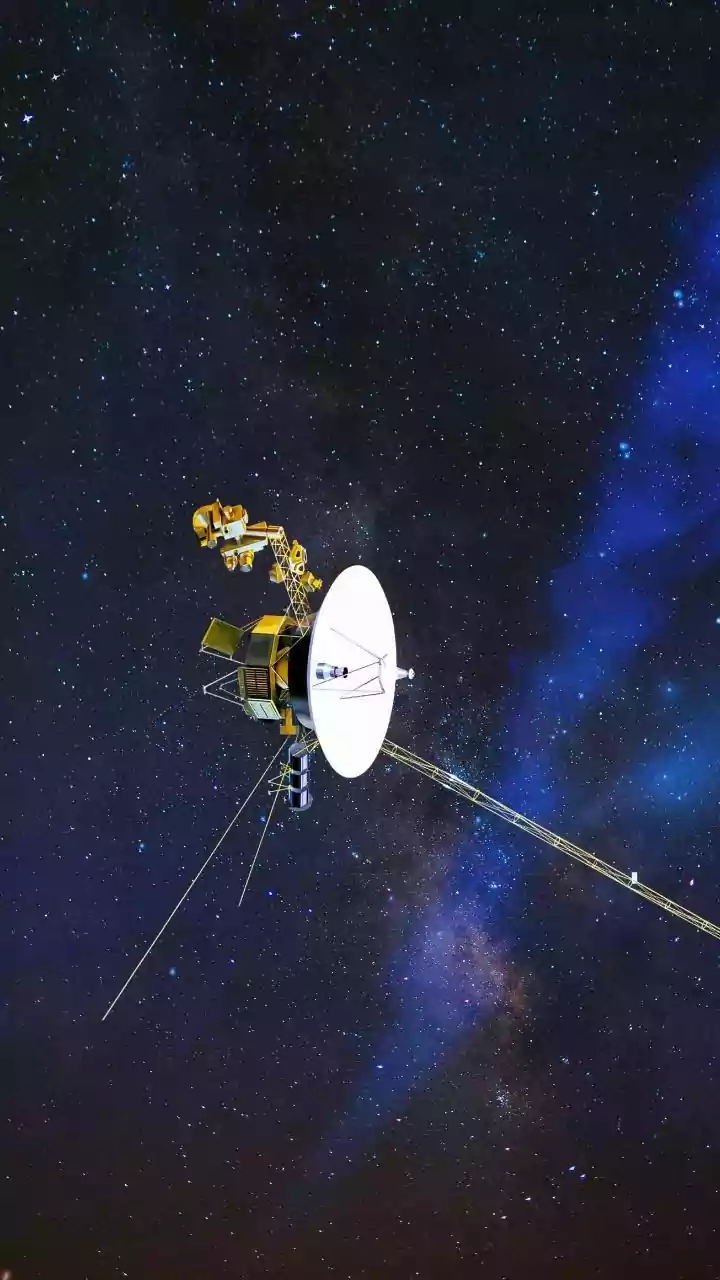




Japan's Martian Moons eXploration (MMX) spacecraft has successfully navigated its first and most delicate phase. JAXA confirmed the probe is healthy after its launch, a crucial first step in its ambitious journey to the moons of Mars.
A New Pioneer's First Breath
In the vast silence
of space, a new explorer has woken up and confirmed it is ready for its long journey. The Japan Aerospace Exploration Agency (JAXA) announced that its Martian Moons eXploration (MMX) spacecraft completed its 'initial critical operations phase'. This is the nail-biting period immediately after separating from its H3 launch vehicle. For mission controllers, it's the moment of truth where they learn if their multi-million dollar, multi-year effort survived the controlled violence of a rocket launch. The successful confirmation means MMX has unfurled its solar arrays to generate power, stabilised its orientation, and established a steady line of communication with Earth. It’s the equivalent of a newborn taking its first breath and crying out—a fundamental sign that everything is, so far, working exactly as it should be.
Demystifying the 'Critical Checks'
What exactly are 'early operational checks'? Think of it as a comprehensive health assessment for a machine millions of kilometres away. After the spacecraft separates from the rocket, it is essentially on its own for the first time. The first command is one of the most vital: deploy the solar array panels. Without these, the spacecraft cannot generate power to recharge its batteries and will eventually die. Next, engineers establish 'three-axis attitude control', which means they confirm the spacecraft can orient itself correctly, pointing its antennas to Earth and its instruments to space. Finally, they release mechanisms that held sensitive components like antennas secure during the intense vibrations of launch. Passing these checks is a non-negotiable gateway. Only after this 'all-clear' can the team begin the methodical process of switching on and testing the individual scientific instruments, a process that will continue as the spacecraft cruises towards its destination.
An Ambitious Quest for Martian Moons
The MMX mission is one of JAXA's most ambitious projects to date. Its destination is not Mars itself, but its two small, enigmatic moons: Phobos and Deimos. The primary goal is to land on Phobos, collect at least 10 grams of surface material, and return it to Earth for analysis. If successful, it would be the first mission in history to bring back a sample from the Martian system. Scientists are deeply curious about the origins of these moons. Are they captured asteroids, or are they fragments of Mars itself, blasted into orbit by a colossal impact long ago? The chemical composition of the samples MMX plans to collect could provide a definitive answer. The spacecraft will also deploy a small rover, jointly developed by France and Germany, to explore the surface of Phobos before the main craft attempts its landing.
Building on a Legacy of Success
This mission builds on JAXA's growing expertise in a very specific and challenging field: asteroid sample-return. The agency earned global acclaim for its Hayabusa and Hayabusa2 missions, which successfully landed on distant asteroids, collected surface samples, and returned them to Earth. Those missions provided invaluable experience and proved Japan's capability in deep-space navigation, robotics, and precision landing. MMX is the next logical step, applying those hardwon lessons to a new and even more complex target. Japan's space program has become a key player in global space exploration, known for its methodical, technologically sophisticated missions. Success with MMX would further cement its reputation as a leader in robotic space science and exploration, contributing vital knowledge to the international scientific community.
The Long Road to Mars
While passing these initial checks is a cause for celebration, the MMX team knows the journey is just beginning. The spacecraft will now enter a long 'cruise phase' as it travels from Earth's orbit toward Mars. The probe is expected to arrive in orbit around the red planet in August 2027. Once there, it will spend significant time observing both Phobos and Deimos before selecting a landing site. The actual landing and sample collection on Phobos are tentatively scheduled for 2029. After its work is done, MMX will fire its engines to leave Martian orbit in 2030, with the precious sample return capsule scheduled to land in the Australian desert in 2031. Each step is filled with technical challenges, but for now, Japan's bold explorer is healthy and on its way.