






The human genome is the instruction manual for life, but understanding its 3 billion letters has been a monumental challenge. Now, Google DeepMind's new AI model, AlphaGenome 2, promises to read this manual with unprecedented clarity.
What Exactly Is AlphaGenome 2?
AlphaGenome 2 is
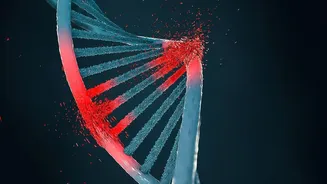
an advanced artificial intelligence system designed to predict the effects of genetic variations on human cells. Think of the genome as a vast biological blueprint. While every cell in your body contains the same blueprint, a heart cell reads different parts of it than a brain cell does. The AI’s breakthrough capability is its ability to predict how tiny changes in the DNA sequence—known as variants—impact the function of specific cell types. Trained on over 100 million individual cell profiles from dozens of tissues, the model helps scientists understand the cellular drivers of disease by linking genetic mutations to their real-world biological consequences.
A Major Leap From Previous Tools
This new model builds on the success of DeepMind's previous biological AI, including the revolutionary AlphaFold, which solved the 50-year-old 'protein folding problem'. While AlphaFold predicts the 3D structure of proteins, and its successor AlphaMissense classifies the disease potential of protein-changing mutations, AlphaGenome 2 goes a step further. It analyzes the entire regulatory system of the genome—the complex 'control panel' that tells genes when to switch on or off. According to DeepMind, this second-generation tool can identify nearly twice as many gene-expression-linked variants as its predecessor, giving researchers a far more powerful lens to find the needles in the genomic haystack.
From Genetic Code to Faster Cures
The practical implications for medicine are enormous. For years, scientists have used genome-wide association studies (GWAS) to link broad regions of DNA to diseases like heart disease or diabetes. However, these studies often only provide a rough location for the genetic culprit. AlphaGenome 2 can pinpoint the likely causal variants within these regions and identify which specific cell types are affected. This precision is critical for accelerating drug discovery. By accurately identifying the biological targets of a disease, researchers can design more effective treatments with greater speed and confidence, potentially shortening the path from lab discovery to clinical therapy. It also offers hope for understanding rare genetic disorders, where a single mutation can have devastating effects.
Making Complex Data Accessible
One of the biggest hurdles in genomics is the sheer volume of data. A single human genome contains billions of data points. To make its insights usable, DeepMind has created the AlphaGenome Atlas, a comprehensive and freely available catalog of predictions for every possible single-letter change in the human genome. The Atlas includes a simplified metric called the AlphaGenome Variant Impact (AVI) score, which helps researchers quickly prioritize which mutations to investigate further, without needing to be an AI expert. This accessibility aims to democratize AI-powered genetic research, putting powerful tools into the hands of more scientists globally.
Challenges and the Road Ahead
Despite its power, AlphaGenome 2 is a tool for research, not a clinical oracle. Its predictions must still be validated through laboratory experiments. Furthermore, like any AI, its outputs are based on the data it was trained on, which can have hidden biases. The 'explainability' of AI—understanding precisely how it reaches a conclusion—remains a challenge for the entire field. However, the launch marks a significant milestone. By combining AI with genomics, we are moving from simply reading the genome to truly understanding how it works. This deeper knowledge is fundamental to the future of personalized medicine and the development of next-generation therapies for humanity's most challenging diseases.