










The Gap Between Lab and Life
Product packaging is prime real estate for brands to grab your attention. They use powerful, scientific-sounding claims to convince you their product is effective and safe. The catch is that while these claims are often technically true, they are typically
born in a laboratory under perfect conditions that don't reflect your daily life. For instance, a household cleaner might boast that it “kills 99.9% of germs.” The lab test to prove this might require the product to be left on a surface for ten minutes. In reality, you probably spray and wipe within seconds. The claim isn't false, but it is achieved under conditions so specific that it becomes misleading in a real-world context.
Decoding Common Claims
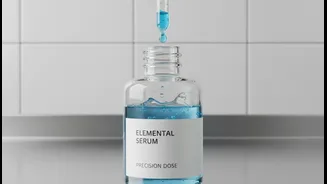
Certain phrases appear so often they become background noise. But understanding their narrow definitions is key to seeing past the hype. ‘Dermatologically Tested’: This simply means a product was tested on human skin under the supervision of a dermatologist to check for reactions like irritation. It does not mean the dermatologist endorsed the product or that it's guaranteed to be safe for everyone, especially those with sensitive skin. The testing methods can vary, and the claim doesn't speak to the product's effectiveness, only its basic safety in a controlled test. ‘Clinically Proven’ vs. ‘Clinically Tested’: These terms sound similar but have different weights. ‘Clinically tested’ suggests a product was evaluated in a clinical setting, but it doesn’t say anything about the results. The test could have shown the product did very little. ‘Clinically proven,’ on the other hand, implies the product demonstrated a positive effect in a trial. However, the term is not regulated by a single authority, so the quality of this 'proof' can vary wildly—from a small, company-funded study to a large, independent, peer-reviewed trial. Without seeing the data, the claim remains vague.
The Indian Regulatory Landscape
In India, the Advertising Standards Council of India (ASCI) and the Food Safety and Standards Authority of India (FSSAI) work to curb misleading advertisements and labels. FSSAI, for example, has recently increased its scrutiny on brands making health claims like 'natural', 'healthy', and 'no added sugar'. Similarly, ASCI has introduced guidelines to prevent 'greenwashing'—false environmental claims. These bodies often rely on consumer complaints to take action, and their regulations require claims to be substantiated. FSSAI's rules state that labels cannot be 'false, misleading or deceptive' and must reflect the 'true nature' of the food. However, the sheer volume of products makes it challenging to police every claim before it hits the shelves, placing the initial burden of scepticism on the consumer.
How to Be a Smarter Consumer
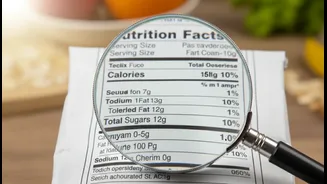
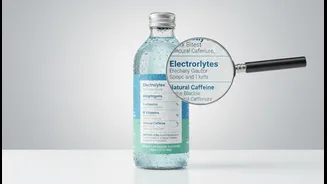
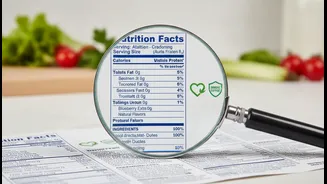
Navigating a world of clever marketing doesn't have to be overwhelming. The first step is to cultivate a healthy dose of scepticism. Turn the package over and ignore the splashy claims on the front. Read the ingredient list—it’s often more revealing than any marketing slogan. If a food product claims it has ‘no added sugar,’ check the ingredients for other sweeteners like sugarcane juice or fruit concentrates. For skincare, be wary of promises of dramatic, near-instant results. Meaningful biological changes in the skin take time, far longer than the typical 28-day studies some brands use to generate their claims. Finally, don't let a single claim be your deciding factor. Look for context, read the fine print, and prioritise what the product is made of over what it says it can do.