


The Sun's Turbulent Outbursts
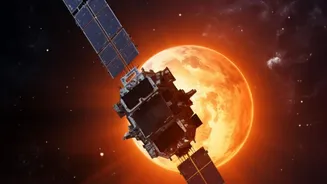
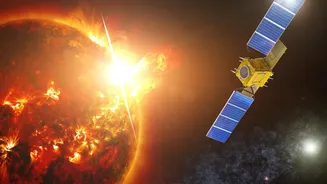
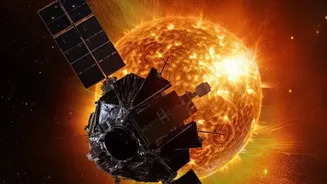
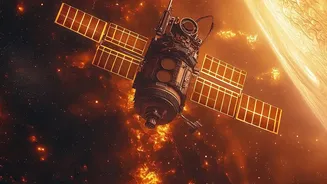
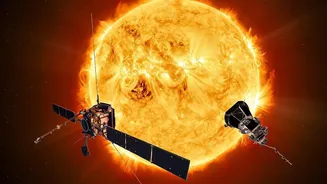
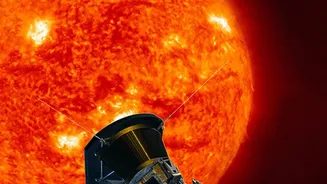
The Sun is not a constant, steady star. It has an 11-year cycle of activity, moving between quiet periods and stormy maximums. During active periods, it can unleash powerful solar flares and coronal mass ejections (CMEs). A solar flare is an intense burst
of radiation, while a CME is a massive bubble of plasma and magnetic field that erupts from the Sun’s outer atmosphere, the corona. When these events are directed at Earth, they can trigger significant space weather events, creating beautiful auroras but also posing a serious threat to our technology-dependent world.
From Solar Eruption to Atmospheric Swelling
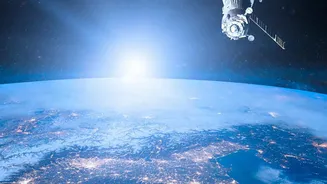
When the high-energy particles and radiation from a solar storm reach Earth, they interact with our planet's magnetic field and upper atmosphere. This massive injection of energy heats the thermosphere, the layer of the atmosphere that starts around 80 kilometres above the surface. This heating causes the thermosphere to expand outwards, much like how air in a balloon expands when heated. As a result, the density of the thin atmosphere at the altitudes where many satellites operate—known as low-Earth orbit (LEO)—can increase dramatically, sometimes by a factor of ten or more during a major storm.
The Invisible Force of Satellite Drag
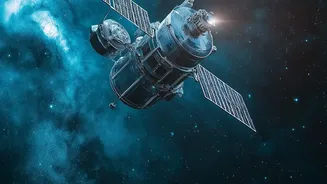
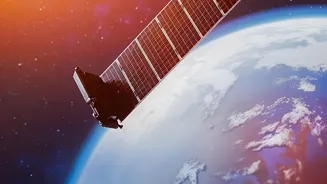
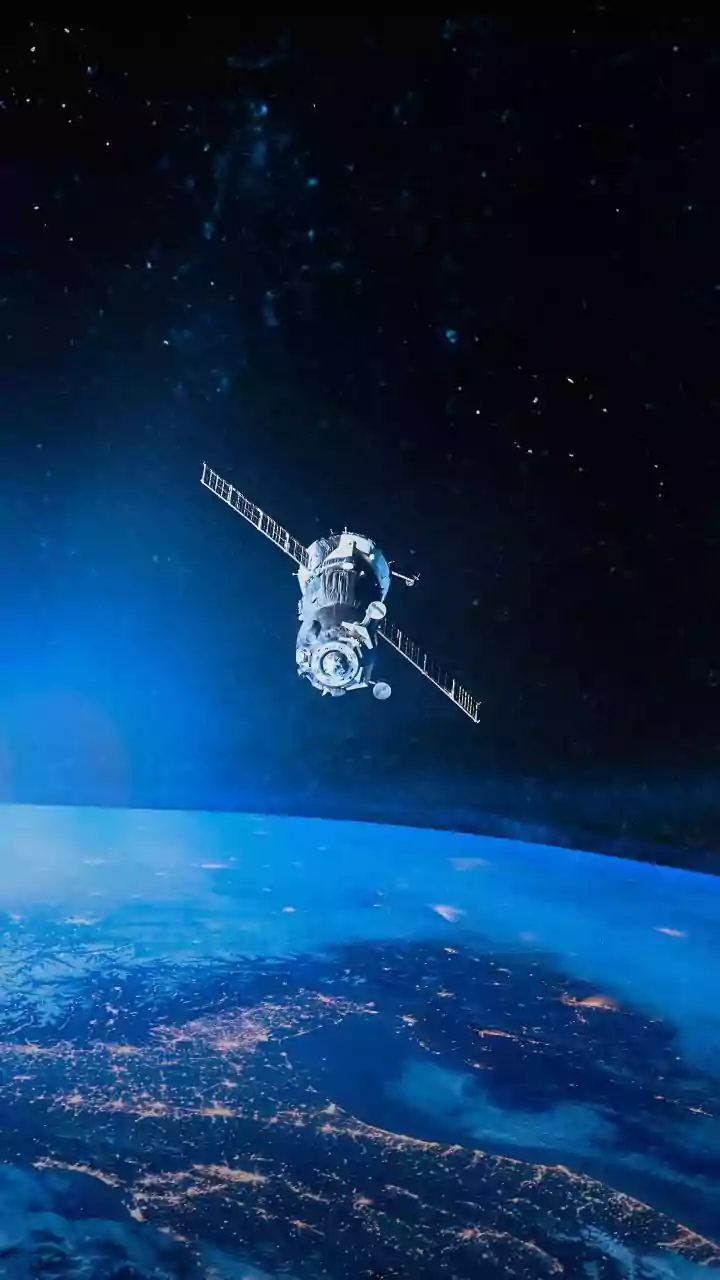
Although the atmosphere in LEO is incredibly thin, it still exerts a frictional force on satellites, known as atmospheric drag. This drag is the primary cause of orbital decay, the natural process where a satellite gradually loses altitude over time. When a solar storm causes the atmosphere to swell, the increased density means satellites encounter more air particles. This significantly enhances the drag force, causing them to slow down and lose altitude much faster than normal. A famous example occurred in February 2022, when a geomagnetic storm increased atmospheric drag by up to 50%, causing the premature re-entry of dozens of newly launched Starlink satellites.
Eyes on the Sky: Our Planetary Guard
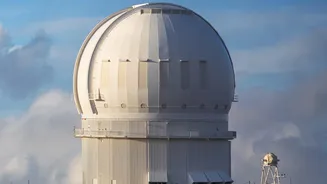
To protect our vital orbital infrastructure, a global network of space weather monitoring stations keeps a constant watch on the Sun. Agencies like the U.S. National Oceanic and Atmospheric Administration's (NOAA) Space Weather Prediction Center (SWPC) serve as official warning centers. They use a combination of space-based observatories like the GOES and DSCOVR satellites, along with ground-based instruments, to monitor solar activity in real-time. These systems provide crucial data on solar flares, CMEs, and the solar wind, allowing for forecasts and alerts to be issued to satellite operators, airlines, and power grid managers. In India, ISRO also contributes to space weather studies and is enhancing its capabilities with new facilities like the radar station in Assam to track orbital objects.
Taking Evasive Action in Orbit
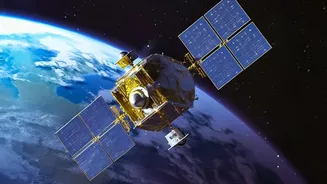
Armed with forecasts from monitoring stations, satellite operators can take proactive steps to protect their assets. When a significant geomagnetic storm is predicted, they can execute carefully planned maneuvers. This might involve firing onboard thrusters to boost the satellite's altitude, compensating for the anticipated orbital decay. Another strategy is to reorient the satellite to present a smaller cross-section to the direction of travel, reducing the effect of drag, a technique known as going into "safe mode." In some cases, sensitive electronics may be temporarily powered down to protect them from damaging charged particles. These maneuvers are essential for extending the operational lifespan of satellites, preventing premature re-entry, and avoiding potential collisions in an increasingly crowded orbital environment.