



A High-Stakes Spacewalk
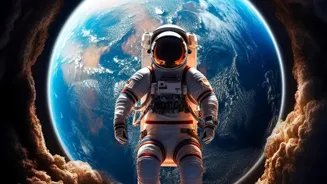
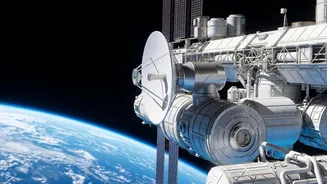
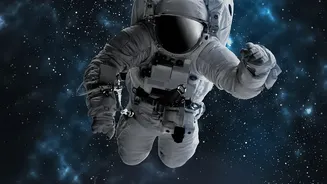
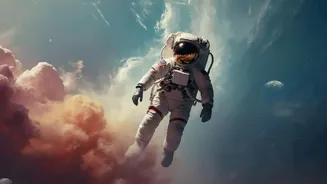
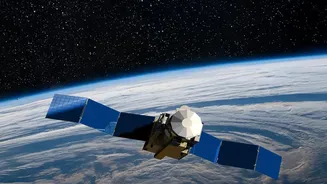
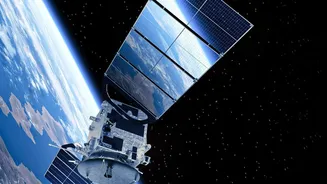
Working against the breathtaking backdrop of our planet, NASA's Anil Menon and the European Space Agency's (ESA) Sophie Adenot spent over six hours outside the International Space Station (ISS). Their mission was to install a new high-speed antenna, a critical
upgrade for the station's communication systems. Spacewalks, or Extravehicular Activities (EVAs), are among the most physically and mentally demanding tasks an astronaut can undertake. Encased in bulky suits, they work with precision in a vacuum, tethered to the station as it orbits Earth at 28,000 kilometres per hour. This particular EVA was crucial for ensuring the ISS can continue to send large volumes of scientific data back to Earth efficiently, supporting countless experiments.
Anil Menon: A Journey from Medicine to the Stars
For Colonel Anil Menon, a US Space Force officer, this mission marks a career pinnacle. Born in Minneapolis to an Indian father from Kerala and a Ukrainian mother, his journey is a powerful story of multidisciplinary excellence. With degrees in neurobiology and mechanical engineering, followed by a medical degree, Menon has always operated at the intersection of health and technology. Before being selected for NASA's 2021 astronaut class, he was SpaceX's first flight surgeon, helping to launch the company's inaugural human spaceflight mission. He has also served as a first responder in disasters in Haiti and Nepal, showcasing a commitment to service that now extends to the frontiers of space. His Indian heritage, tracing back to Palakkad, has made him a celebrated figure, following in the footsteps of astronauts like Kalpana Chawla and Sunita Williams.
Sophie Adenot: A Trailblazing Pilot and Engineer
Working alongside Menon was ESA's Sophie Adenot, an equally accomplished trailblazer. A colonel in the French Air and Space Force, she became France's first female helicopter test pilot, a highly specialised and demanding field. With an engineering degree and a master's from MIT, her expertise lies in flight dynamics and human-machine interaction. Selected as an ESA astronaut in 2022, Adenot brought over 3,000 hours of flight experience on 22 different types of helicopters to her new role. Her background as a test pilot, where every flight pushes the boundaries of an aircraft's capabilities, provides the perfect skill set for the high-stakes environment of a spacewalk. Her fluency in multiple languages, including Russian, is also a vital asset for communication and collaboration aboard the multinational ISS.
A Symbol of Global Collaboration
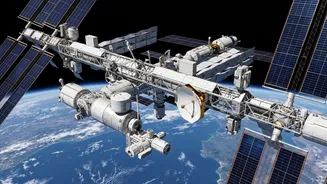
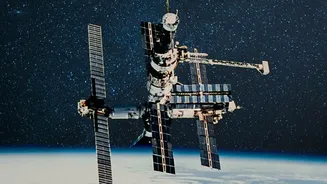
The sight of a NASA astronaut of Indian descent working seamlessly with a French ESA astronaut is a potent symbol of what the ISS represents. Launched in 1998, the station is a joint project between the space agencies of the United States, Russia, Europe, Japan, and Canada. It stands as one of the most ambitious and successful international collaborations ever attempted. In an era of global challenges, the ISS operates as a hub of peaceful cooperation, with astronauts from different nations living and working together for shared scientific goals. This mission, performed by Menon and Adenot, not only ensures the station's operational future but also reinforces the idea that space exploration is a venture that unites humanity.