





The Luxury of Time
Unlike a two-to-three-hour film, a long-form web series offers a sprawling canvas. Writers are no longer forced to compress a character's entire life into a few key scenes. Instead, they have hours, spread across multiple episodes and seasons, to build
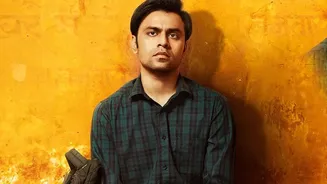
layered personalities. This extended runtime allows for gradual evolution, where a character's beliefs, motivations, and flaws can be explored with patience and nuance. Think of Hathiram Chaudhary in 'Paatal Lok'. We first meet him as a cynical, washed-out cop, bogged down by failure. Across nine episodes, we witness his transformation, not through a single dramatic event, but through a slow, gruelling investigation that forces him to confront his own cynicism. This journey from meek officer to a risk-taker would feel rushed and unearned in a film, but the series format gives his arc the breathing room it needs to feel authentic.
Freedom From Old Formulas
Traditional broadcast television and mainstream cinema often operated within strict creative and commercial boundaries. Stories were designed for mass appeal, which favoured clear-cut heroes and villains. Streaming, by contrast, caters to niche audiences. This frees creators from the pressure to make characters universally likable. As a result, protagonists can be deeply flawed, and antagonists can be disturbingly relatable. 'The Family Man's' Srikant Tiwari, for instance, is a brilliant intelligence officer who is also a terrible husband and a neglectful father. He is a hero who is often hard to root for. Similarly, Ganesh Gaitonde of 'Sacred Games' is not a simple villain; the show dedicates significant time to his backstory, forcing the audience to understand, if not sympathise with, the monster he becomes. This moral ambiguity makes the characters far more compelling and realistic than their binary counterparts in older media.
A New Wave of Realism
The shift to streaming has also allowed for a grittier, more honest portrayal of life. Characters can now exist in worlds that feel grounded and authentic, complete with the complexities of caste, class, gender, and politics. Female characters, in particular, have broken free from being mere love interests or decorative elements. In shows like 'Made in Heaven', Tara Khanna is a complex woman driven by ambition and a past she's desperate to escape. In 'Delhi Crime', Vartika Chaturvedi is a determined police officer defined by her competence, not her relationships with men. Even supporting characters in shows like 'Sacred Games' and 'Mirzapur' are given memorable arcs, moving beyond stereotypes to become figures with their own desires and histories. This focus on realism and representation has created a richer, more diverse fictional universe.
The Rise of the Anti-Hero
Perhaps the most significant development has been the rise of the Indian anti-hero. Streaming platforms have become the home for characters who operate in shades of grey. These are not noble saviours but complicated individuals driven by a mix of good intentions and questionable methods. Kaleen Bhaiya in 'Mirzapur' rules his empire with quiet, terrifying authority, while his son Munna is a volatile mix of insecurity and brute force. Both are villains, but the series ensures we understand the dynastic and psychological pressures that shaped them. In 'Scam 1992: The Harshad Mehta Story', the protagonist's ambition is both his greatest strength and his fatal flaw. The narrative doesn't just celebrate his success; it dissects his hubris. These characters challenge the audience's moral compass, forcing viewers to engage with the story on a much deeper level than ever before.