






Ghee is a cornerstone of Indian cuisine and wellness, but the choice between cow and buffalo ghee can be confusing. Each has unique properties, and the right one for you depends entirely on your health goals and culinary needs.
The Visual and Textural Divide
The most immediate difference
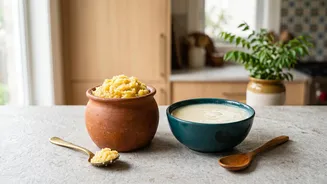
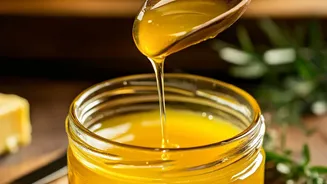
between the two is their appearance and feel. Cow ghee has a distinct golden-yellow colour, which comes from the beta-carotene found in cow's milk. It tends to have a lighter, often grainier (or 'danedar') texture. In contrast, buffalo ghee is typically creamy white. This is because buffalo milk has little to no beta-carotene. Buffalo ghee is also denser and has a thicker, creamier consistency.
A Nutritional Deep Dive
Nutritionally, both types of ghee are primarily fat, but the composition varies. Buffalo ghee generally has a higher fat content and more calories, making it a source of instant energy. It's also rich in minerals like calcium, magnesium, and phosphorus. Cow ghee, on the other hand, is slightly lower in fat and calories. Its claim to fame is a higher concentration of vitamins, particularly Vitamin A, thanks to the beta-carotene content. For those watching their intake, cow ghee is often considered the lighter option.
Digestion and the Ayurvedic View
According to Ayurveda, the two ghees serve different purposes. Cow ghee is considered 'Sattvic', meaning it is believed to promote purity, calmness, and good health. It is considered lighter and easier to digest, making it a preferred choice for children, the elderly, and those with sensitive digestive systems. Buffalo ghee is categorised as 'Tamasic', which means it is heavier and more grounding. It's traditionally recommended for individuals engaged in intense physical labour or those looking to gain weight, as it is more energy-dense.
Performance in the Kitchen
Your cooking style can help you decide which ghee to use. Buffalo ghee often has a slightly higher smoke point, making it excellent for high heat cooking like deep frying. Its rich, creamy flavour is perfect for making traditional sweets like halwa and ladoos, where it adds a distinct richness. Cow ghee has a milder, nuttier flavour that complements everyday dishes without overpowering them. It is ideal for smearing on rotis, drizzling over dal and rice, and for general sautéing or preparing tadka.
Shelf Life and Storage
Due to its higher fat content, buffalo ghee generally boasts a longer shelf life than cow ghee. The lower amount of moisture helps preserve it for longer periods without refrigeration. While both are stable pantry items, buffalo ghee's composition gives it a slight edge in longevity, making it a practical choice if you use ghee less frequently.