



The Spirit of Sharad Navratri
More than just a festival, Sharad Navratri is a celebration of divine feminine energy, or Shakti. It commemorates the victory of Goddess Durga over the demon Mahishasura, a powerful story symbolizing the triumph of good over evil. For nine nights, devotees
worship the nine distinct forms of the goddess, known as the Navadurga. This period, which starts on the first day of the lunar month of Ashwin, is marked by fasting, prayer, and community gatherings, all leading up to the grand finale of Vijayadashami (Dussehra) on October 20.
Day 1 (Oct 11): Orange for Energy
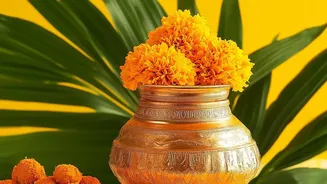
The festival begins with the Pratipada tithi and the important Ghatasthapana ritual, which is the ceremonial installation of a sacred pot. The first day honours Maa Shailaputri. The colour for this day is Orange, representing enthusiasm, warmth, and positive energy as the celebrations kick off. Many devotees wear this vibrant shade to mark the start of the nine holy nights.
Day 2 (Oct 12): White for Purity
On the second day, devotees worship Maa Brahmacharini, who symbolizes penance and devotion. The corresponding colour is White, which stands for peace, purity, and simplicity. It’s a day for serene reflection, and incorporating white into your attire or home décor can evoke a sense of calm and piety.
Day 3 (Oct 13): Red for Power
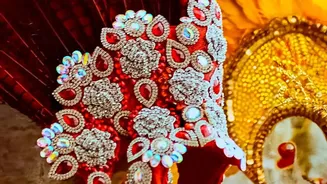
Maa Chandraghanta, representing courage and grace, is worshipped on the third day. The colour of the day is Red, a powerful shade associated with passion, strength, and the fierce protective nature of the goddess. Donning red is a popular way to honour Maa Durga’s warrior aspect.
Day 4 (Oct 14): Royal Blue for Health
Wednesday is dedicated to Maa Kushmanda, believed to be the creator of the universe. The colour Royal Blue is worn on this day, symbolizing good health, prosperity, and strength. This deep, rich hue adds a touch of elegance and divinity to the festive wardrobe.
Day 5 (Oct 15): Yellow for Happiness
The fifth day honours Maa Skandamata, the mother of Lord Kartikeya. Yellow, the colour of the day, is associated with brightness, happiness, and new beginnings. It’s a cheerful and optimistic shade that perfectly captures the festive spirit midway through Navratri.
Day 6 (Oct 16): Green for Growth
Maa Katyayani is the focus of worship on the sixth day. The colour Green is chosen for this day, representing growth, harmony, and nature's renewal. It’s a nod to new beginnings and fertility, bringing a sense of balance and life to the celebrations.
Day 7 (Oct 17): Grey for Balance
On Saptami, the formidable Maa Kalaratri is worshipped. The colour for the day is Grey, which signifies balance, groundedness, and the strength to transform. While seemingly understated, this colour represents the power to overcome negativity and protect devotees from harm.
Day 8 (Oct 18): Purple for Wisdom
The eighth day, or Durga Ashtami, is one of the most significant days of Navratri. Maa Mahagauri, who symbolizes peace and wisdom, is worshipped. The colour of the day is Purple, representing spiritual wisdom, nobility, and ambition.
Day 9 (Oct 19): Peacock Green for Individuality
The final day of worship, Maha Navami, is dedicated to Maa Siddhidatri, the giver of all boons and perfections (siddhis). The unique colour Peacock Green is celebrated on this day, symbolizing individuality, beauty, and freshness as the nine nights of devotion conclude.
Bringing the Festive Spirit Home
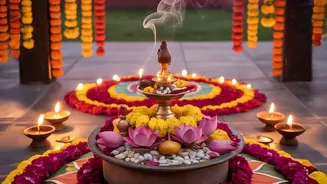
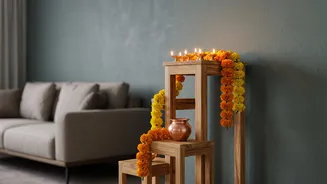
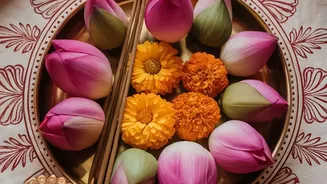
Beyond personal attire, these nine colours find their way into home décor. Many families create a dedicated space for worship, often starting with the Ghatasthapana. You can decorate this area with flowers and fabrics matching the colour of the day. Traditional decorations like earthen diyas, vibrant rangoli patterns at the entrance, and torans (door hangings) made of mango leaves and marigolds instantly elevate the festive atmosphere. The goal is to create a welcoming, sacred space that invites the blessings of the goddess into your home.