






A New Eye on the Cosmos
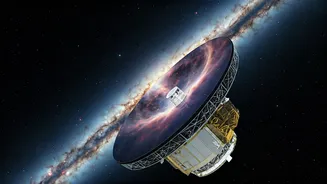
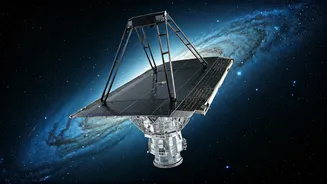
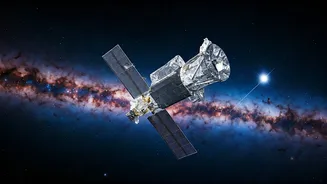
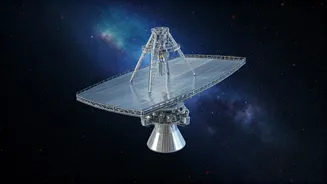
NASA's next great observatory is the Nancy Grace Roman Space Telescope, an infrared powerhouse set to launch as early as August 30, 2026. [1, 3, 11] Named after the agency's first chief of astronomy, Roman shares a mirror size with the Hubble Space Telescope but
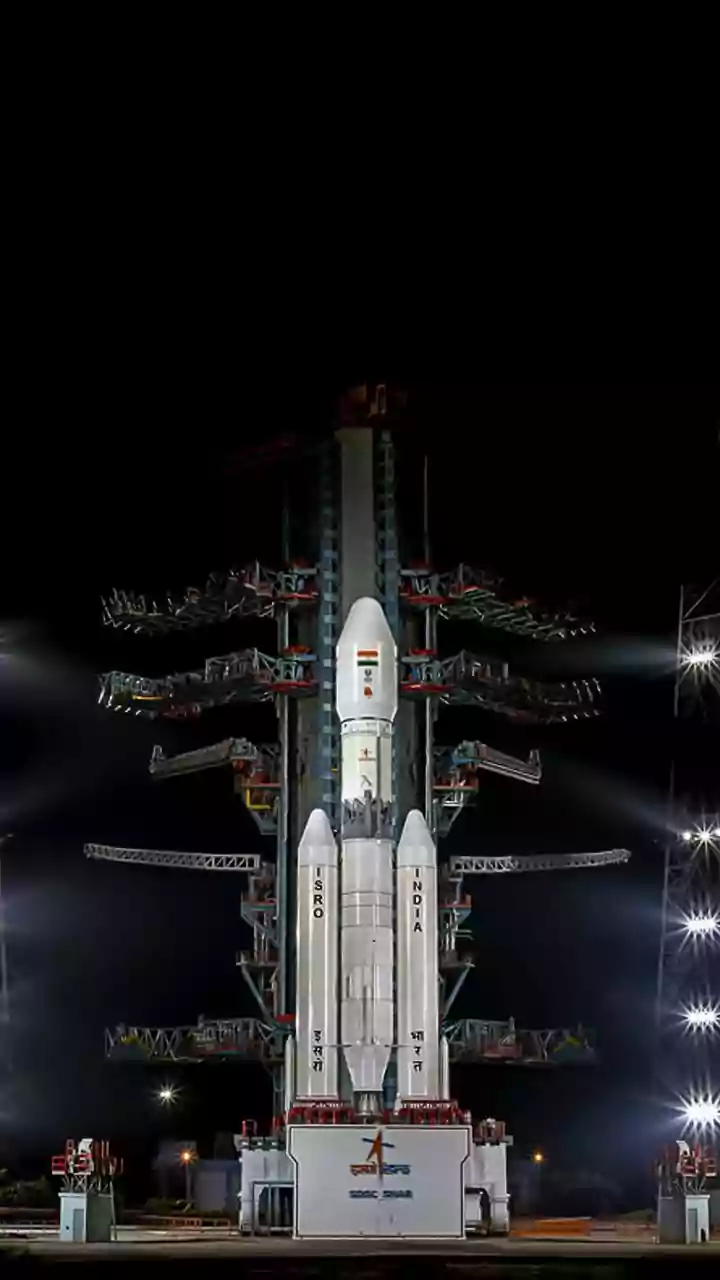
boasts a field of view 100 to 200 times larger. [2, 6] This vast, panoramic perspective will allow it to map huge swaths of the sky with incredible speed and detail, fundamentally changing how we conduct cosmic surveys. [20] While it has broad scientific goals, including the study of dark energy, its impact on the search for exoplanets—planets outside our solar system—is expected to be revolutionary. [1, 4] The telescope recently arrived at Kennedy Space Center for final launch preparations, putting it months ahead of its official schedule. [11]
The Hunt for Hidden Worlds
Roman's primary planet-hunting tool is a technique called gravitational microlensing. [9] This method takes advantage of a phenomenon predicted by Einstein, where a massive object (like a star and its planets) bends and magnifies the light of a more distant star that passes directly behind it from our point of view. [10, 16] This temporary brightening signals the presence of the foreground system. [9] While ground-based telescopes have struggled with this technique due to Earth's hazy atmosphere, Roman's stable perch in space will allow it to monitor hundreds of millions of stars toward the galaxy's center. [9, 13] Microlensing is uniquely suited to finding planets that are difficult to spot with other methods, such as those in wide orbits far from their star—analogs to our own ice giants—and even "rogue planets" that wander the galaxy without a host star. [9, 10] This will allow astronomers to conduct the first true census of planetary systems across the galaxy, filling in major gaps in our knowledge. [18, 20]
Seeing Is Believing: A New Era of Direct Imaging
In addition to finding planets indirectly, Roman carries a groundbreaking technology demonstration called the Coronagraph Instrument. [5, 8] A coronagraph works by blocking the overwhelming glare of a star, much like using your hand to block the sun to see something next to it. [15] This allows the faint light reflected by an orbiting planet to be seen directly. The Roman Coronagraph is designed to be 100 to 1,000 times more powerful than previous space-based versions, using a complex system of masks and self-flexing mirrors to achieve unprecedented contrast. [5, 17] It will be the first active coronagraph flown in space, meaning it can respond in real-time to tiny shifts that would otherwise obscure a planet's light. [5] While a technology demonstrator, it's expected to directly image Jupiter-sized planets, paving the way for future missions like the Habitable Worlds Observatory that will aim to take pictures of Earth-like planets. [5, 15]
A Statistical Powerhouse
While microlensing is its main event, Roman's constant monitoring of stars will also allow it to detect planets using the traditional transit method, where a planet causes a small dip in its star's light as it crosses in front. [10] Astronomers anticipate that Roman could find as many as 100,000 transiting planets this way, creating a massive dataset for understanding planetary demographics. [10] By combining the transit method (best for finding planets close to their star) with microlensing (best for finding planets far from their star), Roman will provide the most complete statistical survey of exoplanets ever attempted. [10, 18] It will help answer fundamental questions: How common are solar systems like our own? What kinds of planets exist in the cold outer regions of a system? [1] The mission is expected to deliver a comprehensive census of worlds, from Earth-sized planets to gas giants, fundamentally shaping our understanding of planet formation across the galaxy. [20, 21]