



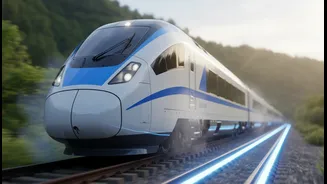


India's Green Milestone on Rails
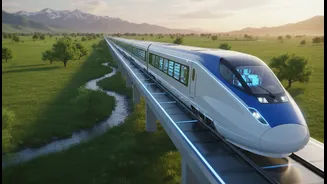
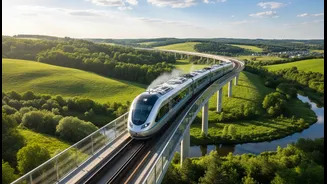
India is set to inaugurate its first-ever hydrogen-powered train, with Prime Minister Narendra Modi expected to flag off the service from Jind, Haryana, on July 17. Following extensive trials, this indigenously developed train is scheduled to begin commercial
operations on the 89-kilometre Jind-Sonipat route. Comprising ten coaches, including two power cars, the train will make two daily round trips, covering a distance of 356 kilometres. The approval from the Railway Board permits an operational speed of 75 kmph on this section, though the train is designed for higher speeds. This launch places India in an elite group of nations like Germany and China that are actively deploying hydrogen technology in their rail networks. It's a landmark moment for the country's 'Make in India' initiative and its ambitious goal of achieving net-zero emissions.
How Does a Hydrogen Train Work?
At its core, a hydrogen train is an electric train that generates its own power onboard. Instead of drawing electricity from overhead lines or burning diesel, it uses hydrogen fuel cells. Inside these cells, a chemical reaction between stored hydrogen and oxygen from the air produces electricity. This electricity then powers the motors that turn the train's wheels. The only byproduct of this process is water vapour, making it a zero-emission mode of transport at the point of use. The new Indian train is a retrofitted Diesel Electric Multiple Unit (DEMU), equipped with fuel cells from Ballard Power Systems and integrated by Medha Servo Drives. It also features batteries to store surplus energy, which can provide extra power during acceleration or while climbing gradients.
A Vision for a Cleaner Network
The Jind-Sonipat pilot is the cornerstone of a much larger vision for Indian Railways. It is a critical part of the "Hydrogen for Heritage" initiative, which aims to replace diesel locomotives on scenic and ecologically sensitive heritage routes. Indian Railways has plans to introduce 35 hydrogen trains across several hill and heritage circuits, including the Kalka-Shimla and Darjeeling Himalayan Railway lines. The broader objective is to decarbonize the rail network and significantly reduce its dependency on diesel fuel, which currently powers about 37% of the locomotive fleet. While 100% electrification remains a primary goal, hydrogen offers a viable and clean alternative for routes where electrification is technically challenging or economically unfeasible, such as in hilly terrains.
The Hurdles on the Track
Despite the promise, the journey towards a hydrogen-powered rail network is filled with challenges. The most significant hurdle is the high initial cost. The estimated cost for each train is around ₹80 crore, with an additional ₹70 crore needed for ground infrastructure per route. To support the first train, a dedicated hydrogen production and refuelling facility has been established in Jind. Another major challenge is the cost and scale of producing 'green' hydrogen—hydrogen created using renewable energy. Currently, green hydrogen production in India is at a nascent stage, making the fuel expensive. Furthermore, ensuring the safe storage and handling of highly flammable hydrogen requires robust infrastructure and stringent safety protocols, all of which add to the complexity and cost of the transition.