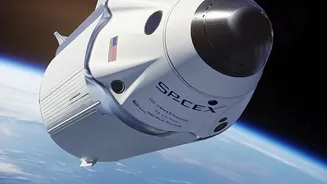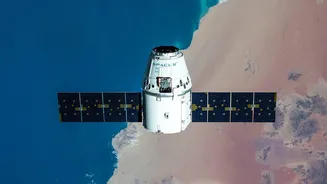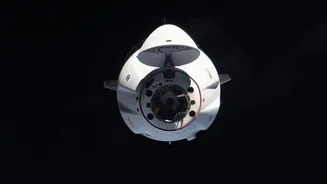




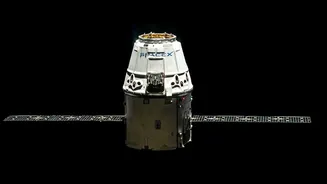
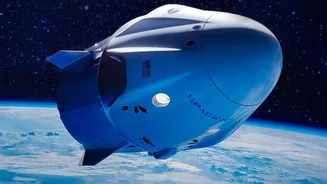
A crucial delivery service for the International Space Station just made its return trip. A SpaceX Dragon capsule splashed down on November 21, but the real value is what was inside: a precious cargo of scientific experiments ready for analysis.
A Successful Splashdown
After
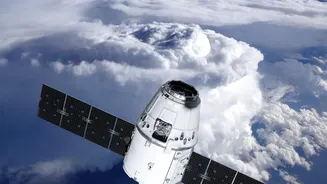
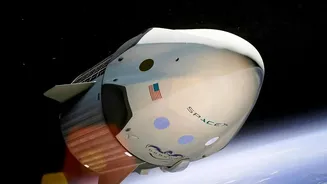
undocking from the International Space Station (ISS) on November 20, the uncrewed SpaceX Dragon spacecraft spent just over a day making its fiery descent through Earth's atmosphere. On November 21, it successfully splashed down in the Pacific Ocean off the coast of California. Recovery teams were immediately on site to hoist the capsule from the water, beginning a race against time to deliver its contents to scientists. This mission, known as CRS-35, marked the 35th time SpaceX has completed a commercial resupply services flight for NASA, a partnership that keeps the orbiting laboratory stocked and productive. While sending supplies up is vital, the Dragon's ability to return cargo intact is what makes it a game-changer for space-based research.
More Than a Delivery Service
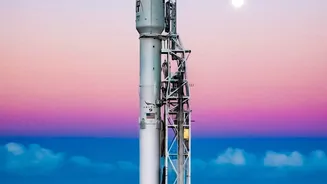
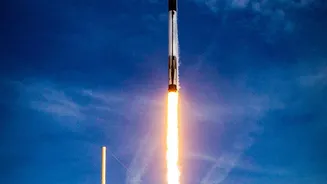
The CRS missions are the backbone of the ISS's function as a world-class science platform. Launched on October 13 from Cape Canaveral, the CRS-35 mission carried over 2,800 kilograms of supplies, hardware, and new experiments to the station. But its return journey is arguably more critical. The Dragon is currently the only cargo vehicle capable of bringing a significant volume of research samples and equipment back to Earth. Other cargo craft, like Northrop Grumman's Cygnus and Russia's Progress, are designed to burn up upon reentry, serving as orbital trash disposal. The reusable Dragon, however, acts as a round-trip courier, allowing scientists to get their hands on experiments conducted in the unique microgravity environment.
The Priceless Cargo Onboard
The real treasures aboard the returned capsule are the scientific samples, which promise to advance human health both on Earth and in space. Among the key experiments are frozen tumor organoids that were treated with cancer therapies while in orbit. By studying how cancer cells grow and react to treatment without the influence of gravity, researchers hope to develop more effective and personalized medical care. Another groundbreaking experiment involved a 3D-bioprinted blood vessel construct, created to study cardiovascular disease and the aging process. Observing these tissues in space helps scientists understand biological changes that affect everyone, providing insights that are difficult to obtain on Earth.
From Microbes to Mental Wellbeing
Beyond the organoids and bioprinted tissues, the Dragon carried a diverse range of other important research. This included frozen microbial samples to analyze how antibiotic-resistant bacteria adapt and survive in space, a critical area of study for protecting astronauts on long-duration missions to the Moon and Mars. Understanding these 'superbugs' in space could also offer valuable data for combating antibiotic resistance on Earth. Additionally, a specialized lighting system that was tested on the station for over three years returned for evaluation. The system was designed to see if tailored lighting can improve astronaut sleep cycles and overall well-being, a key factor for maintaining crew health and performance on extended flights.
What Happens Next?
With the capsule safely recovered, the clock is ticking. The most time-sensitive scientific samples are quickly transported via helicopter and plane to research facilities, including NASA's Kennedy Space Center. There, scientists will begin the detailed work of analyzing the returned experiments, comparing them with ground-based control groups to isolate the effects of the space environment. The data gathered from the CRS-35 mission will not only lead to potential breakthroughs in medicine and technology but will also inform how NASA can better protect its astronauts as it pushes the boundaries of human exploration further into the solar system. The mission is a clear demonstration of how commercial partnerships are accelerating science, turning the ISS into a bustling hub of discovery.