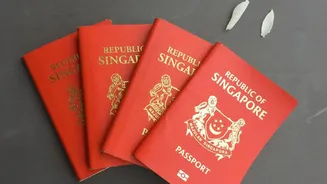






On paper, Singapore holds the ultimate travel document, offering unmatched mobility. Yet, a major 2026 global index places the nation tenth overall. This apparent contradiction reveals a deeper story about what makes a passport truly 'powerful'.
More Than Just Travel
The headline
refers to the 2026 Global Passport Index, an annual ranking from advisory firm Global Citizen Solutions that assesses the strength of 197 countries' passports. Unlike the well-known Henley Passport Index, which focuses solely on visa-free travel access, this index takes a more holistic view. It evaluates passports on three distinct pillars: Mobility, Investment opportunities, and Quality of Life. This comprehensive approach means that while a passport might open many doors, the overall value of the citizenship it represents depends on much more than just crossing borders.
Unbeaten in Mobility and Investment
Singapore's passport is a global titan in two of the three categories. It received a perfect score for Mobility, reflecting its citizens' ability to travel the world with unparalleled ease. This is the metric where Singapore consistently tops rankings like the Henley Passport Index, which confirms its passport provides visa-free or visa-on-arrival access to more destinations than any other, including 192 countries as of July 2026. Furthermore, the Global Passport Index also ranked Singapore first in the Investment pillar. This score is driven by the nation's attractive tax environment, high income per capita, and thriving market opportunities, making it the most appealing passport for those seeking economic pull.
The Quality of Life Factor
The factor that pulled Singapore down to tenth place overall is the third pillar: Quality of Life. This category assesses a wide range of metrics that affect daily life for citizens, including healthcare, safety, social infrastructure, and importantly, cost of living. While Singapore scores well on many aspects like sustainable development and environmental performance, its overall Quality of Life ranking is surprisingly low for a top-tier nation, landing around 115th out of 199 countries in that specific pillar. This single element was significant enough to counterbalance its perfect scores in mobility and investment.
A Tale of Two Costs
The primary drag on Singapore's Quality of Life score is its notoriously high cost of living, with housing being a major component. According to data from Singapore's Housing and Development Board for early 2026, the median price for a standard four-room resale flat reached S$628,000, illustrating the financial pressures on residents. Another factor cited by the index is a comparatively low score for migrant acceptance, which also contributes to the quality-of-life calculation. This demonstrates that even a country with a world-beating economy and travel freedom can face domestic challenges that impact its global standing in a holistic ranking.
A European-Dominated Top Tier
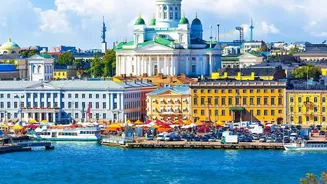
Singapore's tenth-place finish makes it the only non-European country in the index's top tier. The 2026 list is led by Sweden, Switzerland, and Finland, nations that may not lead in mobility but achieve consistently high scores across all three pillars of mobility, investment, and quality of life. For instance, Sweden, the overall winner for three consecutive years, ranks 14th on mobility but excels with a 2nd place rank in quality of life and 9th in investment climate. This balance is what defines the index's vision of the world's strongest and most durable passports.