


The Foundation: More Than Just Standing on One Foot
Before you can grow branches, you need strong roots. In yoga, basic one-legged balancing poses are the roots for more complex postures like Tree Pose. This practice is about much more than just lifting a foot; it’s a powerful tool for developing proprioception—your
body's awareness of its position in space. When you stand on one leg, your body makes constant, tiny adjustments. The muscles in your standing foot, ankle, and leg, particularly stabilizers like the gluteus medius, fire continuously to keep you upright. This not only builds physical strength but also forges a stronger connection between your mind and body, enhancing focus and coordination that are essential for all aspects of life, not just yoga.
Start Simple: How to Practice Basic Balance
Begin in Mountain Pose (Tadasana), standing tall with your feet together or hip-width apart. Ground yourself by pressing evenly through all four corners of your feet. Shift your weight onto your left foot and feel it connect firmly with the floor. Engage your core and gently lift your right foot just a few inches off the ground. Your hands can be on your hips or in a prayer position at your chest. The goal is to stand tall without leaning. If you feel unsteady, stand next to a wall and use it for light support. Hold for 20-30 seconds, breathing steadily, then slowly lower your foot and repeat on the other side. Consistency is key; even a few minutes of this practice daily builds the muscular endurance and stability needed for more advanced poses.
From a Stand to a Tree: Making the Connection
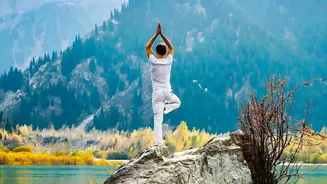
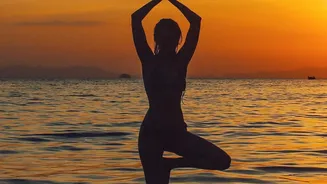
Once you feel more confident in your one-legged stand, you are ready to transition into Tree Pose (Vrksasana). The stability you have cultivated is the direct platform for this pose. All the principles remain the same: a strong standing leg, an engaged core, and a steady gaze. From your one-legged balance, bend your lifted knee and place the sole of your foot on the inside of your standing leg. The key is to find a position that feels stable for you, whether it is at the ankle, the calf, or the inner thigh. A crucial safety rule is to never place your foot directly on your knee joint, as this can put unsafe pressure on it. Press your foot into your leg and your leg back into your foot to create a stable, active connection.
Branching Out: Exploring Tree Pose Variations
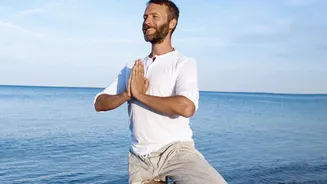
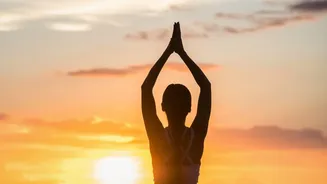
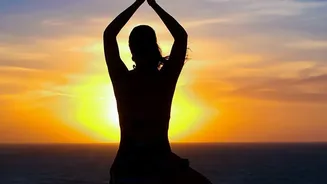
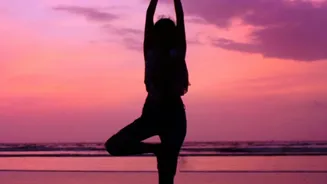
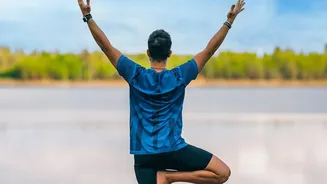
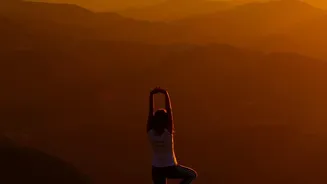
Tree Pose is not a single, static posture; it has many variations that can deepen your practice. For beginners, keeping the hands at the heart in a prayer position (Anjali Mudra) helps centralize your balance. To challenge yourself, extend your arms overhead like tree branches, which raises your center of gravity and demands more core control. For an added stability challenge, try a 'Windy Tree' by gently swaying your arms while keeping your lower body still. Another variation involves a gentle upper-body twist, which requires your core to work harder to maintain balance over your standing leg. Each variation offers a new way to explore your stability.
The Mental Game: Drishti and Breath
Balance in yoga is as much a mental exercise as it is a physical one. A key technique for maintaining stability is the 'drishti', a Sanskrit term for a focused gaze. By fixing your eyes on a single, unmoving point in front of you, you give your mind an anchor, which helps quiet internal chatter and steady the body. If your eyes wander, your body is likely to follow. Equally important is your breath. When concentrating, it is common to hold your breath, but this creates tension and works against your balance. A smooth, even breath calms the nervous system and supports a state of focused relaxation, allowing you to hold the pose with greater ease and presence.
Common Hurdles and Simple Fixes
Even with practice, certain challenges are common. One is letting the hip of the standing leg jut out to the side, which destabilizes your foundation. To correct this, actively engage your glute and 'hug' your outer hip in toward your body's midline. Another is locking the knee of the standing leg; always keep a micro-bend in the knee to protect the joint and keep the leg muscles active. If you find yourself wobbling, remember that it's part of the process. Instead of getting frustrated, simply lower your foot, re-ground yourself, and try again. The goal is not perfect stillness, but the mindful practice of finding your center again and again.