





The Nutritional Power of Hummus
At its core, traditional hummus is a simple blend of chickpeas, tahini (sesame paste), olive oil, and lemon juice. This combination is more than just delicious; it's a treasure trove of nutrients. Chickpeas, the star ingredient, are packed with plant-based
protein and dietary fiber. Protein is essential for building and repairing tissues, while fiber aids digestion and helps you feel full and satisfied for longer, which can support weight management. A few tablespoons of hummus can contribute significantly to your daily fiber intake. The nutrients in hummus may also help support blood sugar management and heart health.
A Blend of Healthy Ingredients
Beyond chickpeas, the other components of hummus add their own health benefits. Tahini is a good source of healthy monounsaturated fats and minerals like copper and selenium. Extra virgin olive oil is celebrated for its heart-healthy fats and powerful antioxidants, which have anti-inflammatory properties. Lemon juice provides a boost of vitamin C, and together, these ingredients create a food that is naturally free of common allergens like dairy, gluten, and nuts. This powerful mix of ingredients delivers a range of vitamins and minerals, including iron, folate, and manganese, which can be particularly beneficial for those on plant-based diets.
Choose Your Pita Wisely
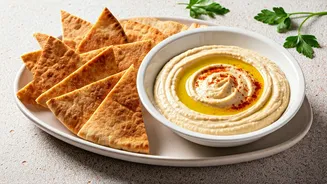
Pita bread is the perfect vehicle for scooping up creamy hummus, but not all pitas are created equal. To maximize the health benefits of this pairing, opt for whole wheat pita. Whole wheat versions contain significantly more fiber than those made with refined white flour—often three to four times as much. This extra fiber helps slow digestion, promotes a healthy gut, and can help stabilize blood sugar levels. Whole wheat pitas also tend to have slightly more protein and a richer profile of vitamins and minerals like iron and magnesium compared to their white-flour counterparts. Always check the ingredient list to ensure you're getting 100% whole grains without a lot of added sugar or preservatives.
A Complete and Satisfying Combination
When eaten together, hummus and pita create a surprisingly complete nutritional package. While chickpeas themselves are not a complete protein (meaning they don't contain all nine essential amino acids), the grains in pita bread provide the missing ones. This makes hummus and pita a source of complete protein, similar to what you'd find in meat or dairy. This combination of fiber, complex carbohydrates from the whole wheat pita, and protein and healthy fats from the hummus works together to keep you feeling fuller for longer. This makes it an excellent choice for a satisfying snack that prevents overeating or as a light, yet sustaining, meal.
More Than Just a Dip
While dipping warm pita into a bowl of hummus is a classic, don't let your creativity stop there. Hummus is incredibly versatile. Use it as a nutrient-rich spread on sandwiches and wraps instead of mayonnaise. A dollop of hummus can also be thinned with a little water, vinegar, or lemon juice to create a creamy, flavorful salad dressing. In many Middle Eastern cultures, hummus is served as a main course, forming the base of a meal in a 'hummus bowl'. You can top a generous spread of hummus with roasted vegetables, a hard-boiled egg, or spiced meats for a quick, balanced, and delicious dinner.