




After a long day, your body is tired but your mind is still racing. Instead of collapsing onto the sofa, try creating a simple ritual to signal that the workday is truly over. A short, gentle yoga sequence can be the perfect transition.
1. Child's Pose (Balasana)
This quintessential
resting pose is a perfect start to any wind-down routine. It provides a sense of safety and grounding, allowing you to turn your focus inward. Child's Pose gently stretches the lower back, hips, and thighs, areas that often hold tension after hours of sitting. By resting your forehead on the mat, you create a calming effect on the nervous system, helping to soothe stress and anxiety. To practice, kneel on the floor, touch your big toes together, and sit on your heels. Then, separate your knees about as wide as your hips. Exhale and lay your torso down between your thighs. Allow your forehead to rest on the floor and your arms to stretch out in front of you or rest alongside your body. Focus on deep, slow breaths into your back.
2. Cat-Cow Stretch (Marjaryasana-Bitilasana)
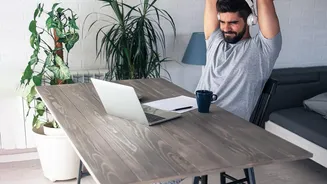
Sitting at a desk can cause stiffness in the spine and shoulders. The Cat-Cow stretch is a gentle, flowing movement that warms up the spine and improves flexibility. As you move with your breath, it helps release tension in the neck, shoulders, and back. This coordination of breath and movement is known to calm the mind and create emotional balance. To begin, position yourself on your hands and knees in a 'tabletop' position, with wrists under shoulders and knees under hips. As you inhale (Cow Pose), let your belly drop towards the mat, lift your chest and sit bones, and gaze forward. As you exhale (Cat Pose), round your spine toward the ceiling, tuck your tailbone, and release your head toward the floor. Repeat this flow for 5-10 breaths.
3. Legs-Up-the-Wall Pose (Viparita Karani)
This is one of the most restorative and passive poses in yoga, requiring minimal effort for maximum relaxation. Elevating your legs helps reverse the effects of gravity, which is especially beneficial after a long day of sitting or standing. It can ease tired legs and feet, improve circulation, and reduce swelling. Most importantly, this gentle inversion calms the nervous system, shifting your body into a 'rest and digest' state that prepares you for sleep. To get into the pose, sit sideways next to a wall. Gently swing your legs up the wall as you lie back on the floor. Your hips can be right against the wall or a few inches away, depending on your hamstring flexibility. Let your arms rest comfortably at your sides and stay for 5 to 15 minutes.
4. Seated Forward Bend (Paschimottanasana)
Forward bends have a naturally calming and grounding effect on the mind. This pose provides an intense stretch for the entire back of the body, from your heels to your spine, targeting the hamstrings and lower back. The Seated Forward Bend is said to soothe the nervous system and help relieve stress and fatigue. Sit on the floor with your legs extended in front of you. You can place a folded blanket under your hips to help you tilt forward. Inhale to lengthen your spine, and as you exhale, hinge at your hips and begin to fold forward. Don't worry about touching your toes; simply let your body go as far as it comfortably can, keeping your back long. If you have tight hamstrings, it is important to bend your knees.
5. Corpse Pose (Savasana)
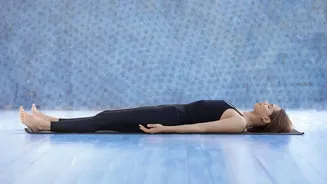
Though it seems like just lying down, Savasana is a crucial pose for deep relaxation and integrating the benefits of your practice. It gives your body and mind a chance to completely let go. Practicing Savasana allows your nervous system to shift into a deeply restful state, which can lower blood pressure and reduce stress hormones like cortisol. It calms the mind, reduces fatigue, and can improve sleep quality by training your body to relax more easily. Lie flat on your back, with your legs separated slightly and your arms resting alongside your body with palms facing up. Close your eyes and release control of your breath and body. Allow yourself to be fully supported by the floor for at least 5-10 minutes, simply observing without judgment.