




Mint (Pudina)
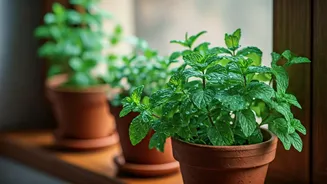
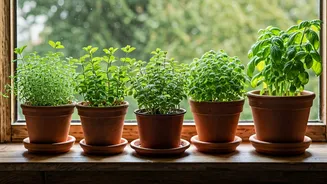
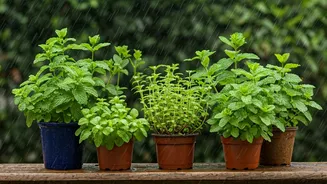
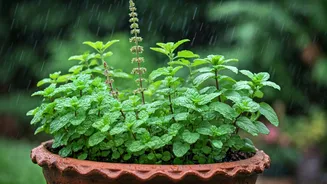
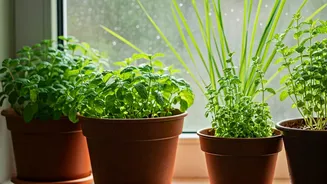
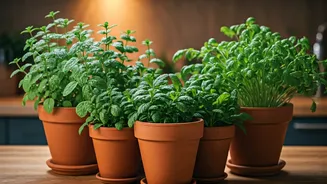
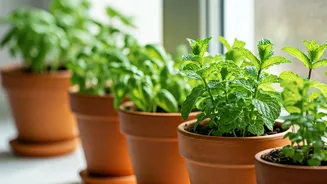
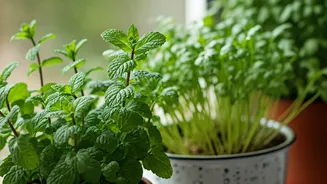
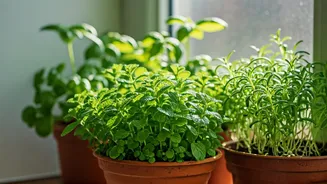
Mint is one of the most forgiving and fastest-growing herbs, making it perfect for beginners. Its refreshing aroma and taste can elevate everything from your morning chai to a zesty chutney. During the monsoon, mint flourishes in the cool, damp conditions.
You don't even need seeds; simply take a few healthy stems from a bunch bought at the market. Place these cuttings in a glass of water, and within a week or two, you will see small white roots emerge. Once the roots are about an inch long, plant them in a wide pot filled with a mix of soil and compost. Mint spreads quickly, so a wider pot gives it room to grow. Place it on a windowsill where it gets some light, but protect it from heavy, direct rain. Water only when the top layer of soil feels dry, as its roots don't like to be waterlogged. Harvest the leaves regularly to encourage bushier growth.
Holy Basil (Tulsi)
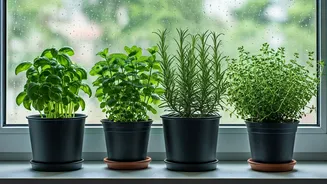
A staple in Indian households for its spiritual and medicinal properties, Holy Basil is a hardy plant that does well indoors. It is known to boost immunity, making its fresh leaves a great addition to teas during the monsoon, a season notorious for coughs and colds. Tulsi enjoys the warm and humid weather of the monsoon but needs protection from constant, heavy downpours which can cause root rot. To grow it, you can start from seeds sown in a pot with good drainage. The seeds are tiny, so sprinkle them on the soil surface and cover them with a very thin layer of soil. The plant needs at least four to six hours of sunlight a day to thrive, so a south-facing windowsill is ideal. If you have an established plant, you can also propagate it from cuttings placed in water until they root. Water your Tulsi plant when the topsoil feels dry, but avoid overwatering. Regularly pinching off the top leaves will encourage a fuller, bushier plant.
Coriander (Dhania)
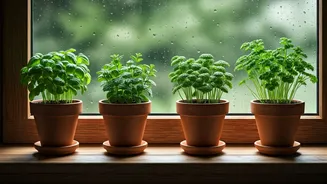
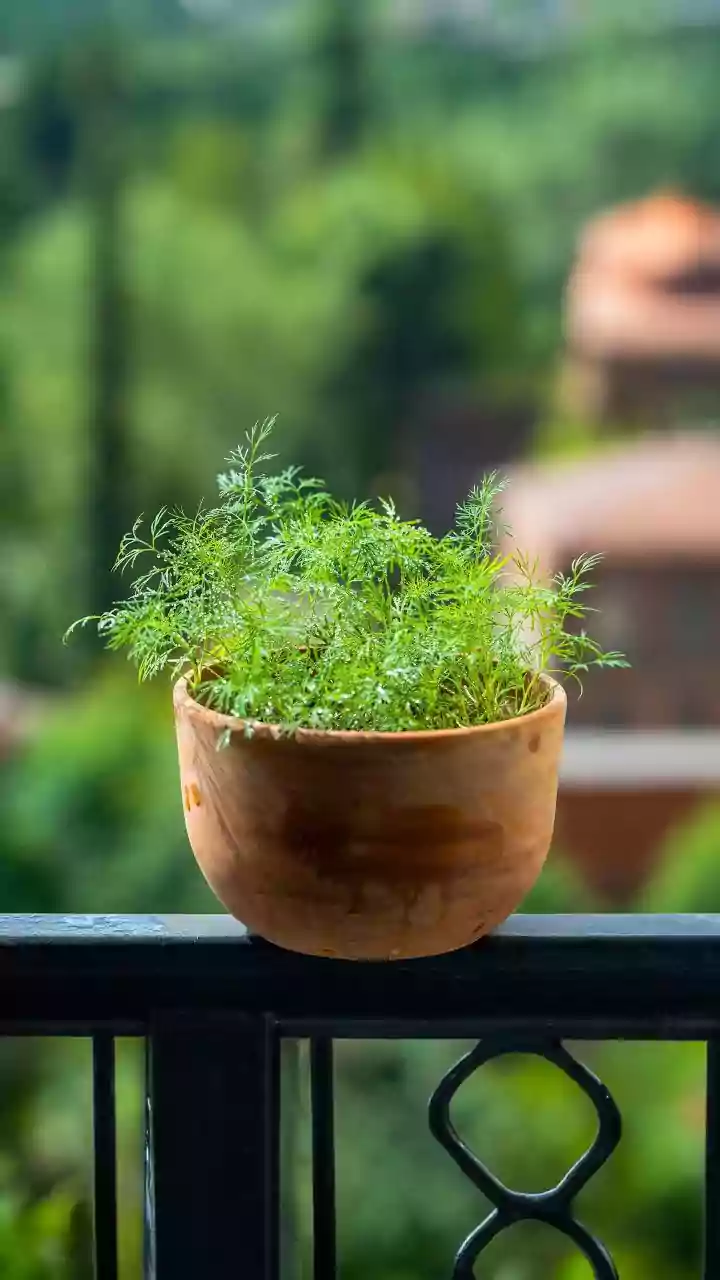
There's nothing quite like the taste of fresh coriander, but it can be tricky to keep store-bought bunches from wilting. Growing your own is a rewarding solution, and the monsoon provides an ideal climate for it. The season’s gentle sunlight and cooler temperatures prevent the plant from flowering too early, which is a common issue in intense heat. For best results, use whole coriander seeds from a gardening store rather than the split variety from your spice rack. Gently crush the seeds and soak them overnight to improve germination. Sow them in a shallow, wide pot with good drainage, as coriander has shallow roots. Place the pot where it can receive four to six hours of indirect sunlight. Keep the soil consistently moist but not soggy, which is crucial during the humid rainy season. Your fresh dhania should be ready to harvest in just three to four weeks. Snip the outer leaves as needed, and the plant will continue to produce more.
Lemongrass
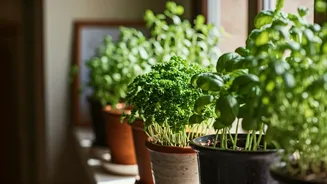
With its distinct citrusy fragrance, lemongrass is a wonderful herb to grow for flavouring teas, soups, and Asian dishes. This tropical grass is surprisingly easy to cultivate indoors in a pot. Though it loves sun, it can adapt to a bright windowsill and will appreciate the high humidity of the monsoon. The easiest way to start is by using fresh stalks from the grocery store. Look for stalks with the bulbous base intact. Place them in a glass with a few inches of water, and change the water every few days. In a couple of weeks, roots will begin to sprout from the base. Once you have a few healthy roots, you can plant the stalk in a deep pot filled with well-draining soil. Lemongrass can grow quite large, so choose a pot that is at least 12 inches in diameter. It needs at least six hours of bright light daily and should be watered regularly, allowing the soil to dry slightly between waterings.