



Start with an Anchor Piece
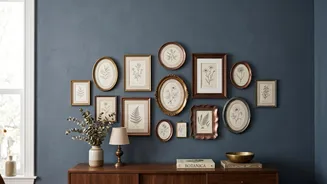
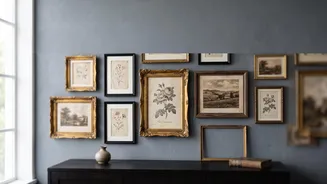
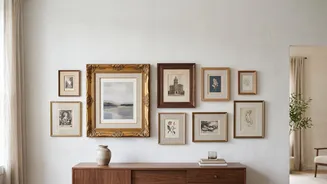
Every great gallery wall needs a focal point. Before you hang anything, identify your anchor piece. This is typically the largest or most visually dominant frame in your collection. Place this piece first, often slightly off-centre, to create a more dynamic
composition that encourages the eye to travel around the entire arrangement. Building around a strong starting point prevents the layout from feeling random and provides a natural guide for placing the rest of your collection. Your anchor could be a striking oil painting, a large-scale photograph, or even an intricately framed mirror.
Master the Art of the Mix
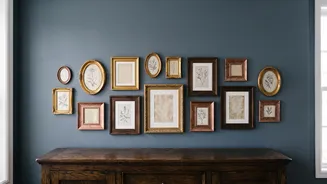
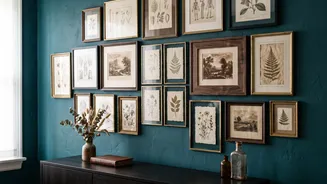
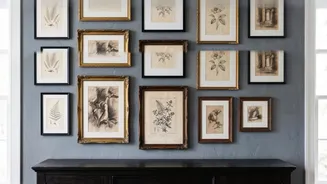
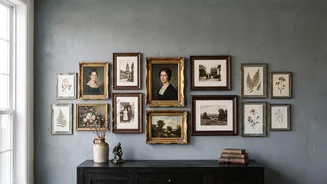
The secret to mixing ornate and simple frames is intentional contrast, not chaos. A good guideline is the 80/20 rule: let one style be dominant. For example, use mostly simple, modern frames (80%) and accent them with a few standout ornate or vintage pieces (20%). This creates balance. To maintain cohesion, limit your frame colours to a palette of two or three. Classic combinations like black and gold, or natural wood mixed with white, work beautifully. This limited palette helps unify frames of different styles, materials, and eras.
Create Cohesion Through Common Threads
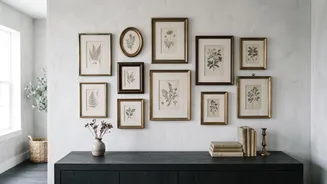
Even with different frame styles, you can create a harmonious look by establishing a unifying element. One of the easiest ways to do this is with matting. Using the same colour mat—typically white or off-white—across different frames provides a consistent visual thread that ties the collection together. You can also unify the display through the artwork itself. A gallery wall featuring all black-and-white photography, sepia-toned prints, or pieces with a similar colour story will feel cohesive, even if the frames vary wildly in style and texture.
Plan Your Layout and Spacing
Before a single nail hits the wall, map out your arrangement. Lay your frames on the floor or use paper cutouts taped to the wall to experiment with placement. This allows you to see how the pieces interact and adjust the balance without making unnecessary holes. Pay close attention to spacing. A consistent gap of 5 to 8 centimetres between each frame is a standard rule that helps the collection read as a single, unified composition. While salon-style walls allow for some variation, keeping the spacing relatively even prevents the arrangement from looking cluttered or disconnected.
Sourcing Your Vintage Finds
Building a collection of vintage frames is a treasure hunt. Local thrift stores, antique shops, and flea markets are often the most budget-friendly places to find unique pieces with authentic character. When you're searching, look for frames made of solid wood or those with interesting plaster details. Check the corners for how they are joined—older frames often use nails rather than modern staples. Don't be deterred if the art inside a beautiful frame isn't to your taste; you can always replace it. Online marketplaces are also great resources; use search terms like 'ornate gold frame' or 'antique wood frame' to uncover hidden gems.