





The Liquid Conundrum: Mastering the 100ml Rule
The rule for liquids, aerosols, and gels (LAGs) is a common point of confusion but is simple once you know it. In India, as in most parts of the world, any liquid you wish to carry in your hand baggage must be in a container that is 100ml or smaller.
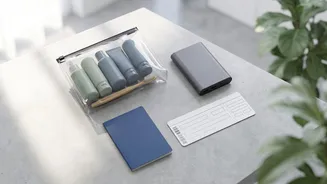
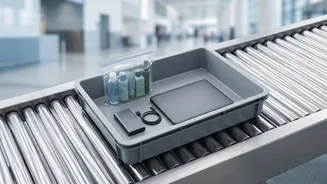
Critically, it is the size of the container that matters, not how much liquid is inside; a half-empty 200ml shampoo bottle will be confiscated. All these small containers must then fit comfortably inside a single, transparent, re-sealable plastic bag with a capacity of no more than one litre. This one-litre bag is your total allowance. To breeze through security, have this bag ready to be pulled out and placed in a separate tray for scanning. Items like prescribed medicines and baby food are generally exempt, but you should declare them to security officers. For everything else—perfumes, sunscreen, creams, and even food items like pickles—the 100ml rule applies strictly.
Power Banks: Carry-On Only, With Strict Limits
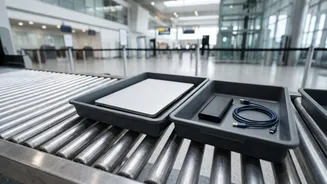
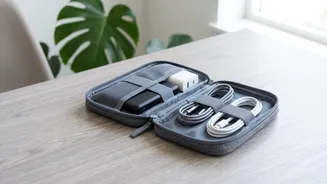
Power banks are essential for modern travel, but they come with strict safety regulations due to the fire risk associated with lithium-ion batteries. The most important rule, enforced by India's Directorate General of Civil Aviation (DGCA), is that power banks are only ever allowed in your carry-on luggage; they are strictly forbidden in checked baggage. In India, passengers are generally allowed to carry a maximum of two power banks, each with a capacity of 100 Watt-hours (Wh) or less. For context, a typical 20,000mAh power bank is around 74Wh, well within the limit. Power banks with a capacity between 100Wh and 160Wh may be permitted, but require prior airline approval, which is not always granted. Anything over 160Wh is banned. Crucially, recent DGCA directives have banned the use of power banks to charge devices during a flight. You are also not allowed to charge the power bank itself using the in-seat power supply. For scanning, it's best to place power banks in a tray separately, just like a laptop.
Camera Gear: Protect Your Equipment, Speed Up Screening
For photographers and hobbyists, travelling with camera equipment requires a balance of protection and accessibility. The golden rule is to always keep your valuable camera bodies and lenses in your carry-on bag to protect them from the rough handling checked luggage often endures. Most security agencies, including those in India, require you to remove large electronic items from your bag for separate X-ray screening. This usually includes DSLR and mirrorless camera bodies. Smaller point-and-shoot cameras may sometimes be left inside, but it’s best to be prepared to take them out. Lenses can typically stay in your camera bag unless they are particularly large. To make this process seamless, pack your camera body in an easily accessible part of your bag. All spare lithium-ion camera batteries must be in your carry-on, never in checked baggage, with their terminals protected to prevent short-circuiting—either by keeping them in their original packaging or in separate plastic bags.
Strategic Packing for the Security Belt
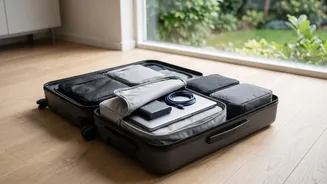
How you arrange your hand luggage can make all the difference. Think of your bag in layers. The items you will need to remove for security—your one-litre liquid bag, your laptop, and any large electronics like cameras or power banks—should be packed last, right at the top. This prevents you from having to frantically dig through your belongings, holding up the queue behind you. A backpack or carry-on with multiple compartments can be extremely helpful. Dedicate an outer pocket or top section to these 'scanner-ready' items. According to the Bureau of Civil Aviation Security (BCAS), passengers in India are now strictly limited to one piece of cabin baggage, with a general weight limit of 7kg for economy class. A handbag or small laptop bag may need to be consolidated into your main carry-on. By packing smartly, you ensure all your essentials fit within the rules and are ready for a quick and efficient security check.