



More Than Just Decoration
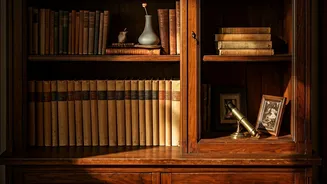
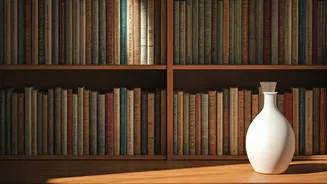
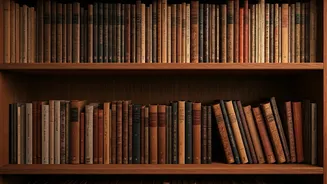
In an age of minimalist aesthetics and curated, often sterile, living spaces, the overflowing bookshelf stands as a quiet rebellion. It declares that a home is for living, not just for looking at. While a perfectly placed vase or a piece of abstract art
can add beauty, a collection of books adds something more profound: a story. Not just the stories within their pages, but the story of the person who collected them. Each spine represents a journey taken, a curiosity pursued, or a comfort sought. Books are not passive decor; they are active participants in the life of a room, bearing witness to quiet evenings, lively discussions, and the slow accumulation of wisdom and wonder.
An Autobiography on Display
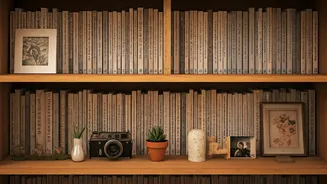
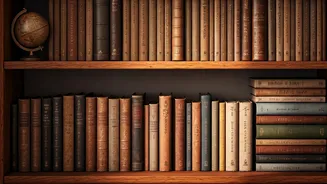
A person’s bookshelf is their unintentional autobiography. It’s a physical map of their mind and heart. That dog-eared copy of a childhood favourite, the stack of travel guides from adventures past, the imposing history tomes from a university course, the well-worn cookbooks splattered with ingredients—they are all markers of a life. Unlike curated objects bought to fit a colour scheme, books are gathered over time, often haphazardly. This organic accumulation is precisely what gives them their power. They reveal a person’s passions, their intellectual journey, and their moments of escape. To scan someone's bookshelf is to get a glimpse into their soul in a way that looking at their furniture never could.
The Comfort of ‘Good’ Clutter
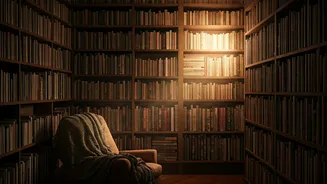
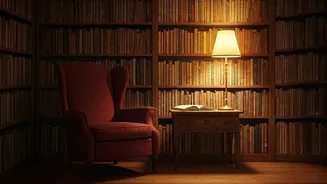
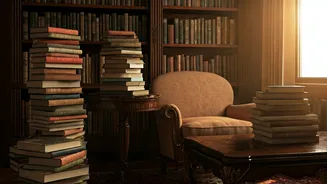
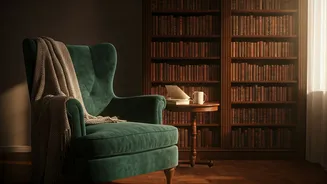
There is a significant difference between messy clutter and the rich, textured presence of books. While a pile of unopened mail creates anxiety, a stack of books on a side table suggests possibility and intellectual comfort. Interior designers often talk about adding texture and layers to a room to make it feel cozy and inviting. Books are the ultimate layering tool. Their varied colours, sizes, and fonts create a visual tapestry that is both stimulating and soothing. They absorb sound, making a room feel quieter and more intimate. This ‘good clutter’ is the opposite of chaos; it’s a sign of a mind at work and a life in progress, transforming a sterile box into a sanctuary.
Beyond the Social Media Trend
Recently, the term ‘bookshelf wealth’ has trended on social media, describing homes that feel authentically intellectual and cultured due to their extensive book collections. But the appeal is far deeper and more timeless than a fleeting online aesthetic. True ‘bookshelf wealth’ isn’t about buying books by the metre to fill a space, a practice that often results in a soulless, library-like display. It’s about the slow, patient accumulation of books that have been read, loved, and lived with. The magic isn’t in having books, but in having *your* books. A home filled with books that have been thoughtfully chosen and genuinely engaged with will always feel more authentic than one where books are used as mere props.
The Paradox of the Digital Age
In an era of e-readers and audiobooks, one might expect the physical book to have faded into obsolescence. And yet, its power as a domestic object has only grown. The convenience of a digital library is undeniable, but it is an invisible, intangible thing. A Kindle doesn’t radiate warmth or tell a story about its owner from across the room. The persistence of physical books in our homes speaks to a human need for tangible connection—to ideas, to stories, and to our own pasts. They ground us in the physical world, offering a tactile escape from the endless scroll of our digital lives.