





A Tale of Two Monsoons
For generations, the rhythm of India's forests has been tied to the predictable arrival of the monsoon. However, recent scientific analysis reveals a subtle but critical shift. It's not just about how much rain falls, but how it falls. Studies across
the country point to a trend of fewer rainy days but more intense downpours. This means the same amount of annual rainfall might be delivered in shorter, more aggressive bursts. This change in precipitation patterns, from gentle, sustained showers to torrential deluges, is forcing ecosystems to adapt to a new and often stressful reality. This variability matters deeply, as different types of forests have evolved to thrive under specific moisture conditions.
The Paradox of the Thirsty Wet Forest
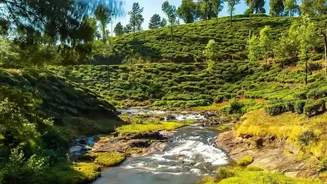
One might assume that intense rain is good for lush, wet forests like those in the Western Ghats. However, the reality is more complicated. These forests, which are biodiversity hotspots, rely on consistent moisture that seeps deep into the soil. When rain arrives in extreme, short-lived events, much of it can run off the surface before it has a chance to be absorbed. This can lead to soil erosion and, paradoxically, drier soil conditions between rainfall events. This added stress makes these ecosystems more vulnerable. Studies have already linked declining rainfall and drier soil to a reduced ability of some forests to absorb carbon, a key function in regulating climate. Furthermore, deforestation in the Western Ghats has been shown to reduce the forest's ability to recycle moisture, which can decrease rainfall in neighbouring states like Tamil Nadu, especially during deficit years.
A Greener Centre, A Browner Edge
The picture is not uniform across the country. In some of India's drier, deciduous forests, particularly in Central India, researchers have observed a 'greening' trend. Some studies suggest that certain vegetation in these regions may be resilient to or even benefit from the changing patterns, able to take advantage of intense water availability when it occurs. However, this doesn't always signal a healthy ecosystem. Other research in the same region highlights significant forest cover loss due to a combination of rising temperatures, shifting rainfall, and human pressures. In Madhya Pradesh's Panchmarhi Biosphere Reserve, for example, dry teak forests saw a steep loss in canopy cover, linked to increased fire risk from warmer, drier periods.
The Human Factor and Future Projections
Climate change is not the only actor in this story. The conversion of forest land for agriculture and other human activities has a direct impact, often weakening the summer monsoon by reducing evapotranspiration—the process by which plants release moisture into the air. Studies have shown a link between deforestation and a decline in monsoon rainfall. Looking ahead, models project that rainfall patterns will continue to become more variable. Some studies project an overall increase in carbon stored in India's forests by the end of the century due to higher CO2 levels and more rain, but this growth will be uneven. The largest gains are expected in semi-arid zones, while crucial ecosystems like the Western Ghats and Himalayan forests may see only modest increases.