




A Note on Plant Power
Before we dive in, it is important to set realistic expectations. The famous 1989 NASA Clean Air Study demonstrated that plants are effective at removing Volatile Organic Compounds (VOCs) like formaldehyde and benzene from small, sealed chambers. While
this is fantastic, your home is not a sealed lab. Research shows that to significantly purify the air in a typical room, you would need a very large number of plants. However, studies have also shown that plants do contribute to reducing airborne particulate matter (PM). Broad-leaved plants can trap dust and particles on their surfaces, which can then be wiped away. Think of these plants as a natural, beautiful supplement to your main air-cleaning strategy (which should include air purifiers and sealing gaps in windows and doors), not a replacement.
Snake Plant: The Bedroom Guardian
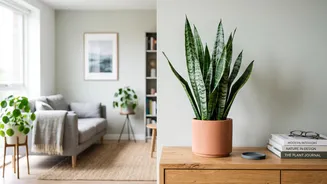
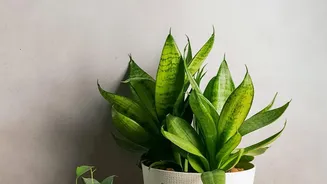
The Snake Plant (Dracaena trifasciata) is a hero for urban homes. It is incredibly resilient, tolerating low light and infrequent watering. Its fame comes from its ability to perform a special type of photosynthesis that allows it to release oxygen at night, making it an excellent companion for the bedroom. While its impact on a room's overall oxygen level is minimal, it's a hard worker against pollutants. Studies have shown that Snake Plants can help reduce PM2.5 concentrations indoors and are effective at absorbing toxins like formaldehyde and benzene. How to Care for It: Water only when the soil is completely dry, roughly every 2-3 weeks in winter. It's happy in almost any light condition but prefers indirect sunlight.
Areca Palm: The Natural Humidifier
With its lush, feathery fronds, the Areca Palm (Dypsis lutescens) not only adds a tropical vibe but also works as a natural humidifier. During Delhi's dry winters, this is a significant benefit. It releases moisture into the air through transpiration, which can help soothe dry sinuses. The Areca Palm was one of the top-rated plants in NASA's study for its ability to filter out pollutants like xylene and toluene. Its large surface area, thanks to its dense foliage, makes it efficient at trapping airborne dust particles. How to Care for It: Keep the soil consistently moist but not waterlogged. It thrives in bright, indirect light. A spot near an east-facing window is ideal.
Money Plant: The Effortless Purifier
The Money Plant (Epipremnum aureum), or Pothos, is ubiquitous in Indian homes for a reason. It is incredibly easy to grow and requires very little maintenance. This fast-growing vine is a powerhouse when it comes to removing formaldehyde, a common indoor pollutant found in furniture and cleaning agents. While its primary strength is against VOCs, its broad, waxy leaves also serve as effective surfaces for capturing dust and other particulates from the air. A study showed that it contributed to an accelerated decrease in airborne PM concentrations in a controlled environment. How to Care for It: Water when the top inch of soil feels dry. It can tolerate a wide range of light conditions, from low to bright indirect light.
Spider Plant: The Resilient Filter
The Spider Plant (Chlorophytum comosum) is another champion of air purification that's forgiving for beginner plant parents. It is known for its ability to combat pollutants like formaldehyde and carbon monoxide. Some research suggests it is particularly effective at capturing particulate matter. One study found that spider plants could absorb a significant percentage of PM from the air in an experimental setting. Its arching leaves and the fact it's often kept in hanging baskets mean it can capture particles floating higher up in a room. How to Care for It: It prefers bright, indirect light but can adapt to lower light levels. Water regularly, but allow the soil to dry out between waterings. It is also non-toxic, making it a safer choice for homes with pets.
Rubber Plant: The Toxin Absorber
The Rubber Plant (Ficus elastica) features large, glossy, dark leaves that are visually striking and functional. These broad leaves provide ample surface area for trapping dust and airborne particles. The plant is particularly good at removing formaldehyde from the air, a chemical often released from furniture and wood polish. To keep it working effectively, it's a good idea to gently wipe down its leaves with a damp cloth every few weeks to remove the collected dust and allow the plant to breathe. How to Care for It: It needs bright, indirect light and should be watered when the top layer of soil is dry. Avoid direct sun, which can scorch its leaves.