




More Than Just Tricks
When we think of dog training, we often picture formal obedience classes or complicated tricks. The reality is that the most impactful training happens in small moments every single day. Teaching your dog basic cues is less about demanding obedience and more
about creating a shared language. This communication forms the bedrock of a strong, trusting relationship. It provides your dog with a predictable structure, which reduces their anxiety and helps them feel more secure. Furthermore, these short training sessions are a powerful form of mental stimulation, often called enrichment. A mentally stimulated dog is a happy dog—one who is less likely to develop problem behaviours like destructive chewing or excessive barking out of sheer boredom.
The Foundation: Positive Reinforcement
The most effective and humane way to teach these cues is through positive reinforcement. This simply means rewarding your dog for a behaviour you want to see again. A reward can be a small, tasty treat, enthusiastic praise like "Good dog!", a favourite toy, or a gentle pat. The key is to offer the reward immediately after the desired action occurs, so your dog makes a clear connection. This method turns training into a fun game, building your dog's confidence and strengthening their desire to cooperate with you. Consistency is crucial; initially, reward the behaviour every time, then gradually become more intermittent as your dog masters the cue.
Practical Cue 1: 'Watch Me'
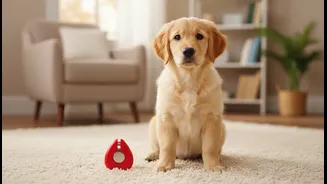
Before you can ask your dog to do anything, you need their attention. The 'Watch Me' or 'Look' cue is fundamental for this. It teaches your dog to break their focus from a distraction—a speeding squirrel, another dog, a dropped piece of food—and look at your face. To teach it, hold a high-value treat near your dog's nose and slowly move it up towards your eyes. The moment your dog's eyes meet yours, say "Yes!" or "Good!" and give them the treat. With practice, you can add the verbal cue "Watch me" and gradually increase the duration of the eye contact before rewarding them. This single cue is a game-changer on busy streets and in any distracting environment.
Practical Cue 2: 'Place'
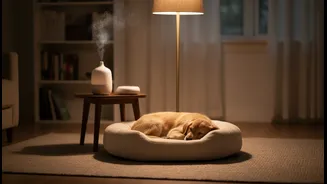
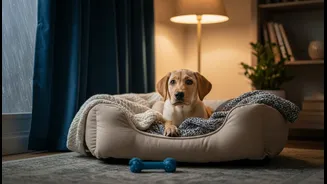
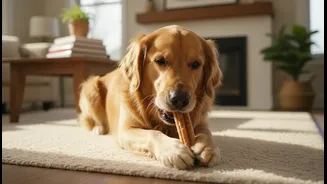
Imagine having a calm, settled dog when guests arrive or while you're eating dinner. That's the magic of the 'Place' command. This cue teaches your dog to go to a designated spot, like their bed or a specific mat, and stay there until released. It creates a safe, comfortable space for your dog and gives you an invaluable tool for managing your household. Start by rewarding your dog for any interaction with the mat, like sniffing or stepping on it. You can use a treat to lure them fully onto the mat, then reward them. Gradually build up the time they spend on their 'place' and begin adding the verbal cue. This command is far from a punishment; by providing special chews or toys only on their 'place,' it can become their favourite spot in the house.
Practical Cue 3: 'Wait'
Often confused with 'Stay', the 'Wait' cue is a short, temporary pause. It means 'hold on for a second' and is incredibly useful for safety. You can use it to stop your dog from bolting out of an open front door or jumping out of the car before you're ready. A simple way to teach it is at mealtimes. Ask your dog to sit, then say "Wait" as you begin to lower their food bowl. If they get up, lift the bowl back up. Repeat until you can place the bowl on the floor while they remain seated. Then, use a release word like "Okay!" to let them eat. This teaches impulse control in a highly motivating situation and translates easily to doorways and street crossings.
The 'Enriching' Part: A Deeper Bond
Beyond the practical benefits of a better-behaved companion, this daily practice of communication is deeply enriching for both you and your dog. Training is a form of quality time that builds mutual respect and understanding. When your dog learns that paying attention to you leads to good things, they become more confident and focused. They begin to look to you for guidance, strengthening your bond. These cues are not about control; they are about connection. Every successful 'Wait' at the curb and every focused 'Watch Me' on a walk reinforces that you are a team, navigating the world together. This creates a calmer, more confident dog and a more relaxed, joyful pet parent.