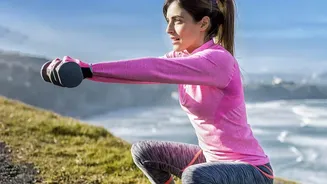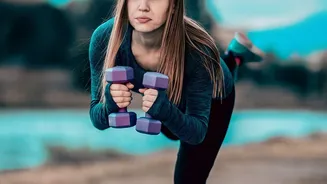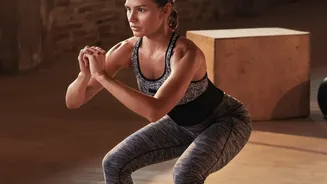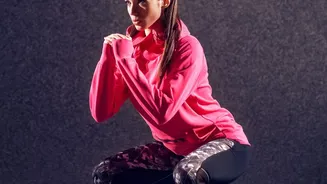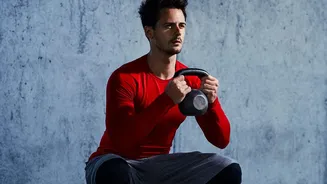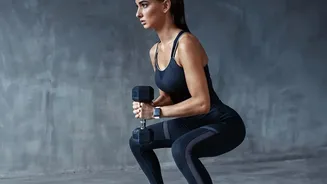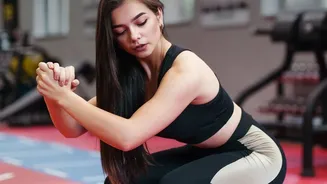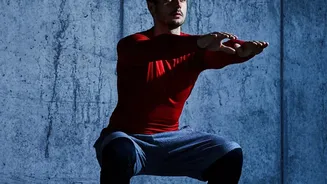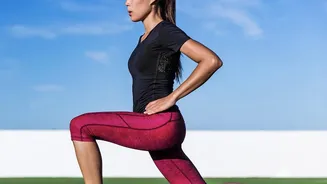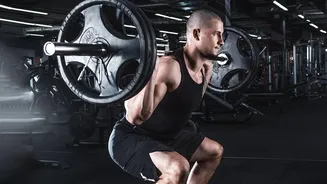




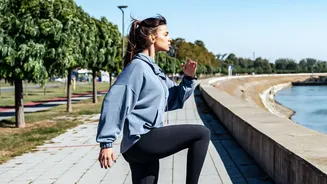
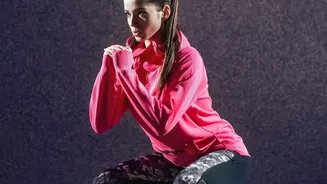
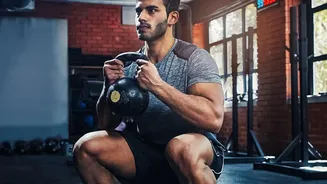
Actor Sonam Bajwa's commitment to fitness is no secret, with her rigorous gym sessions often giving fans a glimpse into her disciplined routine. A recent look at her leg day highlights two foundational exercises: squats and lunges. But why do both?
The Foundation: Sonam Bajwa's Fitness Approach
Sonam
Bajwa is known for her dedication to a challenging and consistent workout schedule. Her fitness philosophy often seems to blend strength training, functional movements, and a focus on long-term health over short-term results. Her recent leg day, featuring both squats and lunges, is a perfect example of a well-rounded approach. These exercises are staples in many fitness routines because they are highly effective, but they work the body in distinct ways. Understanding their differences is key to building a balanced and powerful lower body.
Squats: The Powerhouse for Overall Strength
The squat is often called the king of leg exercises for good reason. As a bilateral movement, it involves using both legs simultaneously to lift a load. This allows you to move heavier weights, which is incredibly effective for building raw strength and muscle mass in the lower body. Squats primarily target the largest muscles in your legs—the quadriceps (front of the thighs) and the glutes (buttocks). They also heavily engage the hamstrings and recruit the core and lower back muscles for stability. Because they activate so many large muscle groups at once, squats are a compound exercise that can boost your metabolism and overall calorie burn. Think of squats as the foundation for building size and power.
Lunges: The Specialist for Balance and Stability
While squats build brute strength, lunges are specialists in refinement and stability. As a unilateral exercise, a lunge works one leg at a time. This immediately introduces a balance challenge that forces smaller, stabilising muscles in your hips and core to work much harder. Lunges are excellent for targeting the glutes and quads, but they also bring the hamstrings and calves into play more significantly for control and propulsion. The single-leg nature of lunges is also crucial for identifying and correcting muscle imbalances between your left and right sides, something that can be hidden during a bilateral squat. This makes lunges highly functional, mimicking everyday movements like walking, climbing stairs, or stepping forward.
Squats vs. Lunges: The Key Differences
So, what's the verdict? The truth is, it's not a competition. The most effective training programs view them as complementary tools. Squats are superior for building maximal strength and muscle mass due to the heavier loads you can lift with the stability of two feet on the ground. Lunges, on the other hand, are better for enhancing single-leg stability, improving coordination, and addressing side-to-side strength asymmetries. Research shows that while both work similar primary muscles, squats tend to elicit more quad activation, while lunges call upon the gluteus medius (a key hip stabiliser) and hamstrings more actively. One isn't better than the other; they simply have different primary benefits.
Building Your Own Balanced Leg Day
A well rounded leg day, like the one Sonam Bajwa demonstrates, includes both types of movements. By incorporating squats, you build the raw power and strength that serves as your lower body's engine. By adding lunges, you fine tune that engine, ensuring both sides are working evenly and improving the balance and stability needed to prevent injury and perform better in athletic activities. There are many variations to explore as well. Sumo squats can target the inner thighs, while reverse lunges can be gentler on the knees. Beginners should always master the bodyweight form of both exercises before adding weights, focusing on proper knee alignment and core engagement to protect the joints.