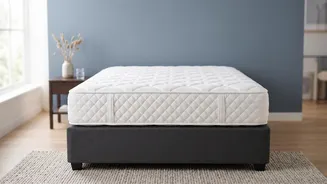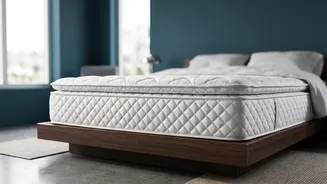







A great mattress is an investment in your well-being, but it can also be a significant financial commitment. Before you get lost in coil counts and firmness levels, there's a crucial step: understanding the return policy. Here's how to shop smart.
Understanding the Appeal of Spring Mattresses
Spring
mattresses, also known as innerspring mattresses, remain a popular choice in India for good reason. They are constructed with a core of metal coils that provide durable support and a responsive, often bouncy feel. This internal structure allows for excellent airflow, which is a major advantage in warmer climates as it helps keep the sleeping surface cooler through the night. Compared to memory foam, which can trap heat, a spring mattress offers a more breathable sleep environment. They are also known for their strong support, making them a reliable option for many sleepers, particularly those who prefer a firmer surface.
Bonnell Coils vs. Pocket Springs
Not all springs are created equal. The two most common types you'll encounter are Bonnell coils and pocket springs. Bonnell coils are the traditional, hourglass-shaped springs that are wired together to form a single unit. This interconnected system means that when you press down on one spring, the surrounding ones also move. This creates a durable and supportive mattress but can also lead to 'motion transfer'—meaning you're more likely to feel a partner's movements. Pocket springs, on the other hand, are individual coils each housed in its own fabric pocket. They work independently, which allows the mattress to contour more closely to your body's shape and significantly reduces motion transfer. This makes pocket spring mattresses an excellent choice for couples. Generally, Bonnell coil mattresses are more budget-friendly, while pocket spring systems are found in more premium models.
Decoding the '100-Night Trial'
The rise of online mattress brands has popularised the 'sleep trial', often advertised as '100 nights, risk-free'. This allows you to test the mattress at home, which is far more effective than a few minutes in a showroom. However, 'risk-free' often comes with conditions. Many companies require a mandatory 'break-in' period of at least 21-30 days before you can initiate a return, arguing your body needs time to adjust. Furthermore, eligibility is not guaranteed. A return can be voided if the mattress has any stains, spills, or damage. You'll likely need to provide photographic proof of its condition and keep the original invoice.
The Fine Print: Return vs. Exchange
The most critical detail to check is whether the policy offers a full refund or only an exchange. Some retailers, particularly brick-and-mortar stores, may only allow you to swap your mattress for another model, and you might lose a percentage of the original price in the process. Also, watch out for hidden fees. While many online brands offer free return pickups, others may charge restocking fees or handling charges, which can be 10–15% of the mattress cost. These fees can significantly reduce the amount of your refund, turning a 'simple return' into a costly exercise. Always confirm who is responsible for the logistics and costs of the return before you buy.
Don't Confuse a Trial with a Warranty
A trial period and a warranty serve two completely different purposes. The trial period is for assessing comfort—if you simply don't like the feel of the mattress, the trial is your window to act. A warranty, on the other hand, protects you against manufacturing defects over a longer term, typically 5–10 years. Common warranty claims cover issues like significant sagging (usually defined as a dip of $1.5$ inches or more) or broken coils. A warranty will not cover a change in your comfort preference a year after purchase. Understanding this distinction is vital for managing your long–term expectations.