






The Old Economics of Spaceflight
Historically, launching a satellite was akin to buying a new airplane for a single flight and then throwing it away. Rockets were expendable, single-use vehicles. This meant the entire cost of manufacturing a multi-million-dollar piece of precision hardware
was baked into the price of one mission. As a result, placing a kilogram of payload into Low Earth Orbit (LEO) could cost tens of thousands of dollars. This immense expense limited space access primarily to governments and a handful of large corporations for whom the strategic value was non-negotiable. For most commercial ventures, the price was simply too high, stifling innovation and growth in satellite-dependent industries.
The Falcon 9 Revolution and the Dawn of Reuse
SpaceX's Falcon 9 rocket began to change this paradigm by proving that the most expensive part of the rocket, the first-stage booster, could be landed, refurbished, and flown again. This partial reusability was a game-changer, dramatically cutting costs and increasing launch frequency. The price of a Falcon 9 launch, at around $67 million, brought the cost-per-kilogram down to under $3,000, a nearly tenfold reduction from older systems. This spurred a boom in commercial space activity, particularly the development of large satellite constellations like SpaceX's own Starlink. However, the Falcon 9 still discards its second stage on every flight, meaning a significant portion of the rocket is still thrown away.
Enter Starship: The Promise of Full Reusability
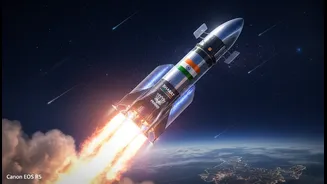
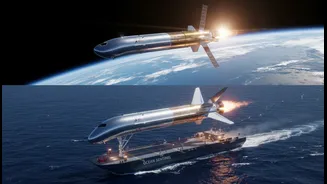
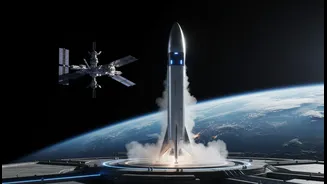
Starship represents the next monumental leap: a fully reusable transportation system. Both its massive Super Heavy booster and the Starship upper stage are designed to return to Earth for rapid reuse, much like an airplane. This is the holy grail of launch economics. By eliminating the need to build a new rocket for every mission, the marginal cost of a launch is expected to plummet. SpaceX's target is to reduce the cost to below $200 per kilogram, and potentially as low as $10 per kilogram over the long term. A successful, fully reusable Starship could carry 100 to 150 metric tons to orbit for a price that might eventually be just a few million dollars per launch, a fraction of the Falcon 9's cost for vastly more capability.
From Ambitious Goal to Bankable Forecast
For commercial satellite operators, telecom companies, and even firms planning in-orbit manufacturing, this isn't just an interesting technological development; it's a critical variable in their financial models. The difference between a launch cost of $3,000/kg and $100/kg fundamentally alters a business case. However, these revolutionary cost reductions are contingent on Starship achieving full and rapid reusability. This is why every test flight is scrutinized. A successful launch, booster landing, and ship recovery are not just engineering wins. They are tangible data points that reduce the perceived risk and increase the financial certainty for commercial actors. Each milestone, like the upcoming Flight 13, moves the projected cost of Starship from a theoretical target to a reliable figure that can be plugged into a business plan or a multi-billion dollar investment strategy for a new satellite constellation.
The Ripple Effect on Global Business
The implications extend far beyond the launch providers themselves. For satellite internet companies like OneWeb, Amazon's Project Kuiper, and even SpaceX's Starlink, cheaper launch costs enable the deployment of larger, more capable satellites at a faster pace. This accelerates the rollout of global high-speed internet, creating new markets and opportunities. For Earth observation, climate monitoring, and logistics companies, it means more data, more frequently, at a lower cost. The prospect of Starship's affordability is even paving the way for entirely new business models that were once the stuff of science fiction, such as orbital data centers and in-space manufacturing. As the cost of access drops, the barrier to entry for innovators in India and across the globe falls with it, promising a more competitive and dynamic space economy.