

More Than Just Sustainable
Upcycling is one of the most powerful trends in modern interior design, and for good reason. Beyond the significant environmental benefit of reducing textile waste, which accounts for millions of tons in landfills annually, it offers a practical solution
to a common design dilemma. Instead of being limited by what’s available in stores, you gain the freedom to create pieces that are entirely your own. It is a cost-effective way to achieve a high-end, bespoke look, transforming items you already own into decor that has a higher value and a richer story.
Weaving in Your Personal Story
Perhaps the most compelling aspect of upcycling is its ability to embed personal history into your home. That old silk saree of your mother's, a grandmother's embroidered tablecloth, or even a favourite cotton kurta that's seen better days—these fabrics are carriers of memory. By transforming them into something new, you’re not just decorating; you’re making your heritage a visible and tangible part of your daily life. A cushion made from a cherished saree is more than just a soft furnishing; it's a conversation starter and a piece of your family's history.
From Old Sarees to New Cushions
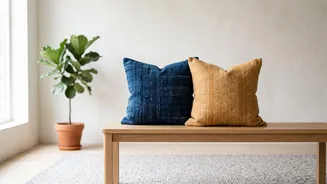
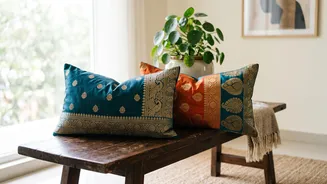
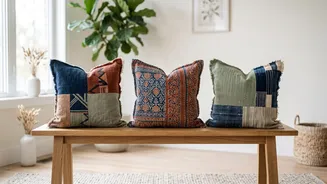
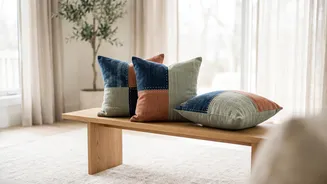
Cushion covers are one of the simplest and most impactful ways to begin your upcycling journey. The rich colours and intricate zari borders of old silk or Banarasi sarees are perfect for creating luxurious, eye-catching cushions that look like designer pieces. You can frame a beautiful pattern from a pallu as the centrepiece or mix and match different fabrics to create a vibrant, bohemian set. For a softer, more casual look, old cotton sarees or dupattas can be stitched into breezy, comfortable covers that brighten up any sofa.
Creating Your Own Wall Art
Why buy generic prints when you can create stunning wall art? A particularly beautiful piece of fabric, like a section of a brocade saree or a piece of hand-embroidered textile, can be stretched over a canvas or placed in a frame. This approach turns the fabric's craftsmanship into the focal point. For a larger statement, you can create a patchwork tapestry from various fabric scraps, combining different textures and colours to produce a unique piece that adds warmth and personality to a plain wall.
Revitalising Furniture and Surfaces
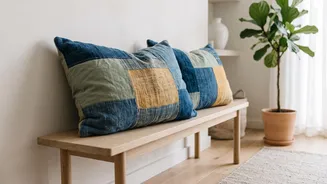
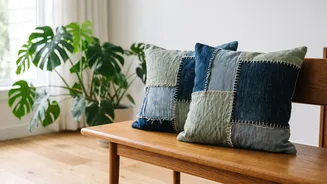
Upcycling isn’t limited to small accents. You can give a new lease of life to furniture. A tired-looking footstool or a dining chair seat can be easily reupholstered with a durable piece of fabric. Old curtains, with their large expanses of material, are ideal for creating custom table runners and matching placemats. A patchwork quilt made from multiple old garments can become a beautiful and sentimental throw blanket for your couch, adding a layer of texture and history.
The Freedom to Be Imperfectly You
Ultimately, the creative freedom of upcycling comes from letting go of the need for shop-bought perfection. Handmade items have character. A slightly uneven stitch or a frayed edge is part of the story. This process allows you to experiment without fear, mixing prints and textures in ways that mass-market collections rarely do. It encourages a playful, personal approach to design, resulting in a living room that doesn't just look good, but feels deeply and authentically connected to you.