



A Sweet Discovery Near the Galaxy's Heart
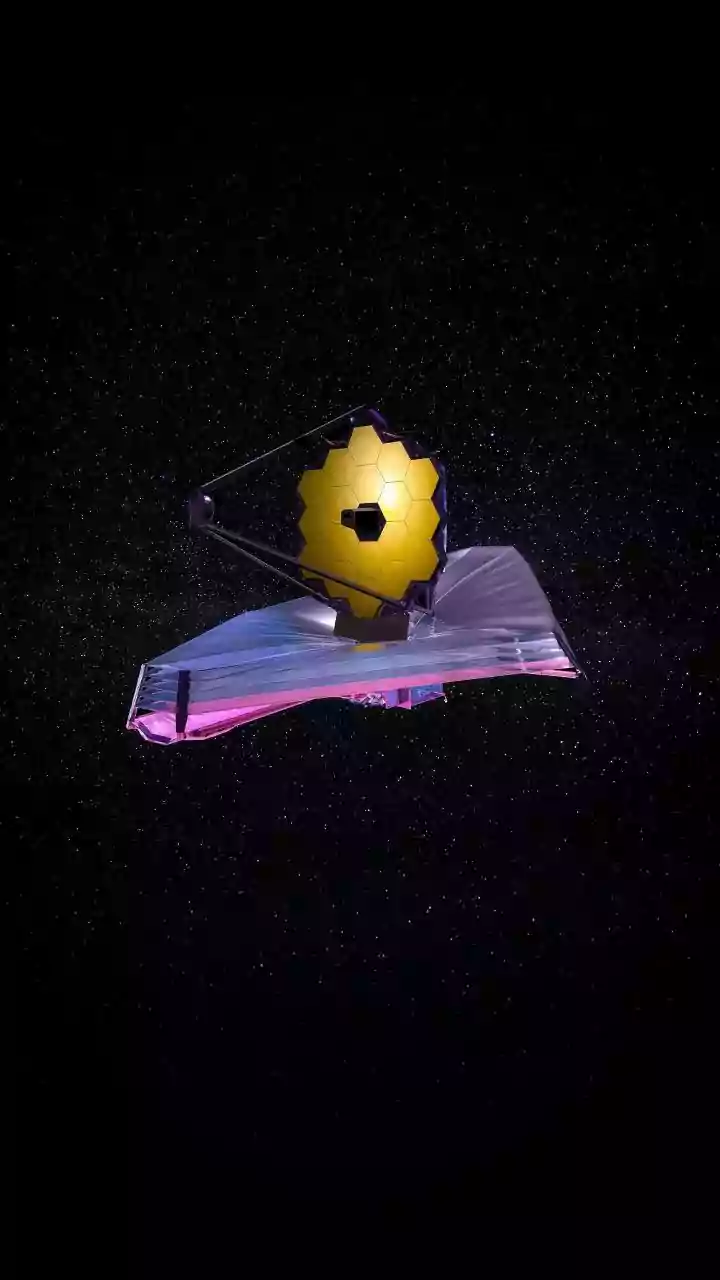
Astronomers have made a groundbreaking detection of a sugar molecule called erythrulose in a molecular cloud near the center of our Milky Way. Using powerful radio telescopes in Spain, an international team identified the distinct radio signal of this
four-carbon sugar in a massive cloud of gas and dust known as G+0.693-0.027, located approximately 26,700 light-years from Earth. While simpler organic molecules have been found in space before, and sugars have been identified in meteorites that have landed on Earth, this is the first direct detection of a true sugar in the interstellar medium—the raw material from which stars and planets are born. The discovery provides compelling evidence that the chemical precursors to life can form in the cold, dark voids between stars.
More Than Just a Simple Sugar
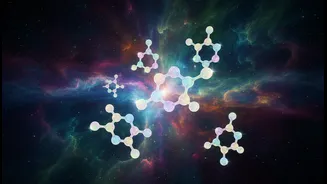
Erythrulose is not just any sugar; it is a relatively complex one with a structure of four carbon atoms. On Earth, it is found naturally in small amounts in red raspberries. This molecule is significantly more complex than the two- and three-carbon molecules previously thought to be the primary building blocks in interstellar chemistry. In fact, the team found that erythrulose was at least eight times more abundant than any three-carbon sugars in the same cloud, challenging the long-held theory that complex molecules in space are built sequentially, one carbon atom at a time. This suggests that more efficient chemical pathways exist, perhaps on the icy surfaces of dust grains, allowing larger, more intricate molecules to form directly.
A Key Ingredient for the Origin of Life
The presence of erythrulose in space is profoundly important for prebiotic chemistry—the study of how life’s building blocks could have formed before life itself emerged. Sugars are fundamental to life as we know it; they are not only a source of energy but also form the structural backbone of RNA and DNA. Scientists believe in a concept called the "RNA World hypothesis," which posits that RNA, not DNA, was the original genetic material for early life. The sugar component of RNA is ribose, a five-carbon sugar. Erythrulose is considered a key intermediate step toward forming ribose. Finding a molecule like erythrulose demonstrates that the universe is capable of creating the necessary ingredients for more complex biological molecules like RNA, even in the harsh environment of interstellar space.
From Interstellar Clouds to New Worlds
This discovery bolsters the theory of panspermia, which suggests that the essential ingredients for life were not created on Earth but were delivered here from space. During the early history of our solar system, a period known as the Late Heavy Bombardment saw Earth pummeled by comets and asteroids. These celestial bodies are thought to have formed from the same interstellar clouds of gas and dust where erythrulose was just found. Scientists theorize that millions of tonnes of sugars like erythrulose could have been delivered to a young, cooling Earth, seeding its primitive oceans with the raw materials needed for a "prebiotic soup" from which the first life could emerge. The detection of erythrulose suggests these vital ingredients are not unique to our corner of the galaxy but may be widespread.