


The Sun's Hidden Temper
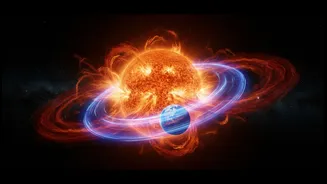
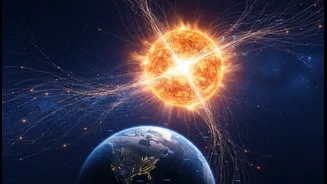
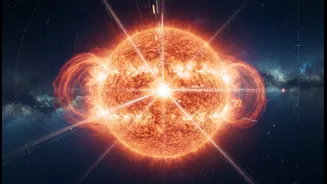
The Sun, our life-giving star, has a volatile side. It periodically unleashes massive bursts of energy and particles in the form of solar flares and coronal mass ejections (CMEs). These events create what is known as space weather. A solar flare is an intense
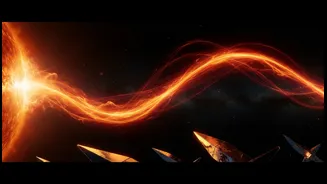
explosion of radiation, which can reach Earth in just eight minutes. A CME is a giant cloud of magnetized plasma and solar particles hurled into space, which can take one to several days to travel to our planet. When these solar storms are aimed at Earth, they can interact with our planet's magnetic field and have significant, disruptive consequences for our technology-dependent society.
Our Technological Achilles' Heel
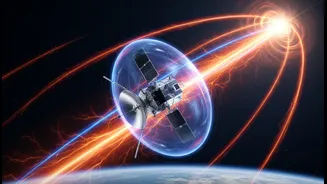
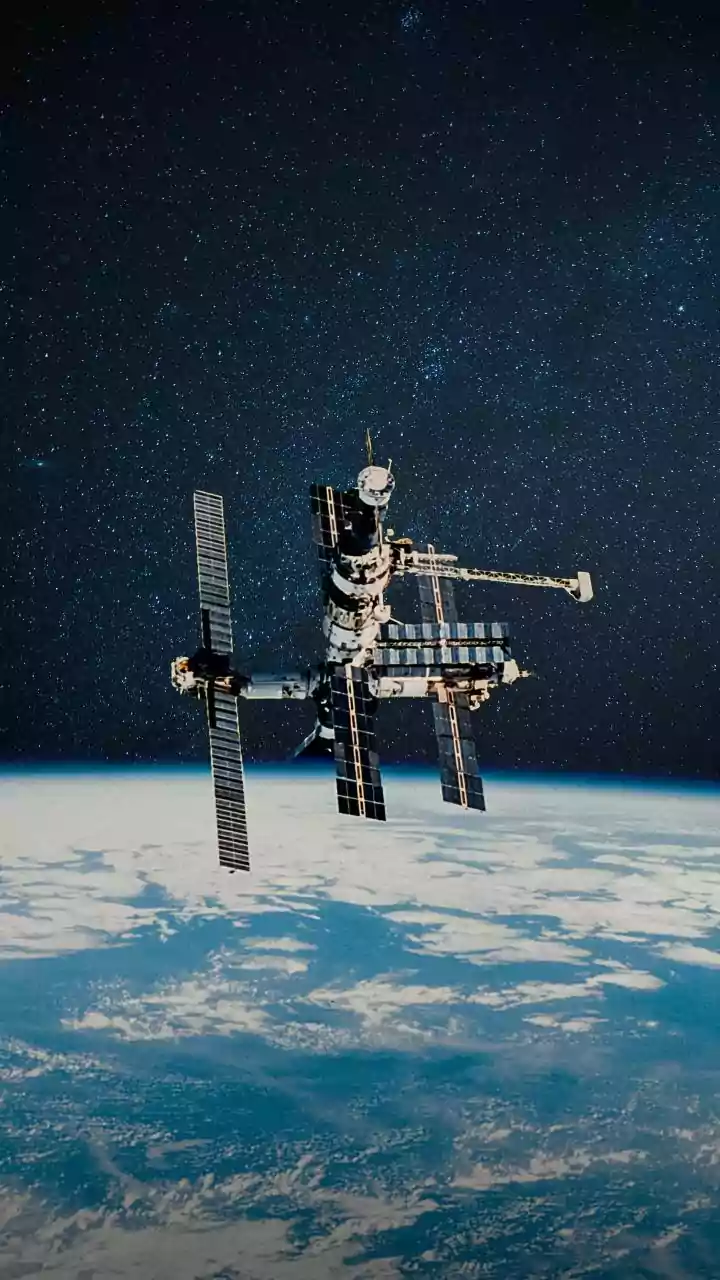
In today's interconnected world, the stakes are higher than ever. A severe solar storm could induce powerful currents in power grids, potentially overheating transformers and causing widespread, long-lasting blackouts, as happened in Quebec in 1989. Our vast network of satellites, crucial for everything from GPS navigation and financial transactions to television broadcasts and weather forecasting, is particularly at risk. These storms can damage a satellite's sensitive electronics, degrade its solar panels, and disrupt the signals they transmit, impacting communications and aviation worldwide. A worst-case scenario could see global infrastructure disabled, with economic costs potentially reaching trillions of dollars.
A New Generation of Solar Sentinels
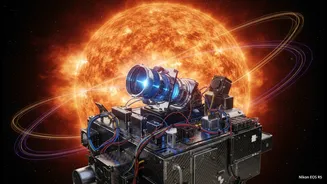
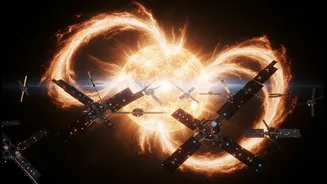
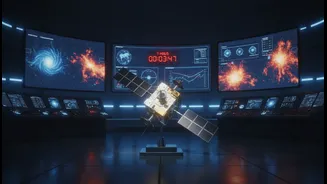
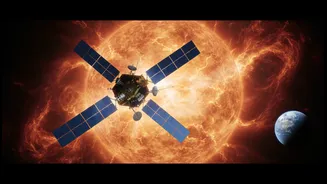
Fortunately, scientists are not just watching idly. A new generation of advanced space instruments is providing an unprecedented ability to monitor the Sun and forecast its behaviour. Missions like NASA's Polarimeter to Unify the Corona and Heliosphere (PUNCH), which launched in 2025, use a constellation of small satellites to create a 3D view of the solar wind as it leaves the Sun. This helps scientists understand how these massive ejections evolve as they travel towards Earth. Another key asset is NOAA's SOLAR-1 observatory, which became operational in 2026. Positioned nearly a million miles from Earth, it provides a constant, uninterrupted view of the Sun.
From Minutes to Days of Warning
The key advantage of these new instruments is the significant improvement in warning times. Previously, forecasters might only have minutes of warning before a geomagnetic storm's impact. New instruments like the coronagraph on SOLAR-1 can send images of a CME to forecasters within 30 minutes, a huge improvement over the eight hours it took previous instruments. Looking to the future, the European Space Agency's Vigil mission, planned for launch in 2031, will take this even further. By positioning itself at a unique vantage point, Vigil will be able to see the 'side' of the Sun, spotting active regions days before they rotate to face Earth. This could extend our advance warning for some space weather effects to four or five days, giving authorities and infrastructure operators invaluable time to prepare.
Protecting India's Future
For a rapidly growing nation like India, with its expanding digital economy, space program, and critical infrastructure, this enhanced forecasting is vital. Protecting power grids, communication networks, and its fleet of navigation and observation satellites from solar disruptions is a matter of national importance. Better space weather forecasts allow for proactive measures, such as temporarily adjusting power loads on the grid, putting satellites into a protective safe mode, or rerouting flights that may be exposed to increased radiation. As India continues its technological and economic ascent, the ability to mitigate the effects of solar storms becomes a crucial component of national resilience and security.