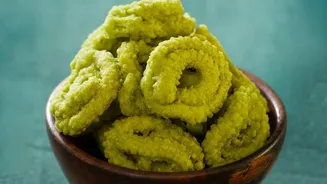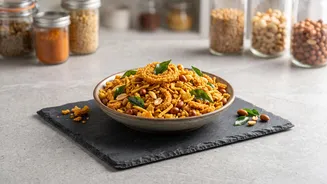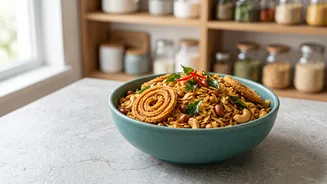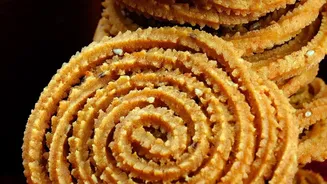

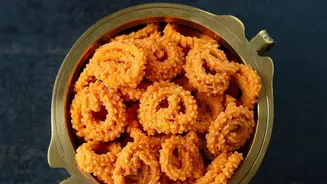

That iconic crunch, the thorny spiral, the savoury, spiced flavour—a perfect Maharashtrian chakli is a sensory delight. A staple during Diwali, this beloved snack can seem tricky, but its perfection is an art that anyone can master.
The Soul of Chakli: Bhajani Flour
The authentic taste
of Maharashtrian chakli comes from its unique flour base, called 'bhajani'. Unlike instant versions that rely solely on rice flour, traditional bhajani is a multigrain flour made by roasting and grinding a mix of ingredients. This typically includes rice, various dals like chana dal and urad dal, and aromatic spices such as cumin and coriander seeds. Each component is roasted separately until aromatic before being ground into a fine powder. This roasting process is crucial; it not only imparts a deep, nutty flavour but also helps the chakli stay crisp and absorb less oil during frying. While many store-bought bhajani flours are available, especially around Diwali, making your own gives you complete control over the flavour and texture.
The Perfect Dough Consistency
The success of your chakli hinges almost entirely on getting the dough right. The ideal dough should be soft and pliable, but firm enough to hold its shape. If the dough is too stiff or dry, the chakli strands will crack and break as you press them. If it's too soft and sticky, they won't form the distinct spiky ridges and may disintegrate or absorb excess oil when fried. The secret is to use hot, sometimes boiling, water and add it gradually to the flour mix. After mixing, let the dough rest for about ten minutes, covered, to allow the flours to hydrate properly. Before kneading, check the consistency; if it feels dry, add a few teaspoons of warm water. If too sticky, add a bit more rice flour until you reach a smooth, non-sticky texture.
The Art of Pressing and Shaping
Shaping the iconic spirals requires a chakli maker, also known as a 'soorya' or press. To ensure the dough doesn't stick, lightly grease the inside of the press and the star-shaped disc before filling it. Pack the dough tightly inside to avoid air pockets, which can cause the chakli to burst in the hot oil. Press the dough in steady, concentric circles onto a sheet of parchment paper, a greased plate, or a damp cloth. This makes it easier to lift and slide them into the oil. For a perfect spiral that holds together, aim for about three to four tight rings, starting from the center and moving outwards. Crucially, press the end of the dough spiral gently onto the last ring to seal it, preventing it from unwinding during frying.
Mastering the Fry: Temperature is Everything
Frying is the final, decisive step. The oil temperature must be just right—a steady medium heat is key. If the oil is too hot, the chaklis will brown quickly on the outside but remain raw and soft inside. If the oil is not hot enough, they will soak up excess oil, becoming greasy and losing their crunch. To test the temperature, drop a tiny piece of dough into the pan. It should sizzle and rise to the surface steadily after a few seconds. If it shoots up instantly, the oil is too hot; if it sinks and stays there, it's too cool. Fry only a few chaklis at a time to avoid overcrowding the pan, which lowers the oil temperature. Flip them once they are firm and continue frying until they are an even golden brown and the bubbling in the oil has slowed down significantly. Drain them on paper towels and let them cool completely before storing them in an airtight container to preserve their crispness for weeks.