


Meet Euclid, The Dark Universe Detective
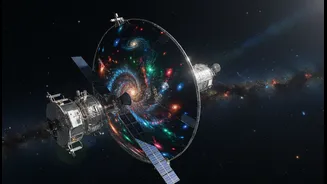
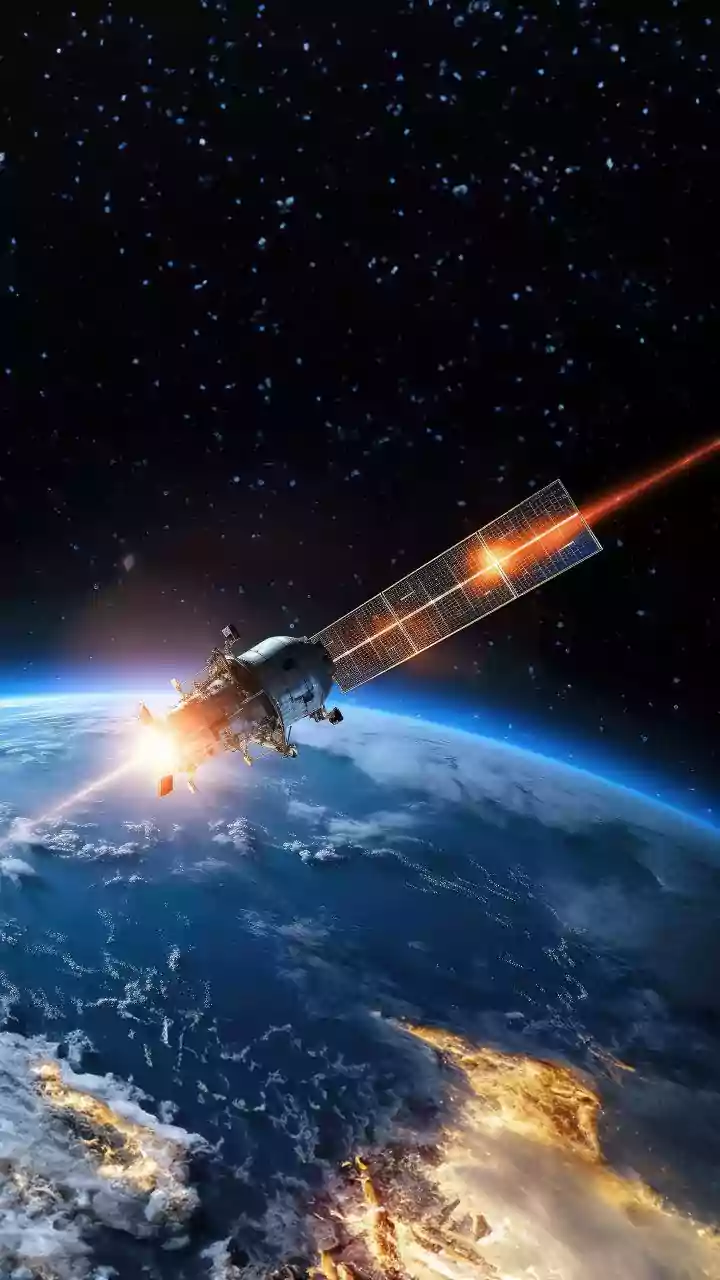
Launched in 2023, the Euclid space telescope is on a mission to map the 'dark universe'. Its primary goal is to understand dark matter and dark energy, the mysterious components that make up most of our cosmos. To do this, Euclid is creating a vast 3D
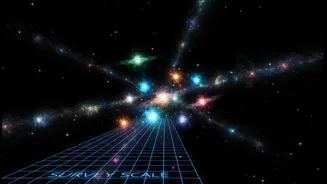
map of the sky, observing billions of galaxies up to 10 billion light-years away. With its wide field of view and high sensitivity, especially in infrared light, Euclid can spot extremely distant and faint objects that were previously invisible to ground-based surveys. This unique capability makes it a game-changer for finding rare cosmic objects, like ancient quasars.
What Are Quasars?
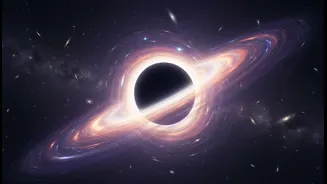
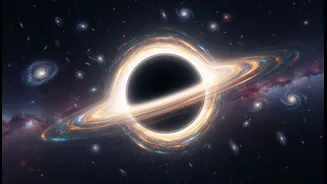
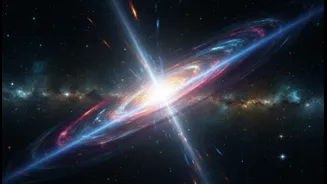
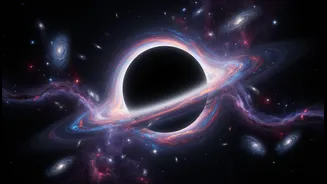
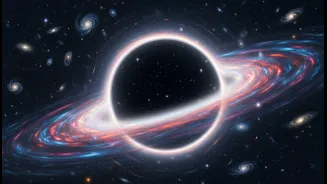
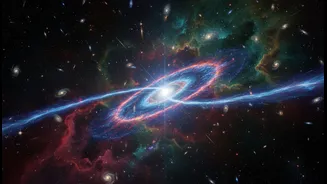
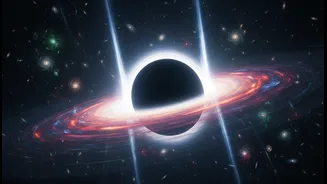
Imagine a black hole millions or even billions of times more massive than our sun, sitting at the centre of a young galaxy. Now, imagine it pulling in surrounding gas and dust in a chaotic, swirling vortex called an accretion disk. The immense friction and gravitational forces heat this material to incredible temperatures, causing it to glow with the light of a trillion suns, often outshining the entire host galaxy. That brilliant, energetic object is a quasar. Because their light takes billions of years to reach us, quasars serve as cosmic time machines, allowing astronomers to study the conditions of the early universe.
A Trove of Ancient Discoveries
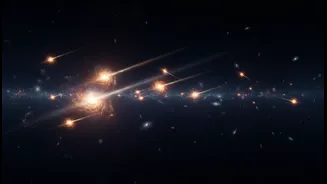
In its first couple of years of operation, Euclid has already made a stunning discovery: 31 previously unknown quasars from the dawn of the universe. These aren't just any quasars. Twelve of them are from a period when the universe was only about 770 million years old. Most impressively, two of these have set a new record as the most distant quasars ever found, their light coming from just 670 million years after the Big Bang. This means we are seeing them as they were when the universe was just 5% of its current age. In a short time, Euclid has more than doubled the number of known quasars from this primordial era, a feat that previously took astronomers over a decade to achieve.
The Billion-Solar-Mass Problem
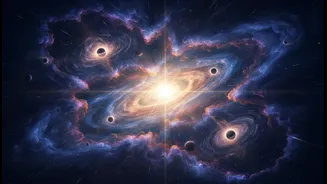
Here's the puzzle: supermassive black holes take time to grow. According to our current understanding, they start as smaller 'seed' black holes and grow by two main methods: accreting gas and dust, and merging with other black holes. However, there's a physical limit to how fast a black hole can feed before the radiation it emits pushes away its 'food' supply. The black holes powering these newly discovered quasars are already enormous, possessing millions to billions of times the mass of the Sun. Finding them so early in the universe's history is like finding a giant redwood tree that has grown to its full height in just a few years. They simply shouldn't have had enough time to get that massive, that quickly.
Rewriting Cosmic History?
Euclid's discovery throws a wrench into our neat models of cosmic evolution. It forces astronomers to confront difficult questions. Were the initial 'seed' black holes much more massive than we thought, perhaps forming from the direct collapse of massive gas clouds instead of single stars? Or could black holes in the early universe somehow have grown at 'super-Eddington' rates, bypassing the normal limits on consumption? The newly found quasars, which are fainter and more 'typical' than the exceptionally bright ones found before, provide a more representative sample of the early black hole population. Studying them will give scientists crucial data to test new theories and potentially rewrite our understanding of how the first galaxies and their central black holes came to be.