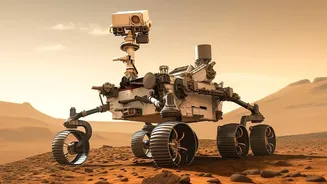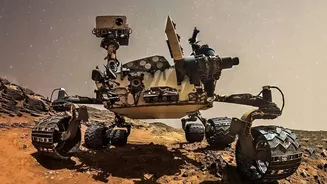




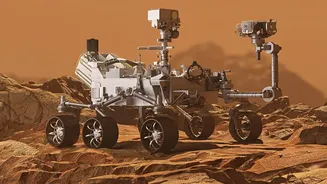
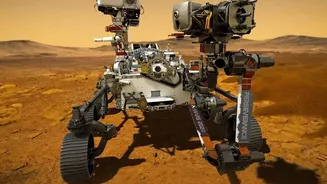
On Mars, NASA's Perseverance rover holds a treasure trove: tubes filled with ancient rock and soil. But the monumental challenge of bringing this priceless cargo back to Earth has sent the space agency back to the drawing board.
A Treasure Chest 200 Million Kilometres Away
Since its landing in February
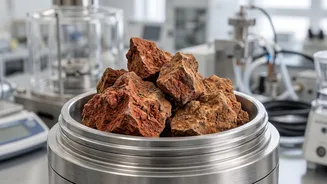
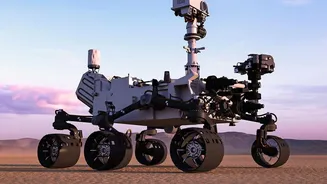
2021, the Perseverance rover has been meticulously exploring Jezero Crater, an ancient lakebed that scientists believe may hold signs of past microbial life. The rover has drilled into carefully selected rocks, caching the core samples in small, sealed titanium tubes. Some have been stored aboard the rover, while a duplicate set was strategically dropped on the surface to create a backup depot. These samples—ranging from igneous rocks that can reveal the planet's volcanic history to sedimentary rocks that could preserve biosignatures—are considered the holy grail of planetary science. Analyzing them on Earth with advanced laboratory equipment, far more powerful than any instrument that could be sent to Mars, could revolutionize our understanding of the Red Planet's evolution, its watery past, and whether it ever hosted life.
The Billion-Dollar Dilemma
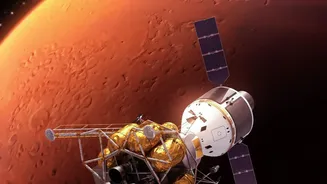
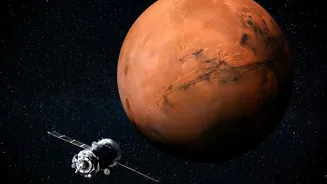
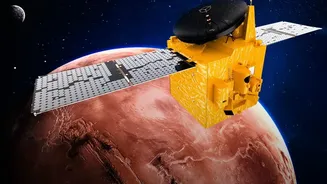
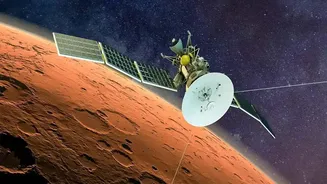
The original plan for the Mars Sample Return (MSR) mission was a complex, multi-stage relay race involving NASA and the European Space Agency (ESA). It involved sending a lander to Mars with a small rocket, the Mars Ascent Vehicle (MAV), which would be the first rocket ever to launch from another planet. This lander would collect the samples from Perseverance, load them into the MAV, which would then launch into Mars orbit. Another spacecraft, the Earth Return Orbiter, would capture the sample container in orbit and fly it back to Earth. However, the sheer complexity and unprecedented nature of the mission caused its projected cost to spiral. An independent review flagged the price tag could reach as high as $11 billion, with a return date pushed back to 2040, a timeline and budget NASA Administrator Bill Nelson deemed unacceptable. The ballooning costs led to a major budget rethink, with the existing MSR program being effectively paused.
Back to the Drawing Board
In response to the fiscal and technical hurdles, NASA announced it was seeking new, faster, and more affordable methods to retrieve the samples. In early 2026, the US Congress passed a budget that did not fund the existing MSR program, instead allocating a smaller amount for 'Mars Future Missions' to keep key technologies alive. This move effectively forced a complete overhaul of the mission architecture. In November 2026, NASA officials unveiled a new initiative called the Perseverance Sample Retrieval Architecture (PSRA). This effort is designed to develop a fresh strategy, soliciting proposals from both industry partners and NASA centers to find a more feasible path forward. The goal is to combine innovation with proven technology to reduce cost, complexity, and risk while still achieving the core scientific objective of bringing the precious samples home, hopefully in the 2030s.
A New Space Race?
The pressure to find a workable solution is not just scientific and financial; it's also geopolitical. While NASA re-evaluates its options, China is moving forward with its own ambitious Mars sample return mission, Tianwen-3. Current plans show China aiming for a 2028 launch, with the goal of returning its own Martian samples to Earth as early as 2031. This has been described by some as a potential 'Sputnik moment', adding a sense of urgency to NASA's efforts. The prospect of another nation achieving this historic first puts additional pressure on the US agency to deliver on a goal that has been a top priority for planetary scientists for decades. The race is on, not just to unlock the secrets of Mars, but to demonstrate continued leadership in the complex and challenging field of interplanetary exploration.