






From Fields to Financial Statements
The connection between weather and agriculture is as old as farming itself. A good monsoon means a bountiful harvest, while a drought can spell disaster. But for large food and beverage corporations, this age-old reality has transformed into a complex
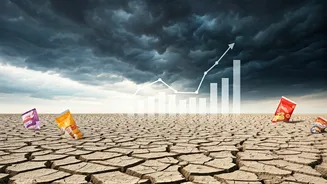
financial risk that must be managed with precision. Unpredictable weather directly impacts the yield and quality of essential commodities like wheat, rice, sugar, and spices. An extreme heatwave can reduce wheat yields, while erratic rains can damage perishable crops like tomatoes and onions, leading to supply shortages and immediate price spikes. These disruptions don't just stay on the farm; they ripple through the entire supply chain, affecting procurement costs, production schedules, and ultimately, a company's bottom line. In an era of climate volatility, simply hoping for good weather is no longer a viable business strategy.
The New Generation of Weather Watchers
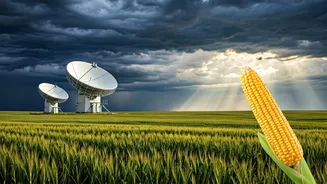
Today, corporate weather watching goes far beyond a simple forecast. Food giants are increasingly behaving like tech companies, employing a sophisticated arsenal of tools to predict and mitigate climate risks. Many are hiring in-house meteorologists and partnering with specialised weather forecasting agencies to get hyper-local predictions. They leverage Artificial Intelligence (AI), satellite imagery, and big data analytics to monitor everything from soil moisture levels to the health of crops in real-time. This allows them to make critical, data-driven decisions: adjusting sowing times, rerouting supply shipments to avoid disruptions, and planning inventory cycles to prevent unsold stock during sudden weather shifts. This new field of 'agri-tech' is shifting the focus from reacting to the weather to proactively managing its impact.
Why Climate Change Is Raising the Stakes
The driving force behind this intensified surveillance is climate change. Extreme weather events are no longer rare occurrences but an increasingly frequent reality for Indian agriculture. Recent years have seen a pattern of erratic monsoons, with long dry spells punctuated by intense downpours, as well as punishing heatwaves that scorch crops. According to one report, a temperature increase of 2.5 to 4.9°C could reduce rice yields by 32-40% and wheat yields by 41-52%. Events like the 2022 heatwave, where temperatures soared 8-10°C above normal, led to significant losses in wheat, maize, and vegetables. These climate shocks make food production more uncertain and have been identified as a key driver of food inflation in India.
The Ripple Effect on Your Grocery Bill
When a food company successfully navigates a season of difficult weather, it's not just a win for their shareholders; it can also mean more stable prices for consumers. However, when supply chains are disrupted, the costs are often passed on. Erratic rainfall and temperature changes have been shown to directly increase vegetable inflation. A weak monsoon can squeeze rural incomes, which in turn reduces consumer demand for packaged goods, forcing companies to adjust their strategies, often by focusing on smaller, more affordable packs. Government interventions, such as banning rice exports after a poor monsoon to ensure domestic availability, are also a direct consequence of weather-related supply shocks. Ultimately, the cat-and-mouse game between corporations and the climate has a direct impact on the availability and cost of the food in your kitchen.