






The Silent Pandemic of Superbugs
For decades, antibiotics have been a cornerstone of healthcare, turning life-threatening infections into treatable conditions. But their widespread use and misuse have accelerated a natural process: bacterial evolution. Microbes have adapted, creating
strains resistant to our most powerful drugs. This phenomenon, known as antimicrobial resistance (AMR), is a slow-burning global crisis. Drug-resistant infections are linked to nearly five million deaths globally each year, and that number is projected to rise dramatically. Without effective antibiotics, common medical procedures like surgery, chemotherapy, and organ transplants could become unacceptably risky, threatening the foundations of modern medicine.
The Old Way: A Slow and Costly Search
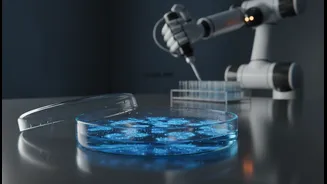
Historically, discovering new antibiotics has been a painstaking and expensive process. The 'golden age' of antibiotic discovery in the mid-20th century relied on screening soil samples and other natural sources for bacteria that produced infection-fighting compounds. This approach yielded most of the antibiotics we use today but has since hit a wall of diminishing returns. The process of identifying a promising compound, testing it, and bringing it to market can take over a decade and cost billions of dollars, with a high rate of failure. As a result, the pipeline for new, innovative antibiotics has run dangerously dry, just as the threat of AMR has intensified.
How AI Changes the Equation
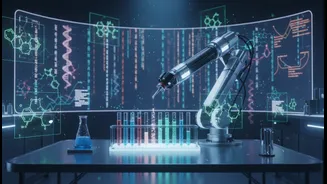
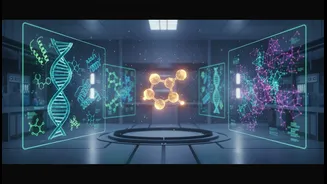
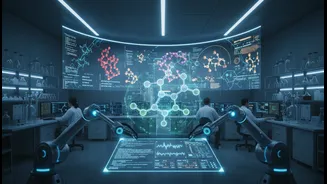
Artificial intelligence, particularly machine learning and deep learning, is completely rewriting the rules of drug discovery. Instead of manually screening a few thousand compounds, AI models can virtually screen billions or even design entirely new molecules from scratch in a fraction of the time. Researchers train these AI systems on massive datasets, teaching them to recognise the molecular structures and properties associated with antibacterial activity. The AI then sifts through enormous digital libraries of known and theoretical compounds, flagging potential candidates that human researchers would never have the time to investigate. Some models even delve into the genomes of extinct organisms like Neanderthals, hunting for ancient peptides with antibiotic potential.
From Code to Clinical Hope
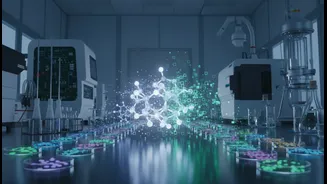
This AI-driven approach is already delivering tangible results. Researchers at institutions like MIT and the University of Pennsylvania have used AI to identify and design potent new compounds. One model, for instance, generated recipes for six novel drugs targeting Acinetobacter baumannii, a notoriously difficult-to-treat pathogen. In another case, an AI model named GNEprop was shown to be 90 times more effective at identifying active compounds compared to traditional screening methods alone. These AI-discovered candidates are often structurally unique from existing antibiotics, suggesting they may work through new mechanisms that bacteria have not yet developed resistance to. For example, the recently discovered compound Abaucin was identified using AI to specifically target a resistant bacterium.
The Path Forward Is Still a Marathon
While AI dramatically accelerates the initial discovery phase, it is not a magic bullet. Identifying a promising compound is only the first small step in a long journey. These candidates must still undergo rigorous lab testing and extensive human clinical trials to prove their safety and effectiveness, a process that remains long and costly. Furthermore, the success of any AI model is entirely dependent on the quality and quantity of the data it's trained on. Biased or incomplete datasets can lead to flawed predictions. Despite these hurdles, the synergy between AI's computational power and human scientific expertise represents the most promising path forward in replenishing our arsenal against superbugs.