

A New View of a Familiar Giant
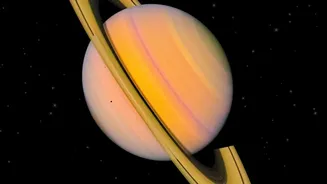
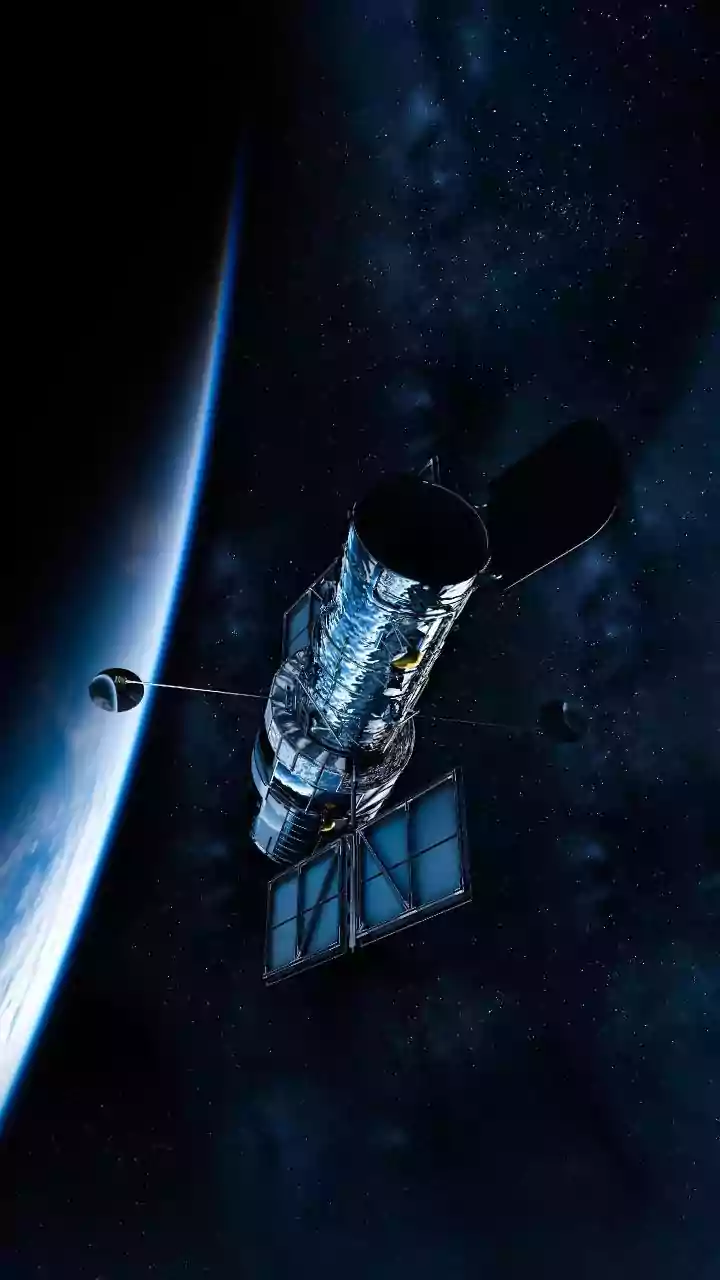
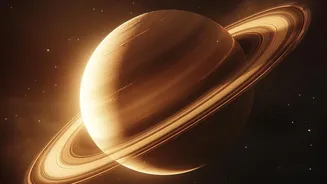
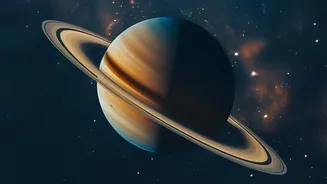
For decades, Saturn has appeared as a serene, banded giant. However, a dedicated observation campaign by the Hubble Space Telescope is showing that its atmosphere is anything but static. As part of the Outer Planets Atmospheres Legacy (OPAL) program,
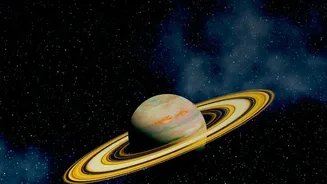
Hubble has been capturing yearly snapshots of our solar system’s gas giants. Recent analysis of images taken between 2018 and 2020 shows subtle yet significant changes as the planet’s northern hemisphere transitions from its long summer toward autumn. During this period, scientists observed that Saturn's equator brightened by as much as 5 to 10 percent. Wind speeds also showed fascinating fluctuations; after being clocked at roughly 1,600 kilometers per hour in 2018, they slowed to around 1,300 km/h in the following two years, matching measurements taken by the Cassini spacecraft over a decade earlier. These year-to-year shifts are the first hints of larger, seasonal transformations unfolding on the ringed planet.
Inside the Shadow Zone
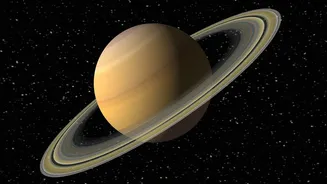
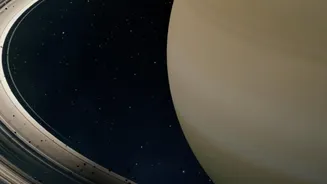
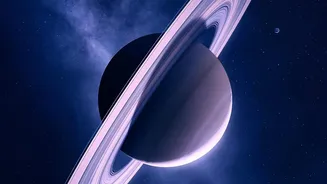
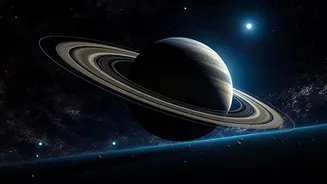
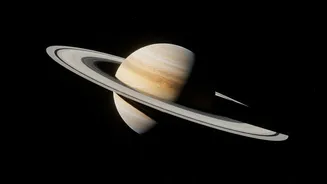
A key area of interest for astronomers is the vast shadow cast by Saturn's iconic rings onto the planet itself. This “shadow zone” is a unique natural laboratory for studying a planetary atmosphere. With the rings blocking direct sunlight, the region experiences different thermal and chemical conditions compared to the rest of the planet. The shadow itself changes with the seasons, stretching long across the rings near the equinox and shrinking to a small sliver during the solstice. By observing how the atmosphere behaves within this shaded area, scientists can isolate the effects of the planet's internal heat from the energy it receives from the Sun. Previous missions found that the shadow can significantly alter Saturn's ionosphere, the electrically charged upper layer of its atmosphere, making this a prime target for understanding atmospheric dynamics.
The Slow March of Saturn's Seasons
Understanding Saturn's atmospheric shifts requires thinking on a grander timescale. Like Earth, Saturn has seasons because its axis is tilted. But with an orbit that takes over 29 Earth years to complete, each of Saturn's seasons lasts for more than seven years. The recent Hubble observations capture just a small fraction of this cycle, documenting the gradual changes as the northern hemisphere moves out of its summer peak. Scientists expect that as the seasons progress, the changes will become more dramatic. The subtle shifts in color, cloud brightness, and wind are precursors to a planet-wide atmospheric response to the changing sunlight, a slow-motion weather report written across the clouds.
The Power of Infrared Vision
The headline's mention of infrared is critical. While visible light shows us the color and texture of the topmost cloud layers, infrared light allows astronomers to see deeper. Hubble’s Near Infrared Camera can peer through the upper atmospheric haze to sense heat and the chemical composition of clouds at different altitudes. This capability is crucial for interpreting findings like the fluctuating wind speeds. Since winds on Saturn are known to vary with altitude, a change in measured speed could mean that the clouds themselves have shifted vertically. Infrared observations help distinguish between a true change in wind velocity and observing clouds at a different depth in the atmosphere. This multi-layered view is essential for building a complete, three-dimensional model of how Saturn's massive weather systems work.
What This Means for Planetary Science
These ongoing observations do more than just add to our photo album of Saturn; they provide crucial data for understanding all gas giants, including the hundreds of exoplanets discovered orbiting other stars. By tracking how Saturn’s atmosphere responds to seasonal change, scientists can refine their models of planetary weather and climate. The long-term monitoring by programs like OPAL provides a baseline that cannot be achieved with short-term missions. Building on the legacy of spacecraft like Voyager and Cassini, and now working in concert with the powerful James Webb Space Telescope, Hubble continues to prove its value. Each new image helps piece together the puzzle of how these enormous, turbulent worlds evolve over time.