




The Monsoon's Pavlovian Prompt
The connection between rain and this specific food pairing is a powerful example of associative learning. For generations, the sights, sounds, and smells of the monsoon—the cool breeze, the rumble of thunder, the scent of wet earth—have been followed
by the sizzle of pakoras and the brewing of spiced tea. This repetition has trained our brains to link the weather with the food. Psychologically, there's also a biological urge at play. Cooler, damp weather makes our bodies crave warm, energy-dense foods to maintain temperature. Carbohydrate-rich foods like pakoras can also trigger the release of serotonin, a neurotransmitter that elevates mood, providing a comforting antidote to gloomy weather.
A Ritual Steeped in Comfort
The desire for chai and pakoras is about more than just consumption; it’s about the ritual. It’s a pause in the day, an invitation to gather. The act of preparing the pakora batter and grating ginger into the tea is a mindful process that fosters a sense of togetherness and community. In many households, the arrival of rain is a cue for family members to come together, sharing stories and snacks. This tradition transforms a simple afternoon snack into a memorable occasion, a shared experience that reinforces social bonds. Whether at a roadside 'tapri' or in a family living room, the ritual of 'shaam ki chai' (evening tea) transcends class boundaries, serving as a moment of respite and connection.
A Symphony of Texture and Taste
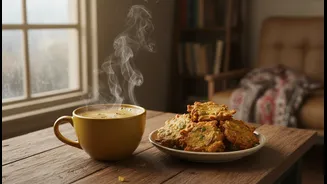
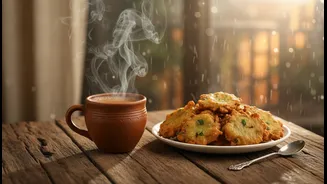
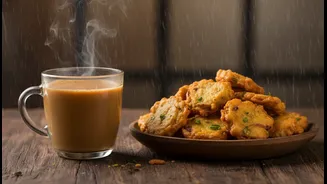
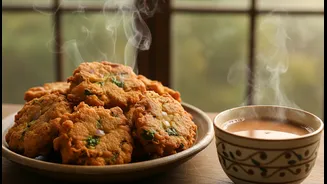
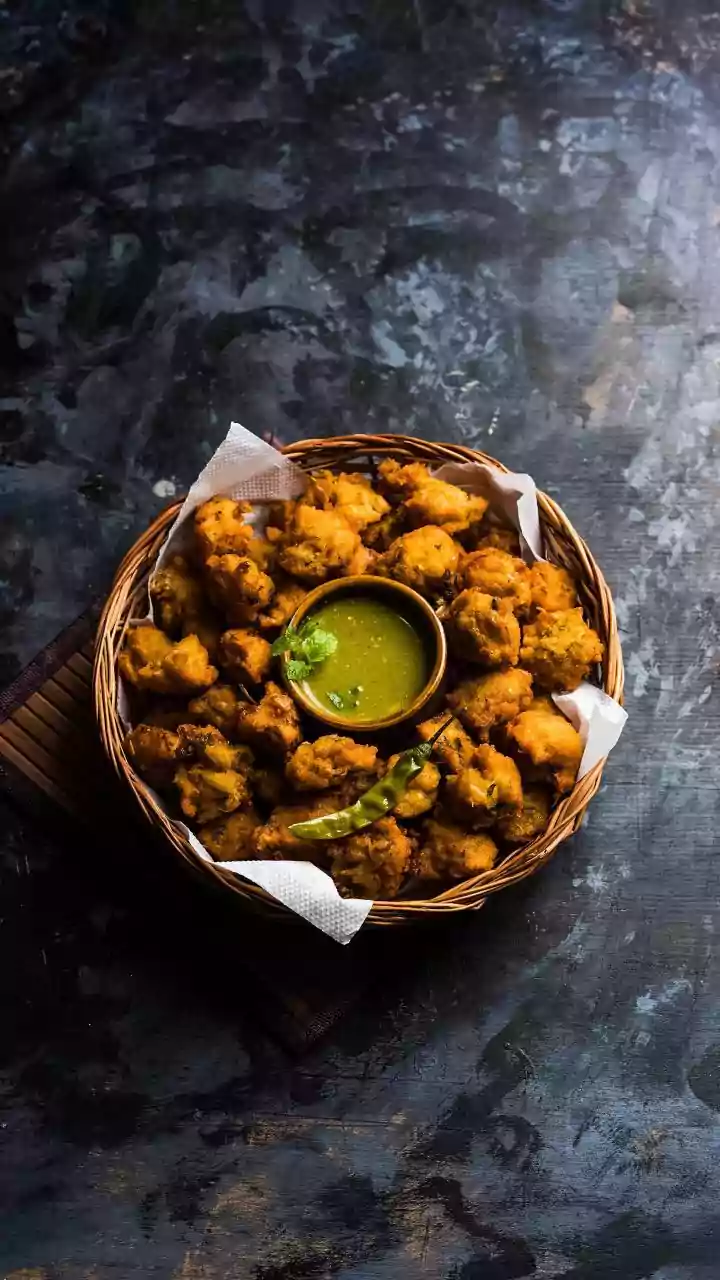
The culinary genius of the chai-pakora combination lies in its perfect contrast. You have the pakora's crispy, golden-brown exterior giving way to a soft, steamy interior filled with spiced vegetables like onion or potato. This crunchy, savory, and slightly oily bite is then followed by a sip of hot, milky, sweet chai. The warmth and spices of the tea—often featuring cardamom, ginger, and cloves—cut through the richness of the fried snack, cleansing the palate and preparing it for the next bite. This rhythm of bite and sip, of hot and cool, and of savory and sweet creates a complete and deeply satisfying sensory experience.
A Portal to Sensory Memory
Food memories are uniquely powerful because they engage all five senses. For many Indians, the flavour combination of chai and pakoras is inextricably linked to the past. It evokes nostalgia for childhood, for holidays spent with grandparents, or for carefree college days huddled in a canteen during a downpour. The brain's olfactory bulb, which processes smell, has direct links to the amygdala and hippocampus, which are responsible for emotion and memory. This is why the aroma of frying pakoras or brewing chai can instantly transport you back in time, making the craving not just for a food, but for the feeling and the people associated with it.
Acknowledging the Humble Limits
To fully appreciate the magic of chai and pakoras is to also understand its limits. This isn't everyday health food; it's a deep-fried indulgence. Its charm is rooted in its role as a special treat, an exception to the routine. The fact that it’s not consumed daily is precisely what preserves its ritualistic power. The pairing is simple, accessible, and doesn't require elaborate ingredients or techniques. Its 'limit' is also its greatest strength: it remains an uncomplicated pleasure. This boundary ensures that the tradition remains a joyful, occasional indulgence rather than a dietary staple, keeping the craving and the comfort it brings potent and special. It’s a celebration of balance, a simple joy that brightens a grey day without pretense.