


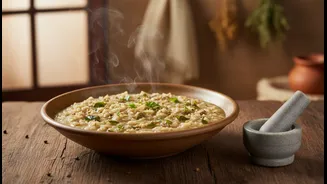



The Monsoon's Healing Broth
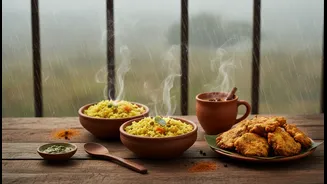
Every year, as the Malayalam month of Karkidakam (mid-July to mid-August) arrives, a quiet culinary ritual unfolds in many Malayali households. This period, coinciding with the peak monsoon, is considered a time when the body's digestive fire, or 'Agni,'
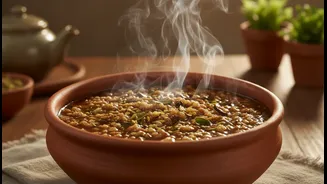
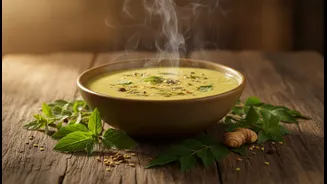
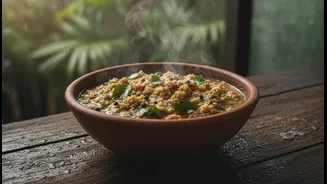
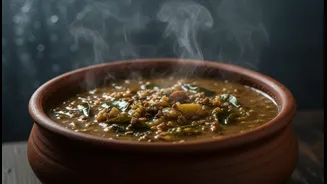
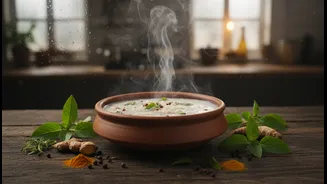
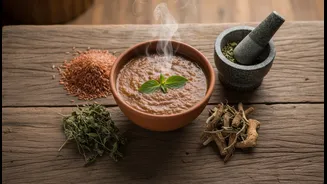
is weak and immunity is low. Ayurveda prescribes a specific seasonal regimen, 'Varsha Ritucharya,' to counteract this. The star of this regimen is Karkidaka Kanji, a warm, medicated rice gruel also known as Oushadha Kanji (medicinal porridge). More than just a simple meal, it's a carefully formulated dish designed to support digestion, boost immunity, and detoxify the body. The traditional base is Njavara rice, a medicinal variety prized in Ayurveda, cooked with coconut milk and a blend of potent herbs and spices like dry ginger, cumin, fenugreek, and collections of herbs known as Dashamoola and Dashapushpa.
Adapting an Ancient Recipe for Today
While the tradition is powerful, the preparation can be daunting. Sourcing numerous specific herbs and slow-cooking the porridge daily is a significant commitment for a modern lifestyle. Recognizing this, the market has responded with 'Karkidaka Kanji kits,' which bundle the essential dry ingredients, making the process much more accessible. But adaptation doesn't stop there. Home cooks are personalizing the porridge, retaining the core principles while simplifying the execution. Some use a pressure cooker to save time, while others might pare down the herb list to a few key digestive spices like ginger, pepper, and cumin, which are already staples in most Indian kitchens. The key is to focus on the function: a warm, easily digestible, and nutrient-dense meal. This might mean using local red rice instead of Njavara or skipping the jaggery for a purely savoury version. This evolution ensures the tradition remains alive and relevant, rather than becoming a venerated but impractical memory.
The Science Behind the Supper
The headline's caution that 'evidence still matters' is crucial. While traditional wisdom is valuable, a modern understanding requires looking at the components. Many of the health claims are rooted in Ayurvedic principles of balancing doshas and strengthening Agni. From a nutritional science perspective, the porridge stands on firm ground. The base, Njavara rice, is scientifically noted for being rich in protein, minerals, and bioactive compounds with antioxidant and anti-inflammatory properties. Studies have shown it may help in managing blood sugar and possesses free-radical scavenging abilities. Spices like fenugreek are well-known for their anti-inflammatory and blood sugar-regulating effects, while ginger and cumin are proven digestive aids. Coconut milk provides healthy fats. While science may not validate every specific Ayurvedic claim about detoxifying 'Ama' (toxins), it does confirm that a porridge made of whole grains and digestive spices is inherently anti-inflammatory, nourishing, and supportive of gut health.
A Porridge for All Seasons
The true potential of Karkidaka Kanji lies not just in preserving a seasonal ritual, but in embracing its underlying philosophy for year-round wellness. The concept of a savoury, spiced grain porridge is universal and incredibly versatile. It can be seen as India's answer to the global trend of grain bowls and savoury oatmeal. You don't need to wait for the monsoon to benefit. The principles can be applied using different grains like millets or even quinoa. A simple 'kanji' made with red rice, a pinch of turmeric, and a tempering of ginger and mustard seeds can be a comforting and restorative meal any time you feel run down. By viewing Karkidaka Kanji as a template—a nourishing grain base combined with digestive spices and seasonal ingredients—home cooks can create endless variations that fit their tastes, dietary needs, and the contents of their own pantry, making this ancient wisdom a modern, everyday tool for health.