
The Ultimate Lifeboat
Sending humans to space is an incredibly complex and risky endeavour. While modern rockets are marvels of engineering, the most dangerous phase of any mission is the launch and ascent. During these initial minutes, the launch vehicle is under immense
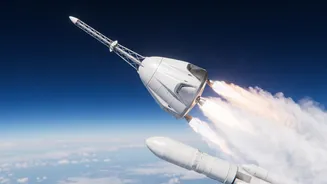
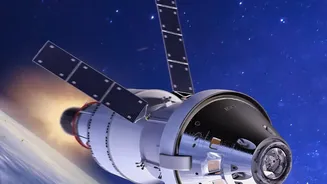
stress as it burns millions of kilograms of propellant to fight Earth's gravity. If something goes wrong, the crew has only seconds to react. This is where the Crew Escape System (CES) comes in. Think of it as the ultimate lifeboat, designed to pull the crew module—the capsule carrying the astronauts—away from a failing rocket at lightning speed. This system is a critical prerequisite for any human spaceflight program, and perfecting it is a major focus for ISRO.
How an Emergency Escape Works
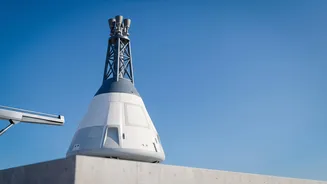
The Gaganyaan's Crew Escape System is a 'puller' or 'tractor' type, similar to those used in the historic Apollo and Soyuz missions. It sits atop the crew module like a tower. This tower is packed with a set of quick-acting, high-burn solid motors. An advanced onboard computer system, known as the Integrated Vehicle Health Management system (IVHM), constantly monitors the rocket's vital signs. If it detects a critical anomaly—like a loss of thrust or a structural failure—it automatically triggers the CES. In less than a second, the powerful escape motors ignite, generating immense thrust to yank the crew module clear of the malfunctioning launch vehicle. The goal is to outrun any potential explosion and put the crew at a safe distance.
A Symphony of Thrusters
The CES doesn't just pull the capsule straight up; it's a carefully choreographed manoeuvre. The system includes several types of motors, including high-altitude and low-altitude escape motors, along with pitch motors. These work together to not only provide the raw power for the escape but also to steer the crew module onto a safe trajectory, pushing it away from the rocket's path. This involves subjecting the astronauts to very high G-forces for a few seconds, an experience that is physically demanding but survivable. Once the module is at a safe distance and altitude, the escape tower jettisons, and the capsule begins its journey back to Earth.
From High Speed to a Gentle Splash
After the escape thrusters have done their job, the next challenge is to bring the crew module down safely. The capsule re-orients itself and deploys a sequence of parachutes to slow its descent. The process begins with smaller drogue parachutes that stabilise the capsule at high altitude, followed by the deployment of large main parachutes. This multi-stage system is crucial for gradually reducing the speed from hundreds of meters per second to a gentle splashdown velocity of under 11 meters per second in the ocean. From there, recovery teams are on standby to retrieve the astronauts and the capsule.
Putting the System to the Test
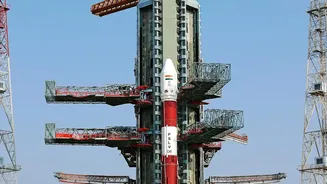
ISRO is not leaving anything to chance. The space agency has been conducting a series of rigorous tests to validate every component of the Gaganyaan mission. A major milestone was the Test Vehicle Abort Mission-1 (TV-D1) conducted in October 2023. In this crucial test, a specially designed test vehicle was launched to an altitude of about 12 kilometres and a speed of Mach 1.2—the point of maximum aerodynamic pressure. The escape system was then deliberately triggered. The CES performed flawlessly, pulling the crew module away from the rocket, which then descended under parachutes and was successfully recovered from the Bay of Bengal. This test was a resounding success, proving the system's reliability in a real-world flight scenario and marking a significant step towards a human-rated launch vehicle.