





First, What Are Super-Earths?
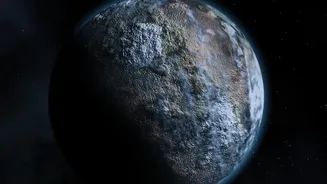
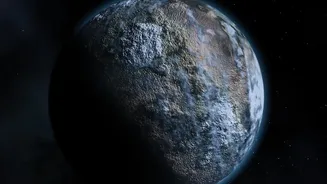
Super-Earths are a class of exoplanet—planets outside our solar system—that are more massive than Earth but lighter than ice giants like Neptune. They are one of the most common types of planets discovered in our galaxy so far, yet our own solar system curiously
lacks one. These worlds can be rocky like Earth or have a different composition entirely. Their size and potential for retaining an atmosphere make them prime targets in the search for habitable worlds, as they could possess a wide range of environmental conditions, from scorching lava landscapes to potential water worlds.
The Technology That Peels Back the Sky
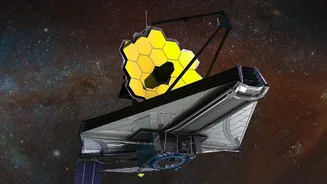
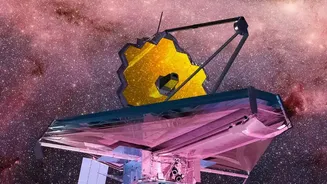
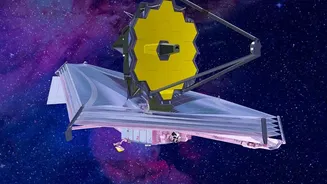
Sensing the atmosphere of a planet light-years away is an immense technical challenge. Astronomers primarily rely on a method called transit spectroscopy, made possible by instruments like those on the James Webb Space Telescope (JWST). Here’s how it works: when a super-Earth passes in front of its host star from our perspective (an event called a transit), a tiny fraction of the starlight filters through the planet's atmosphere. Different gases in the atmosphere absorb specific wavelengths, or colors, of light. By analyzing the starlight that reaches the telescope, astronomers can identify these missing slivers of light and determine which molecules are present, effectively reading a chemical fingerprint of that distant world's air.
From Barren Rocks to Gassy Worlds
Early observations with the Hubble Space Telescope gave us our first hints, detecting hydrogen and helium in the atmosphere of super-Earth 55 Cancri e, though no water vapor was found. But the launch of the more powerful JWST has ushered in a new era of discovery. In a landmark finding from July 2026, astronomers detected a clear atmospheric signature around LHS 1140 b, a rocky super-Earth in its star's habitable zone. This was monumental because it showed that a rocky world orbiting a volatile red dwarf star could hold onto its atmosphere for billions of years—a key requirement for potential habitability. In another surprising discovery, the scorching 'lava world' TOI-561 b, once thought to be a bare rock, was found to have a thick atmosphere that helps distribute heat across its surface.
What These Atmospheres Tell Us
The composition of an atmosphere provides critical clues about a planet's past, present, and future. The presence of certain molecules can indicate ongoing geological activity, such as volcanism, which releases gases that can replenish an atmosphere. For example, recent ground-based studies of super-Earth L 98-59 d hinted at the presence of hydrogen sulfide, which could be a sign of volcanic outgassing. The types of gases found also help scientists distinguish between mini-Neptunes, which have thick, hydrogen-dominated primordial atmospheres, and true rocky super-Earths, which may have lost their initial envelopes to become terrestrial worlds. Ultimately, these atmospheric studies are about narrowing the search for life. Detecting biosignatures—gases like oxygen, methane, or others in certain combinations that could point to biological processes—remains the long-term goal.