



A Tale of Two Origins
Before we get to the nutrients, let's start with a surprising fact: sweet potatoes and butternut squash are not even from the same plant family. A sweet potato, or 'shakarkandi' as it's known in India, is a starchy root vegetable, a tuber that grows underground.
It belongs to the morning glory family. A butternut squash, on the other hand, is technically a fruit. It's a type of winter squash that grows on a vine above the ground. This fundamental difference is the first clue to their varying textures and nutritional profiles. The sweet potato is dense all the way through, while the squash has a hollow, seeded cavity at its base.
The Nutritional Showdown
Here's where the headline's claim of 'no universal winner' really comes to life. A cup of cooked butternut squash has significantly fewer calories, carbohydrates, and sugars than the same amount of sweet potato. This makes it a great choice for those managing their weight or carbohydrate intake. However, the sweet potato fights back with more protein and fiber, which helps with satiety and keeps you feeling full for longer. When it comes to vitamins, both are powerhouses of beta-carotene, which our body converts to Vitamin A. While both are excellent sources, some data suggests sweet potatoes have a slight edge here. Conversely, butternut squash often contains more Vitamin E and calcium, while sweet potatoes are a better source of Vitamin C and potassium. So, the 'winner' truly depends on the nutrient you are prioritising.
Impact on Blood Sugar
For anyone monitoring their blood sugar, including those with diabetes, the glycemic index (GI) is a critical factor. Here, there's a clearer distinction between the two. Butternut squash generally has a moderate and stable glycemic index, meaning it causes a slower, more controlled rise in blood sugar. The story with sweet potatoes is more complex and depends heavily on the cooking method. Boiled sweet potatoes have a medium GI, but baking or roasting them causes the starches to convert into sugars, significantly raising the GI. This makes butternut squash a more predictable and often safer choice for maintaining stable glucose levels.
In The Kitchen: Taste and Texture
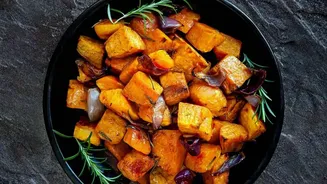
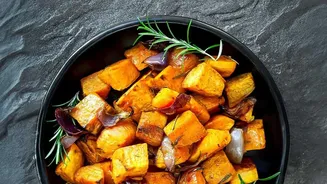
Their botanical and nutritional differences translate directly to their performance in the kitchen. Sweet potatoes are starchier and denser. When roasted, they hold their shape well, developing a fluffy interior and beautifully caramelised edges, making them perfect for roasting whole, cutting into wedges, or making 'chaat'. Butternut squash has a higher water content, resulting in a lighter, creamier, and sometimes stringier texture when cooked. It breaks down more easily, which is why it excels in silky smooth soups, purees, and sauces where its nutty, milder sweetness can shine. While they can be substituted in a pinch, the final texture of the dish will change noticeably.
So, Which Should You Choose?
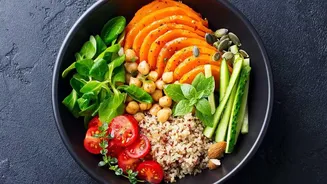
Making the right choice is all about your goal for the meal. Are you looking for a lower-calorie, lower-carb side dish that's great for soups and purees? Reach for the butternut squash. It’s also the more reliable option for blood sugar management. Are you craving a denser, more filling vegetable that's higher in fiber and protein, and perfect for roasting? The sweet potato is your answer. It also provides a fantastic boost of Vitamin C. For a cook, knowing these differences is key to getting the best result from a recipe.