
Why It’s More Than Just a Walk
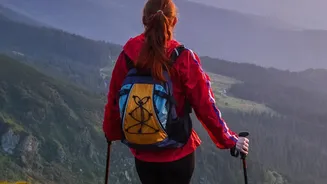
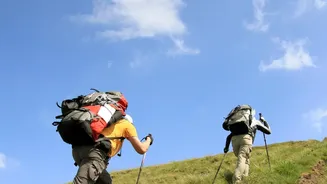
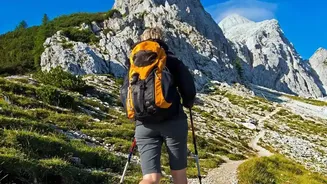
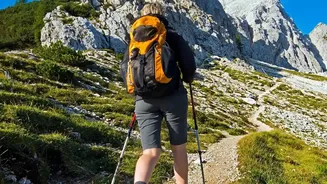
At a glance, Nordic walking looks like hiking, but its origins are in cross-country skiing. The special poles aren't for balance but for propulsion, and using them correctly transforms a simple walk into a surprisingly effective workout. The technique
engages up to 90% of your body's muscles, compared to about 50% with regular walking. This increased muscle activation turns your walk into a full-body session that works your arms, shoulders, core, and back, all while burning more calories than a standard stroll. Because the poles help distribute your weight, it remains a low-impact activity that's gentle on the joints, making it accessible for all fitness levels and ages.
Gearing Up: It Starts With the Poles
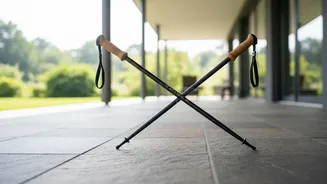
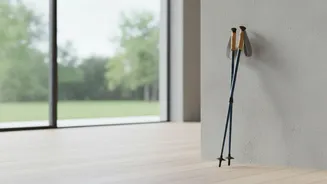
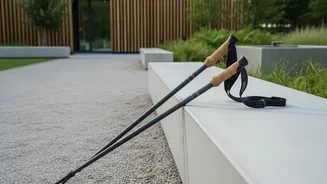
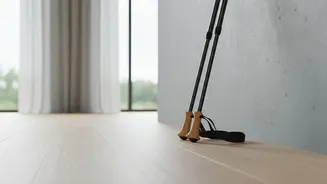
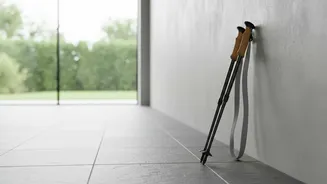
Your equipment is minimal but crucial, and it begins and ends with the poles. They are not one-size-fits-all. A common mistake is using poles that are too long or too short. A good rule of thumb for finding the right length is to multiply your height in centimetres by 0.68. When you hold the pole, your elbow should be at roughly a 90-degree angle. Adjustable poles offer versatility, but ensure they are designed for Nordic walking, not hiking or skiing, as they need to have the right blend of strength and shock absorption. Look for poles made with at least some carbon, as pure aluminium can transfer uncomfortable vibrations into your joints.
The Core Technique: Push, Don't Plant
The single biggest mistake beginners make is planting the poles in front of them like a walking cane. This acts as a brake. The goal of Nordic walking is propulsion. The poles should be planted between your front and back foot, at an angle pointing backward. The movement is a 'push' from the shoulder. As you step forward with your right foot, your left arm swings forward naturally, planting the pole. Then, you push the pole backward, propelling yourself forward. Your arm should extend fully behind you as you complete the push. This movement should be powerful and fluid, originating from the shoulder, not a flick of the wrist or a bend of the elbow.
Finding Your Rhythm
Nordic walking relies on a natural, cross-lateral rhythm: your left arm moves with your right leg, and your right arm with your left leg. Some beginners find themselves 'pacing', moving the arm and leg on the same side together. This is an unnatural movement that eliminates the torso rotation which is key to engaging your core muscles. If you find this happening, a simple fix is to drop your hands, let the poles drag by their straps, and just walk normally for a minute. Let your arms swing naturally. Once you feel that rhythm return, grip the poles again. Don't overthink it; your body already knows the fundamental coordination.
Common Mistakes to Avoid
Beyond planting the pole incorrectly, a few other habits can undermine your workout. One is maintaining a 'death grip' on the handles. The technique involves a cycle of gripping and releasing; you grip as you plant the pole and push, then relax your hand as your arm swings forward again. Another is hunching over. Keep your posture tall and your gaze forward to allow for deep breathing and proper spine alignment. Finally, don't use stiff hiking boots. Nordic walking requires a flexible shoe that allows your foot to roll naturally from heel to toe, which is essential for an efficient stride.