
The Quest for the Perfect Line
The defining feature of a successful colour-blocked wall is the sharpness of the transition between hues. For many DIY enthusiasts, this is where the project lives or dies. Freehand painting, the traditional method, relies heavily on painter's tape. While
seemingly straightforward, it's notorious for mishaps. Paint can bleed underneath the tape, especially on walls that aren't perfectly smooth, resulting in fuzzy, uneven edges that require tedious touch-ups. Even with professional techniques, like sealing the tape's edge with the base paint colour first, achieving a flawless line requires significant patience and skill. This is the central struggle that has led many to seek an alternative.
Wallpaper: The Precision Advantage
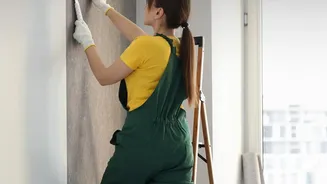
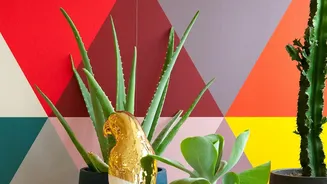
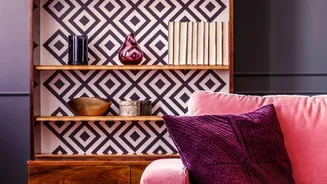
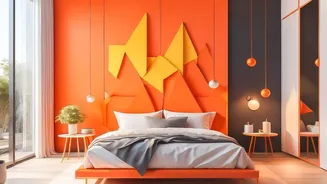
This is where colour-blocking wallpaper enters the scene as a strong competitor. Modern wallpapers, especially those designed with geometric or block patterns, are manufactured for precision. The lines are digitally perfect, printed on a single roll or across seamlessly matched panels. There is no chance of paint bleed because the line is already part of the design. Peel-and-stick varieties, in particular, have made application much more accessible for amateurs. You simply align the panel and smooth it onto the wall. The result is an incredibly clean, sharp line that's almost impossible to replicate consistently with a brush and tape. For anyone whose primary goal is that crisp, professional-looking edge, wallpaper is engineered to deliver it.
Paint: Flexibility and Creative Freedom
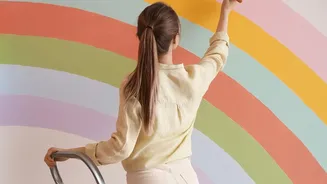
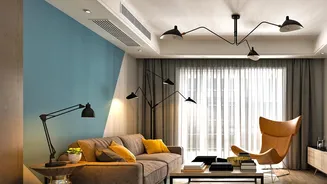
Despite its challenges with precision, painting holds a major advantage: creative freedom. With paint, you have an almost infinite spectrum of colours to choose from, which can be mixed to create a custom shade. You are not limited by a manufacturer's available patterns or colourways. Painting allows for more organic, free-form designs, curves, and unique shapes that may not be available in wallpaper prints. If your vision for a colour-blocked wall is more artistic and less rigidly geometric, paint gives you the canvas to bring that idea to life. You can decide the exact placement and scale of your design directly on the wall, adjusting as you go.
Effort, Cost, and Commitment
When comparing the two methods, it's important to look at the overall investment of time and money. Painting is generally the more budget-friendly option upfront. The materials are relatively inexpensive, and many feel comfortable taking it on as a DIY project. However, the preparation—cleaning, taping, and potentially priming—can be labour-intensive. Wallpaper often has a higher initial cost for both the product and, if you choose, professional installation. Yet, it can be quicker to apply, especially over an already prepped wall, as it involves fewer coats and drying times. A key difference lies in permanence. A painted wall is easy to touch up or completely repaint when you want a change. Removing wallpaper, on the other hand, can be a difficult task, making it a longer-term commitment.
Which Method is Right for You?
Choosing between wallpaper and paint depends entirely on your priorities. If your primary goal is to achieve the cleanest, sharpest lines possible with minimal fuss, colour-blocking wallpaper is the clear winner. It's designed for precision and provides a professional finish that is difficult to match with paint, especially for a novice. Modern peel-and-stick options make it a viable DIY project. However, if your project demands unlimited colour choice, a lower initial budget, or the flexibility to change your design in a few years, paint remains a versatile and excellent choice. While it requires more skill and patience to get those lines just right, the creative control it offers is unparalleled.